Nebelung vs Russian Blue: coat, size and everyday company
Compare Nebelung vs Russian Blue adult weights, coats, breed identity and play, while leaving room for the individual cat.
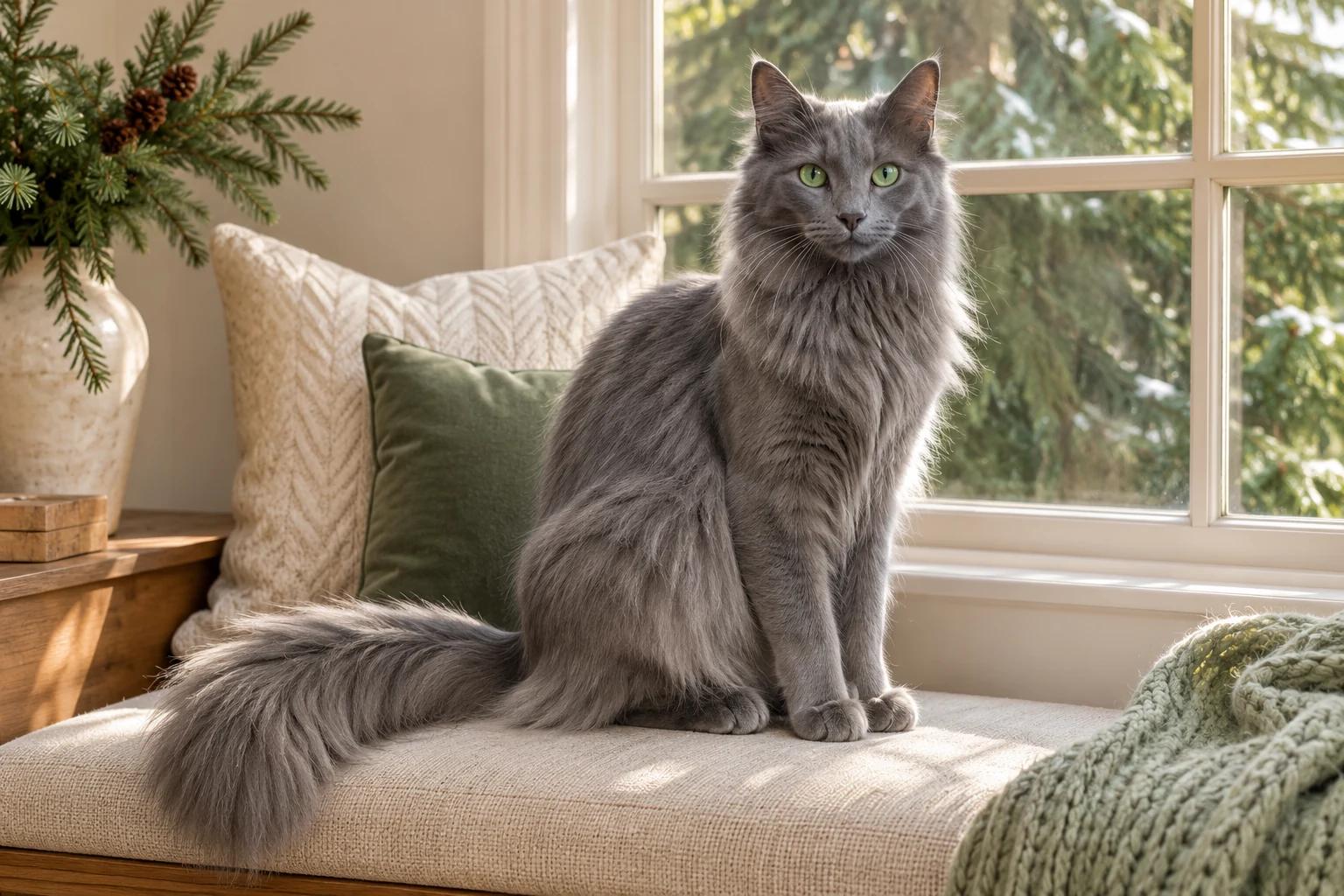
Nebelung vs Russian Blue is a comparison of two breeds, not two interchangeable names for a blue cat. Their shared colour can make photographs look similar, but the details matter: which adult weight range is being quoted, what coat you would actually maintain, and how the individual spends time with people. Start with those practical distinctions rather than deciding that one is simply the fluffy version of the other.
Nebelung vs Russian Blue: the adult weight comparison
The current Nebelung breed profile lists adult females at 8–11 pounds and males at 10–13 pounds. The current Russian Blue breed profile lists females at 7–10 pounds and males at 10–12 pounds. Both profiles describe a medium build.
The comparison changes depending on which figures you place together. The female ranges overlap from 8–10 pounds. The male ranges overlap from 10 to 12 pounds. Looking only at the overall ranges, 8–13 pounds and 7–12 pounds, hides that distinction. An adult male weighing 11 pounds falls within both references; the scale cannot tell you which breed he is.
These are adult reference ranges, not kitten growth charts or instructions to bring a particular cat to a chosen number. They also do not provide numerical shoulder heights. A heavier reference does not establish that every Nebelung stands taller, and a lighter individual is not automatically a Russian Blue. For concerns about an individual cat’s weight, talk with your veterinarian.
Separate breed identities despite the resemblance
The GCCF Nebelung account explicitly distinguishes the Nebelung from the Russian Blue. Its history describes a breeding programme begun in the United States during the 1980s, with Cora Cobb developing the breed from blue longhaired cats. An initial description linked it closely to the Russian Blue, but the standard was revised to describe a separate breed. TICA championship recognition followed in 1997.
For a prospective owner, the useful point is not memorising dates. It is understanding why resemblance and identity are different questions. A semi-longhaired blue cat can resemble a photograph without that photograph establishing its ancestry. Equally, calling a documented Nebelung a Russian Blue with longer hair loses the distinction made by the registry account.
When deciding between a Nebelung or Russian Blue, ask which breed the records actually identify. Appearance can explain why you were attracted to the cat, while the documented identity answers a different question. Neither replaces learning about the individual you might live with.
The Nebelung’s coat changes its outline
TICA’s Nebelung description describes a long, muscular body under a silky, medium-length blue coat, with silver at the hair tips. The tail carries a substantial plume. Regular combing is part of maintaining that coat because tangles can form in its density.
This is a useful way to look beyond the impression of a uniformly fluffy cat. The body coat and the tail do not contribute the same outline: the plume extends the visual shape, while the coat over the torso can soften its edges. A photograph of the tail cannot tell you how large the body is beneath the hair.
In an everyday comparison, consider whether maintaining that longer coat is something you want to do, not just whether you prefer its appearance. Ask to see the individual’s ordinary combing routine. That gives a more concrete picture than a reassuring description such as easy care. The coat is one recurring part of ownership, not a decorative feature separate from the cat’s daily life.
Russian Blue play is more than a quiet first impression
TICA’s Russian Blue account describes retrieving games, observing people and investigating interactive puzzles. It also describes cats choosing private resting places. These are tendencies rather than a promise that a particular cat will fetch, solve a particular toy or follow an organised programme.
The practical question is what interests this individual. A cat that carries an object back is offering a different interaction from one that watches a moving toy without joining in. Neither observation needs to become a judgement about intelligence. Ask a familiar caregiver which activities the cat returns to, rather than relying on how animated it looks during a first meeting.
This also prevents a misleading Russian Blue vs Nebelung comparison in which a quiet manner is treated as the opposite of playfulness. You are comparing actual interests, not awarding an activity prize. Someone who enjoys a particular game should find out whether the individual enjoys it too, instead of treating a breed description as a guarantee that the game will happen.
Read colour labels in their registry context
The GCCF Russian page covers Russian cats in blue, black and white. That is broader than this article’s comparison with the Russian Blue. Its account distinguishes the blue coat’s silvery appearance from the black and white varieties, and notes that recognition of colours differs between registries.
That distinction helps when a search takes you from a page titled Russian Blue to one simply titled Russian. The broader page has not necessarily changed the meaning of the particular blue variety you are researching. Read the variety named in the description rather than assuming that every colour mentioned belongs under the same label everywhere.
For this comparison, keep the subject precise. You are considering the Nebelung and the Russian Blue, not every Russian variety or every cat with blue-grey fur. A matching colour word does not settle the coat-length, identity or individual-care questions already discussed.
Frequently asked questions
What is the difference between Nebelung and Russian Blue weights?
Current profile references give Nebelung females as 8–11 pounds and males as 10–13, compared with Russian Blue females at 7–10 and males at 10–12. These adult ranges overlap and do not identify an individual’s breed.
Can an 11-pound male fit either breed’s reference?
An 11-pound adult male falls within the current male weight references for both the Nebelung and Russian Blue. That numerical overlap does not determine ancestry or provide a target weight for a particular cat.
Where can I continue the comparison?
Use the cat quiz to organise your household preferences. For a separate transition topic, read helping a Nebelung settle after a house move. A comparison helps frame questions; meeting the individual helps answer them.
Sources behind this article
- GCCF: Nebelung ↗
- TICA: Nebelung ↗
- TICA: Russian Blue ↗
- GCCF: Russian ↗
- Hill’s adult reference — adult-weight reference ↗
- CFA adult reference — adult-weight reference ↗
- Nebelung adult-weight reference ↗
Article source checked: November 16, 2026. Source checked 2026-11-16Article source checked: November 18, 2026. Source checked 2026-11-18
Keep reading

Abyssinian vs Somali: Coat, Size and Everyday Company
Read article →