Working Kelpie vs Australian Kelpie
Compare Working Kelpie vs Australian Kelpie size, coat, background and companionship without assuming that similar names mean identical dogs.
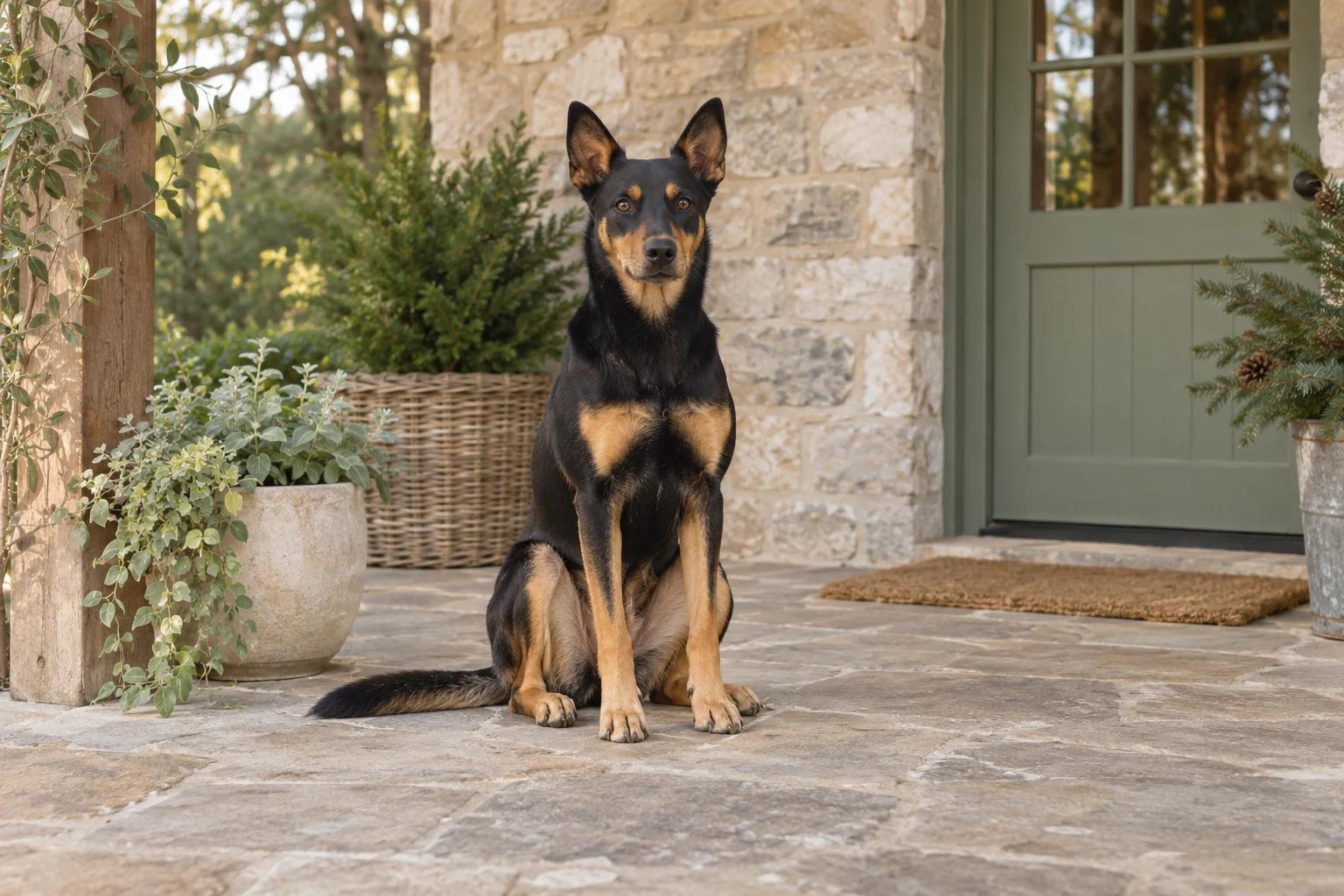
Working Kelpie vs Australian Kelpie is a comparison that benefits from looking beyond similar names. The current Working Kelpie profile and Australian Kelpie profile both describe active dogs with substantial interest in learning. Neither is a low-involvement choice simply because its coat is short. The useful differences include the particular dog's background, the adult size reference and what companionship will look like away from an exciting activity.
Working Kelpie vs Australian Kelpie: understand the background
The Working Kelpie Council's purchasing guide explains that its recorded pedigrees describe a working background. It distinguishes that background from show registration and notes that Working Kelpie breeders have prioritized natural ability over a particular coat color. A litter can consequently include different recognized colors without that variation being the central selection criterion.
For an owner comparing the two names, the practical distinction is the information behind them. A red puppy and a black-and-tan puppy are not two different levels of ability. Nor does a photograph tell you which kind of registration or breeding history the seller means. Look beyond the attractive color and establish what the description actually refers to.
This is particularly useful when an advertisement uses “Kelpie” without further explanation. Ask which background is being described rather than inferring it from appearance. A working pedigree is information about ancestry, not a certificate that the individual already understands a new owner's instructions. The history and the dog's learned experience are related questions, but they are not interchangeable answers.
The Australian Kelpie's coat has a practical structure
The FCI Australian Kelpie standard describes a close outer coat over a short, dense undercoat. The outer hairs lie straight and flat. Coat length changes around the body: the head and front of the legs have shorter hair, while the neck carries more length and thickness, with longer hair behind the thighs and a brush on the tail.
That is more informative than treating every short-coated dog as having the same covering. An Australian Kelpie can look sleek while still possessing two coat layers. The slight ruff and fuller areas are part of the described pattern, not evidence that the dog needs to be made uniformly short.
For someone deciding between these Kelpies, examine the actual adult coat rather than assuming that the shortest-looking photograph represents the least care. Texture, density and where the hair sits are separate from color. The standard's description helps you understand what you are seeing without turning coat appearance into a judgment about a dog's personality or ability to share a home.
Australian Kelpie companionship is not just exercise
Megan Kain's breed-club account for Dogs NSW describes an Australian Kelpie that wants to participate in its person's activities, whether that means time in the garden, a walk or quieter company indoors. It emphasizes the disappointment of being left inactive and uninvolved, rather than presenting distance covered as the whole answer to ownership.
That distinction matters when considering an Australian Kelpie vs Working Kelpie. An owner can provide a large outdoor area yet offer very little shared life. Conversely, participation includes more than a single energetic outing followed by the dog being ignored for the remainder of the day. Think about the activities you actually enjoy doing with a companion nearby.
This is not evidence that every Australian Kelpie wants constant physical contact. It is a reason to consider involvement separately from exertion. A dog may enjoy accompanying a familiar person without seeking continuous petting. Learn how the individual uses shared time, and avoid assuming that one impressive exercise session answers every companionship need.
A short coat still has a care routine
The Canadian Kennel Club's Australian Kelpie profile describes modest grooming requirements, with brushing and occasional bathing rather than elaborate styling. This is an advantage for an owner who prefers a straightforward coat routine, but it should be understood as a type of work rather than the absence of work.
A useful grooming demonstration shows how the adult dog is brushed and what an ordinary session involves. It should not depend on presenting a freshly bathed dog as though that appearance continues indefinitely. The relevant comparison is with the care you are willing to perform consistently, not with a photograph that hides the routine behind it.
If you are choosing a Working Kelpie or Australian Kelpie, keep coat maintenance separate from the much larger question of daily involvement. A manageable grooming session does not make the rest of ownership minimal. Equally, there is no reason to invent complicated styling simply because the dog is athletic. A sensible routine should match the coat the individual actually has.
Compare the current adult size references
The Working Kelpie reference lists 28–60 pounds and 19–25 inches without separate male and female ranges. The Australian Kelpie reference lists females at 24–35 pounds and males at 33–44 pounds, with an overall height of 17–20 inches. The weight ranges overlap substantially; the two labels do not divide dogs into completely separate sizes.
For example, a 34-pound adult lies within both the Working Kelpie range and both sex-qualified Australian Kelpie ranges. That observation does not predict the size of a puppy. It simply shows why “which is bigger?” needs more care than comparing the largest two endpoints. Use the individual adult's measurements when available.
The existing article on matching a Working Kelpie to stock work addresses a more specialized decision. For a wider ownership comparison, the dog quiz can help you consider the daily commitment alongside these physical details.
Frequently asked questions
What is the difference between Working Kelpie and Australian Kelpie size references?
The Working Kelpie reference is 28–60 pounds and 19–25 inches. Australian Kelpie females are listed at 24–35 pounds and males at 33–44 pounds, with an overall height of 17–20 inches. These are overlapping references, not individual predictions.
Does the shorter coat mean neither dog sheds?
No. Both current profiles include regular shedding in their care descriptions. A short coat does not establish that a dog will leave no loose hair in the home.
Can the comparison tell me whether two particular dogs will get along?
No. A breed comparison does not establish compatibility between individuals. Their previous experience, behavior together and carefully managed introductions matter more than assuming that similar names guarantee an easy pairing.
Sources behind this article
- WKC purchasing a Working Kelpie ↗
- FCI Australian Kelpie standard ↗
- Dogs NSW Australian Kelpie account ↗
- Canadian Kennel Club Australian Kelpie ↗
- Hill’s Australia adult reference — adult-weight reference ↗
Article source checked: November 16, 2026. Source checked 2026-11-16Article source checked: November 18, 2026. Source checked 2026-11-18
Keep reading

Affenpinscher vs Brussels Griffon: Everyday Differences
Read article →