Whippet temperament
Understand Whippet temperament through affection, lively greetings, reward-based learning and practical ways to support comfortable everyday behaviour.
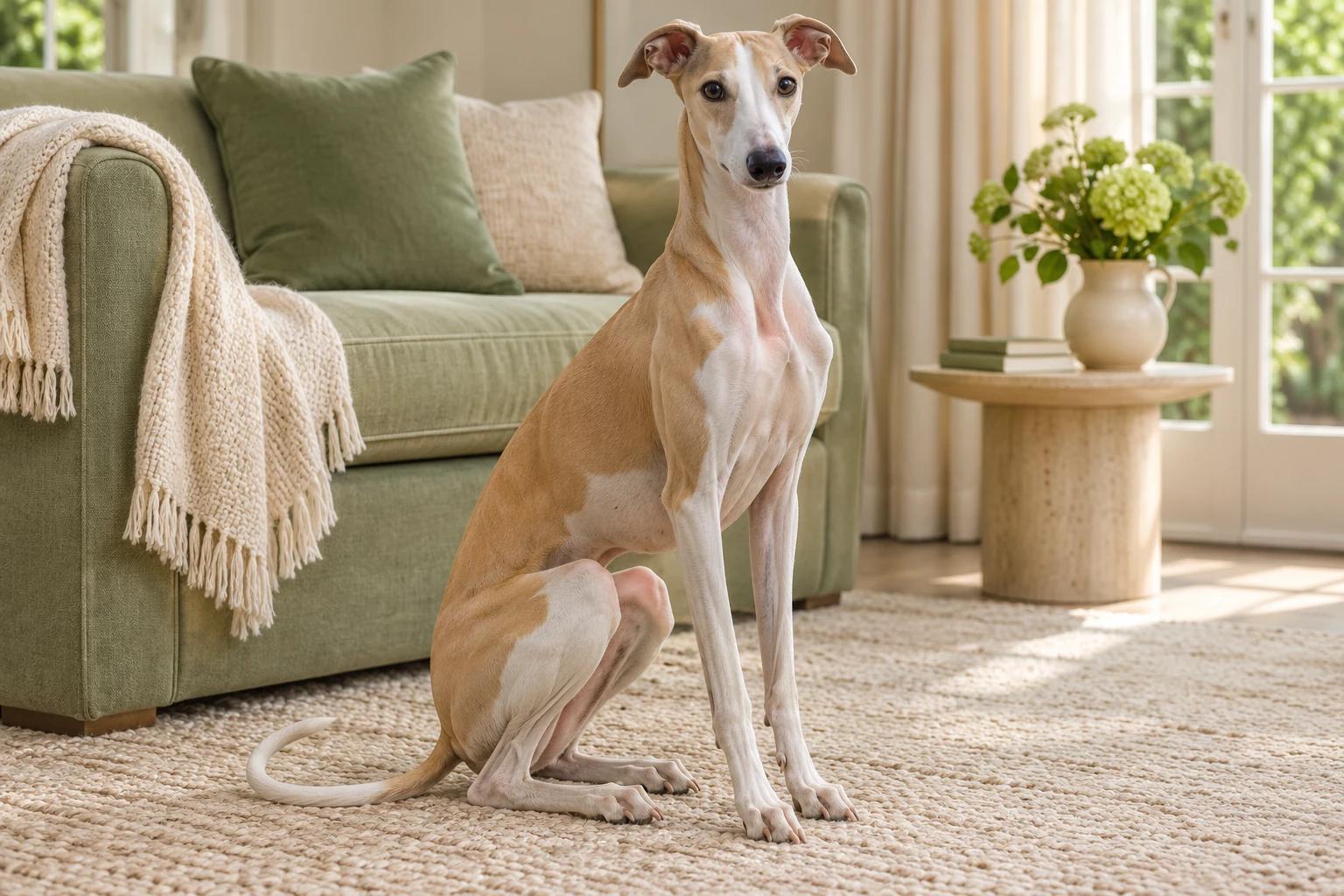
Whippet temperament becomes more useful to understand when broad descriptions are connected to specific situations. The current Whippet profile is a starting reference, not a promise about every individual. This guide focuses on interaction, learning and rest: ordinary parts of life that deserve as much attention as the breed's distinctive appearance.
Whippet temperament includes lively greetings as well as quiet company
The American Whippet Club's temperament account describes a history of living in close contact with people rather than as an outdoor pack. It also notes that enthusiastic greetings can be a practical challenge. A generally gentle description does not mean every reunion will be restrained.
That distinction helps an owner set realistic expectations. A dog can enjoy quiet companionship and still become excited when a familiar person returns. Those are different situations, not evidence that one description must be false. Watch what the individual actually does rather than insisting it should match a single adjective throughout the day.
For a household, the important question is how those moments are managed and taught. A person entering the home should not have to absorb an exuberant greeting simply because it is affectionate in intent. Consider the actual people involved and the dog's existing skills. Do not interpret friendliness as permission for uncontrolled physical contact, or a quiet afternoon as proof that the same dog has already learned calm arrivals.
Make learning rewarding without demanding endless repetition
VCA's Whippet profile identifies food and play as useful rewards and notes that repetition can become boring. It also describes sensitivity. These points support teaching that is clear and worthwhile rather than a contest over how many times the dog will repeat an exercise.
For a Whippet, the value of a lesson is not measured only by the number of repetitions completed. Choose a small, understandable task and a reward the dog actually enjoys. Once the dog has shown the response, consider whether the next attempt adds useful practice or simply extends the session because you expected to keep going.
A change of interest should prompt you to look at the task and setting, not immediately assign a character flaw. The same exercise can be easier in one place than another, and the reward you selected may not be equally appealing at every moment. Work with the dog's motivation and seek an appropriate instructor when needed. Training should make communication clearer, not make sensitivity something the dog must overcome through pressure.
Teach a resting place in gradual stages
Battersea's settling guide starts with a comfortable mat or blanket. Reward investigation by placing food on the mat, then progress from paws on the surface to standing on it. Once that is familiar, ask for a known down and reward there.
Build time gradually before increasing the distance between you and the mat. Later, add distractions and practise in other places. If the dog leaves the position, return to an easier stage rather than treating the interruption as defiance.
For a Whippet household, the practical value is a recognizable place to rest, not a command that instantly produces relaxation anywhere. Begin when the dog is ready for a calm activity. Do not make the first lesson a test in the busiest room during a gathering. Familiarity with the mat, remaining there and coping with movement nearby are different pieces of learning. Teach those pieces before expecting a finished response in a more demanding setting, and ask for professional help if the approach is not working.
Let friendliness coexist with boundaries around touch
The AKC's guidance on greeting dogs says people should ask the owner before approaching and allow the dog to come toward them rather than reaching into its space. An owner may decline contact, including while working on a training task. That decision does not require a public explanation.
For a Whippet, an affectionate reputation does not create an obligation to accept every passerby's attention. You can enjoy a friendly conversation about the breed while keeping the dog's space intact. If an interaction is appropriate, make it calm and let the dog participate rather than allowing enthusiasm to dictate the pace.
The guidance also notes that greeting a jumping dog can reward the very behaviour its owner is trying to change. Ask before interacting even when the dog appears eager. This gives the owner a chance to explain what is being taught and keeps strangers from unintentionally changing the rules. Respectful contact is a better expression of liking dogs than assuming access to every dog you encounter.
Understand Whippet personality without turning ratings into promises
The current breed reference describes playfulness, family involvement and daily learning opportunities. Those features are useful when deciding whether you want an interactive companion. They do not tell you that every activity will appeal to every Whippet or that the same interaction will suit every person in the home.
Keep Whippet characteristics distinct from conclusions about another animal. A breed's social description cannot establish that a particular dog and cat will be compatible, nor does it determine how two individual dogs will interact. Obtain appropriate guidance for the animals concerned rather than treating a broad label as an assessment.
Whippet behavior also has context. A demonstration during a familiar activity answers a narrower question than “What is this dog like in all circumstances?” Preserve that distinction when talking with family members, so a useful observation does not become an unsupported guarantee.
Our guide to meeting a Whippet covers the separate conversation about background and home experience. The dog quiz helps you consider the larger commitment without reducing a dog to one personality word.
FAQ
Does a Whippet personality description predict every interaction?
No. It provides background for understanding the breed, not certainty about an individual encounter. Consider the actual dog, people and setting instead of treating an appealing description as a guarantee.
Does a social breed description settle compatibility with another pet?
No. Compatibility concerns particular animals, not just a breed label. Seek appropriate assessment and guidance for the individuals rather than assuming a generally social description answers the question.
Can physical size stand in for a temperament assessment?
No. The current references list females at 20–35 pounds and males at 25–40 pounds. Those are size figures, not measures of sociability, confidence, training experience or suitability for a particular home.
Sources behind this article
- American Whippet Club temperament ↗
- VCA Whippet profile ↗
- Battersea settling lesson ↗
- AKC respectful dog greetings ↗
Article source checked: November 16, 2026. Source checked 2026-11-16
Keep reading

Airedale Terrier Temperament: What Everyday Life Can Feel Like
Read article →