Wetterhoun shedding
Understand Wetterhoun shedding, practical coat-care questions, tool selection and professional grooming without assuming curls mean no loose hair.
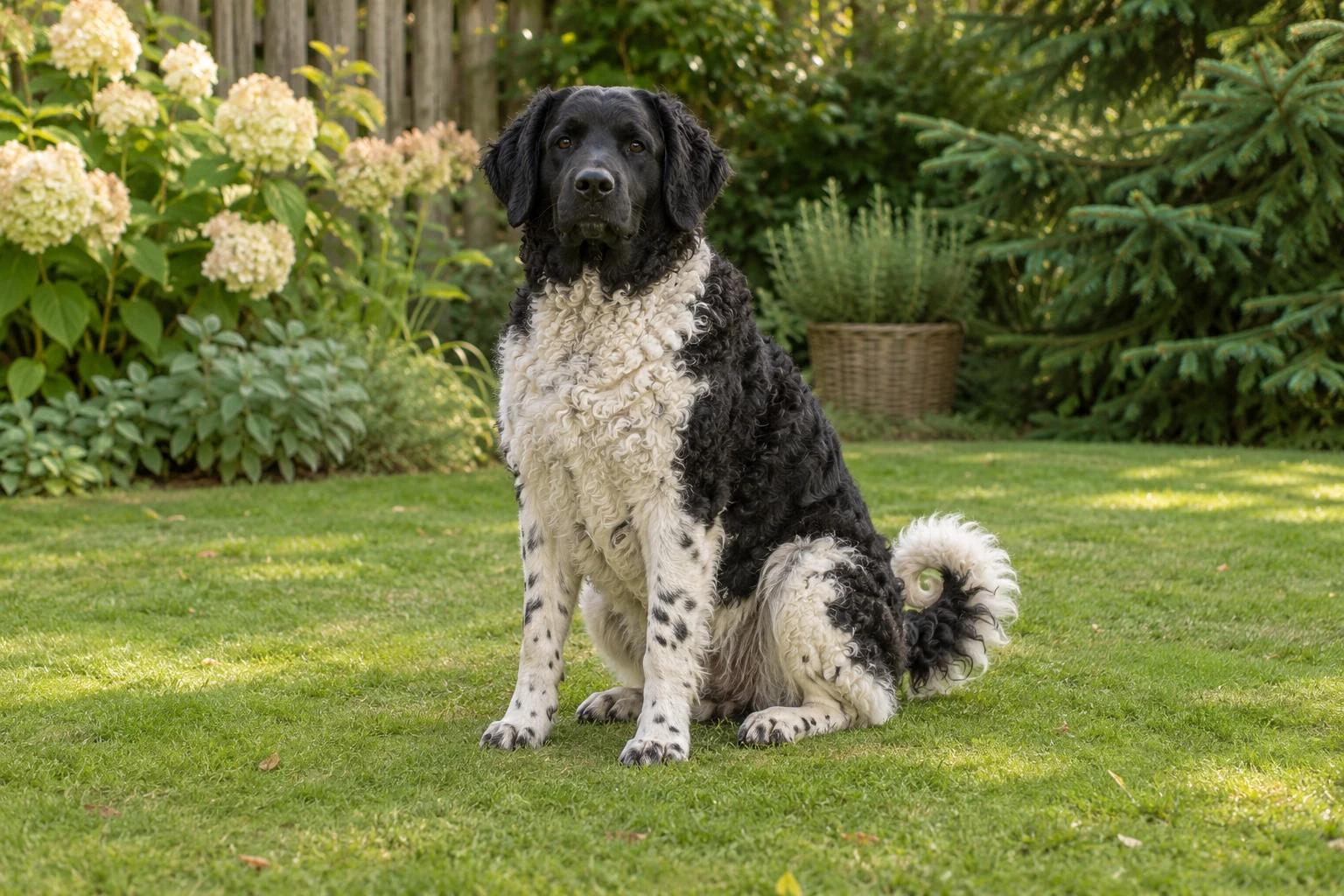
Wetterhoun shedding is part of living with this curly-coated dog. For breed background, see the current Wetterhoun profile. LICG's care guidance addresses seasonal moulting rather than providing a comparative shedding score. That calls for attention to the coat actually present, not an assumption that curls mean hair never comes out. Useful care distinguishes loose undercoat, local tangles, ordinary dirt and the dog's experience of being groomed.
Wetterhoun shedding: concentrate on the work the coat needs
LICG's Wetterhoun care account identifies a coarse comb for working through loose undercoat during moulting, with professional grooming as an alternative. It particularly identifies the hair behind the ears and at the backs of the hind legs as places to check for tangles.
Look at those less obvious areas as part of ordinary care, without turning the check into ear cleaning or trimming. Keep tools outside the ear. Leave difficult coat work to an experienced professional rather than pulling harder until the comb passes.
LICG also makes a distinction between seasonal work and constant combing throughout the year. Apply that as a reason to match the task to the coat, not to promise that every Wetterhoun will follow an identical calendar.
When a wash is needed, make it a separate task
The AKC's home-grooming guidance separates brushing from bathing. Brushing removes loose hair, dirt and debris; bathing involves wetting the coat with warm water, applying a suitable dog shampoo from the neck backward, and rinsing thoroughly. It advises against excessive bathing and identifies towel drying as part of the process.
For a Wetterhoun, do not treat every trace of loose hair as a reason for another shampoo. Identify whether the job is coat maintenance or washing away dirt. When a bath is appropriate, prepare the water and supplies before beginning so you can carry out the task without repeatedly leaving the dog.
Use a product intended for dogs and seek veterinary advice about suitability when needed. Complete the rinse rather than assuming that a coat with no visible foam is necessarily finished. Keep the process ordinary and gentle; a home bath is not an opportunity to experiment with treatments or to force a particular texture. Ask for help if you cannot carry it out comfortably.
Build cooperation with short, gentle grooming
The RSPCA Australia's grooming guide recommends beginning with a part of the body the dog already accepts being groomed. Start with short sessions, reward calm participation and increase the time and areas covered gradually.
Brush gently in the direction of hair growth with an appropriate tool. Do not assume that a pleasant massage mitt can perform every coat-care job: the guide distinguishes enjoyment of a soft tool from its ability to remove loose hair or tangles. Stop if the dog becomes uncomfortable rather than treating completion as more important than the experience.
For a Wetterhoun, practising this cooperation separately from a large seasonal grooming task makes the learning demand clearer. You are teaching the dog what brief handling feels like, not asking it to tolerate an unfamiliar full session on the first attempt. Professional help is appropriate when the work or the handling exceeds what you can manage. Health questions belong with your veterinarian.
Understand what a shedding tool is designed to reach
The AKC's shedding-tool guide distinguishes equipment for short coats from tools intended to reach beneath a longer outer covering. Bristle brushes and grooming mitts can loosen and collect hair on short-coated dogs; other coat types may need a tool that reaches through the outer hair.
This distinction matters when selecting equipment for a Wetterhoun. The label “shedding brush” does not explain how far the teeth reach or which part of a coat they are designed to work through. Have a knowledgeable groomer select and demonstrate the appropriate option rather than copying the tool used on a different breed.
The goal is effective loose-hair removal without treating pressure as a substitute for the right equipment. A tool that skims the surface and one that reaches deeper do different jobs. More hair collected in one pass is not, by itself, proof of better technique. Understand the task before adding a rake or bladed implement to your routine; an unfamiliar device should not be tested by repeated forceful passes over the dog.
Keep Wetterhoun coat care connected to ordinary life
The current breed reference lists a medium-length curly coat. Appearance alone does not quantify loose hair. A dark hair may be more noticeable on a pale floor, while pale hair can stand out on dark clothing. Visibility in the home is therefore not a reliable measure of how much one dog sheds compared with another.
How to groom a Wetterhoun starts with distinguishing the tasks rather than judging the whole coat from the amount of hair on a sofa. The article on Wetterhoun ear covering explains a separate appearance detail. Use the dog quiz to consider regular care alongside the other commitments of ownership.
FAQ
Where does the breed-specific care account suggest checking for tangles?
LICG highlights the hair behind the ears and at the backs of the hind legs. These are coat checks, not ear-cleaning instructions.
Should a Wetterhoun's first grooming lesson be a complete session?
No. Begin with brief, comfortable grooming in an accepted area, reward participation and build gradually. Stop rather than continuing through discomfort.
Can visible hair on furniture tell me exactly how much my Wetterhoun sheds?
No. Hair colour and the surface beneath it affect visibility. Treat the coat's actual needs as the practical question rather than comparing piles or photographs.
Sources behind this article
- LICG Wetterhoun care ↗
- AKC home grooming guide ↗
- RSPCA Australia grooming guidance ↗
- AKC shedding tools guide ↗
Article source checked: November 16, 2026. Source checked 2026-11-16
Keep reading

Affenpinscher Grooming: A Practical Coat-Care Routine
Read article →