Vizsla vs Weimaraner
Compare Vizsla and Weimaraner size, structure, working interests and everyday companionship before choosing an active sporting dog.
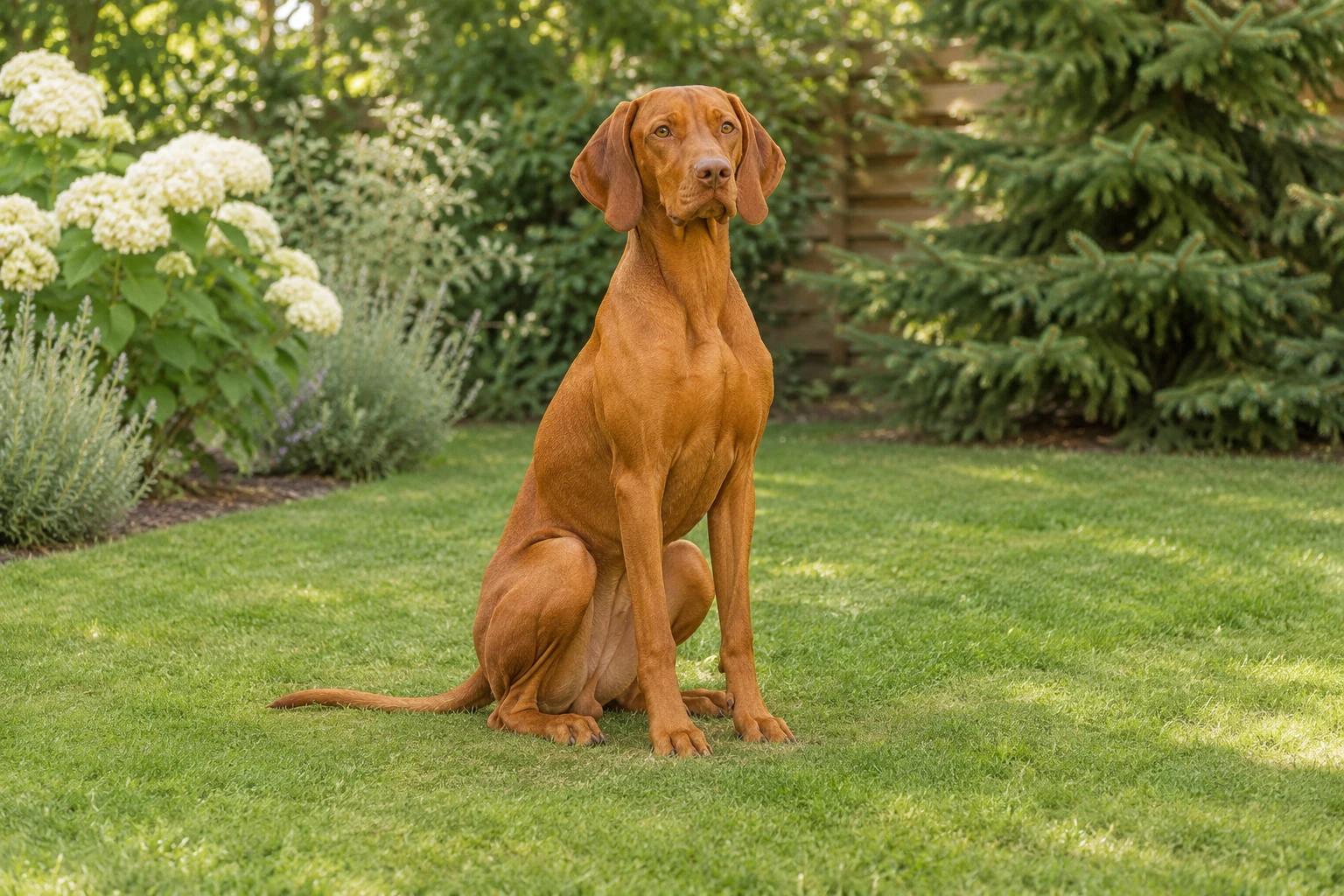
Vizsla vs Weimaraner is a choice between two active sporting breeds, not between a sporting dog and an easygoing substitute. The useful differences include adult size, physical outline and the individual dog's way of engaging with people. Both deserve more consideration than a preference for rust or gray. Start with the Vizsla profile and Weimaraner profile, then separate their reference measurements from the behavior of the dog you actually meet.
Vizsla vs Weimaraner: reading the Vizsla's outline
The AKC Vizsla standard describes proportions that can be missed in a quick photograph. Although the outline may seem square, the measured body is slightly longer than the height at the shoulders. Neither a low, stretched body nor excessively long legs represents the intended balance. The chest reaches the elbows, and the underline rises modestly toward the loin.
Look at the whole dog rather than selecting one striking feature. A moderately long neck leads into the shoulders; the back remains steady in a trot. The feet are compact and rounded, while the movement is light and reaches forward smoothly. These details explain why a Vizsla can look athletic without an exaggerated outline.
The head also has balance: the muzzle is approximately the skull's length or a little shorter, with a moderate transition between them. Ears hang near the cheeks. Observing these relationships is more useful than assuming every slender, rust-colored dog must be this breed. A standard describes an intended form, not proof of ancestry from appearance alone.
The Weimaraner's structure
The AKC Weimaraner standard likewise connects form with sustained field movement. Its chest is deep and developed, with the brisket extending to the elbow. The back is moderate in length and strong. From the side, a moving dog should keep a steady topline rather than looking disjointed as the legs move.
There is a useful front-leg proportion to notice: elbow to ground is approximately the same distance as elbow to the top of the shoulders. The feet are compact, with arched toes and substantial pads. These are structural descriptions, not an instruction to judge an animal's fitness from a single pose.
The head is moderately long, with a muzzle and skull of similar measured length. Long ears are set high and have a slight fold. Gray, blue-gray or light amber eyes contribute to the familiar expression, but eye shade does not predict personality. When comparing two dogs, watch them move naturally as well as stand. A dramatic portrait can emphasize expression while hiding the body proportions that distinguish their outlines.
What the Vizsla's working interests can mean
VCA's Vizsla account describes a dog interested in running, hunting and retrieving, with quick learning that can coexist with distraction. That combination is important: understanding a cue in a quiet room is different from responding when an interesting scent or moving object competes for attention.
A prospective owner should look beyond whether the dog performs a single polished sit. Watch how an ordinary interaction unfolds. Does the dog readily rejoin a familiar person after exploring? What activities hold its attention? The answer may suggest whether a retrieving game, movement with the handler or another shared activity is particularly rewarding for that individual.
VCA also emphasizes a securely fenced area. A hunting interest does not disappear because the dog is affectionate indoors. Access to open space needs to be considered alongside containment, not as a substitute for it. The practical attraction of this breed is participating with an energetic dog; it is not expecting a dog to occupy itself outdoors while the household carries on elsewhere.
The Weimaraner's attention and activities
VCA's Weimaraner account describes an attention-seeking, quick-learning dog with interests in hunting, swimming and retrieving. Those interests offer different ways to participate together. They do not mean every Weimaraner will immediately enjoy every activity, nor that a particular sport is compulsory.
For example, a dog may engage enthusiastically with a retrieve on land but be unfamiliar with water. Treat those as separate experiences rather than assuming that success at one predicts the other. Similarly, a capable learner still needs an owner who makes the desired behavior understandable and worthwhile. Breed aptitude is potential, not a completed education.
VCA links insufficient activity with possible overactivity and destructive behavior. This is a reason to take the everyday commitment seriously, not a promise that more exercise fixes every problem. A household attracted primarily by appearance should consider whether it actually enjoys doing things with a dog. The Weimaraner's need for participation matters long after the novelty of a striking gray companion has worn off.
Adult measurements and everyday contact
The current Vizsla reference lists females at 44–55 pounds and males at 55–60 pounds. Heights are 21–23 inches for females and 22–24 inches for males. The Weimaraner reference lists females at 55–77 pounds and males at 66–88 pounds, with heights of 23–25 and 25–27 inches respectively.
Those sex-qualified ranges make the Weimaraner's generally greater adult size clear without pretending that all individuals differ by the same amount. A female Weimaraner can overlap a male Vizsla in weight. For lifting assistance or moving through a narrow space, the particular dog's measurements matter more than a breed-average calculation.
Both profiles describe substantial interest in family company and purposeful learning. Neither is the obvious choice for someone seeking minimal involvement. To decide between a Vizsla or Weimaraner, consider the dog's actual manner of joining household activities, not only how enthusiastically it greets you. Our dog quiz helps frame the broader ownership commitment. For a separate comparison, read Vizsla and Wirehaired Vizsla.
FAQ
Is Weimaraner vs Vizsla mainly a size decision?
Size is a meaningful difference, but it is not the whole decision. Both profiles describe active dogs that want shared activity and learning. Adult measurements help you understand the physical commitment; meeting the individual helps you understand the relationship.
What is the difference between Vizsla and Weimaraner weights?
Current reference weights are 44–55 pounds for female Vizslas and 55–60 for males. Weimaraners are listed at 55–77 pounds for females and 66–88 for males. These are reference ranges, not predicted final weights for puppies.
Is either breed automatically a quieter companion?
Do not select one on that assumption. Ask about the individual dog's communication in its actual home, including departures, visitors and ordinary activity. A breed label cannot tell you exactly what your household will hear.
Sources behind this article
Article source checked: November 16, 2026. Source checked 2026-11-16
Keep reading

Affenpinscher vs Brussels Griffon: Everyday Differences
Read article →