Vizsla exercise needs
Explore Vizsla exercise needs through shared activity, agility, scent work and retrieving, without treating daily activity as a running target.
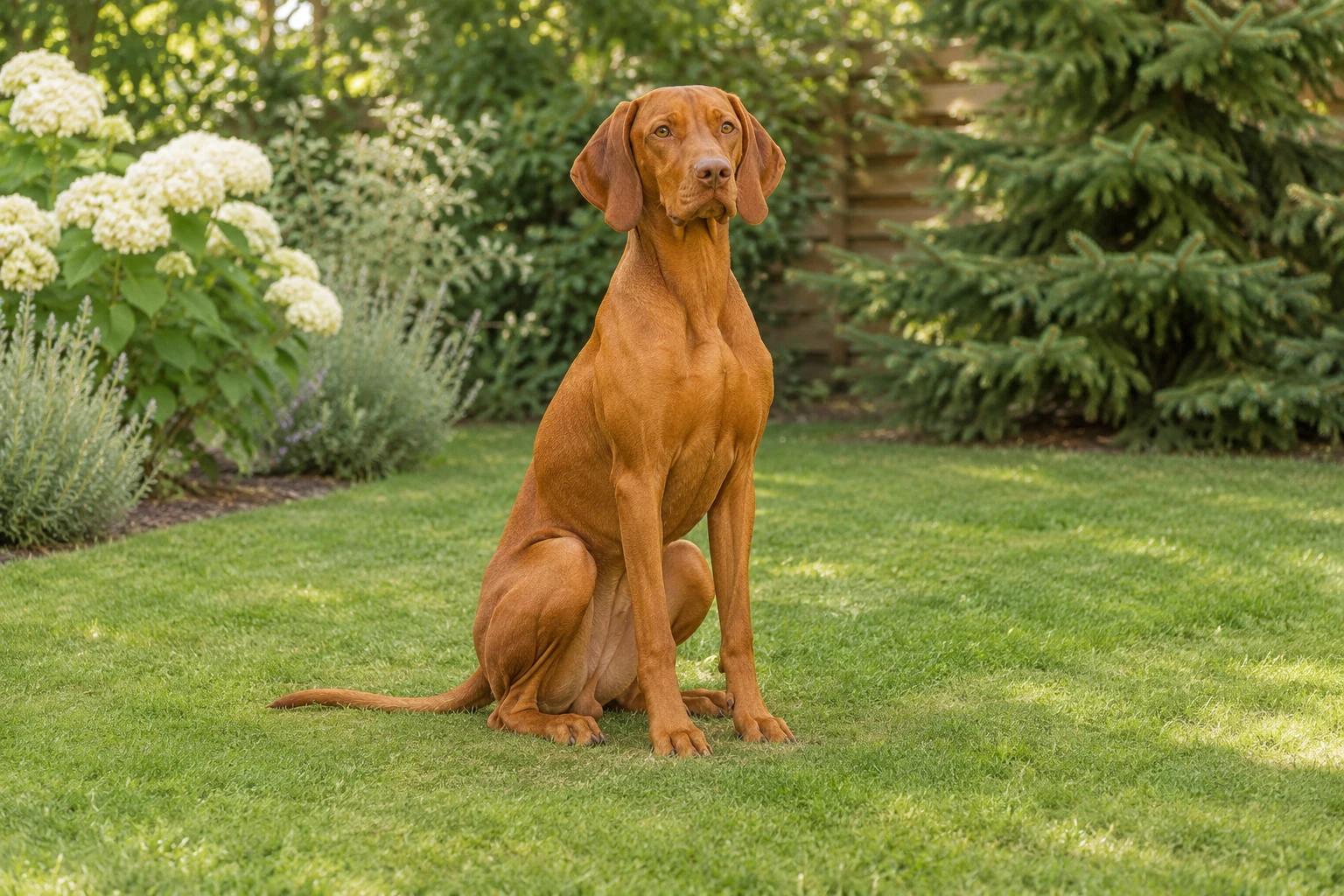
Vizsla exercise needs are substantial, but a useful day is not simply a competition to cover the greatest distance. The Vizsla profile describes high activity, strong mental engagement and a dog that likes being close to its people. Those characteristics belong together. Movement, purposeful learning and shared time should all have a place, rather than expecting one exhausting outing to stand in for the rest.
Vizsla exercise needs: participation rather than a yard alone
The Vizsla Club of America's ownership guide stresses that owners must participate in the dog's activity. A garden does not automatically exercise a dog simply because space exists. The club describes Vizslas as strong, enthusiastic and interested in exploring, with a need for ongoing occupation rather than a short period of lessons followed by years without new challenges.
This is a useful distinction when imagining life with the breed. Being outdoors together is different from opening a door and hoping the dog supplies its own suitable entertainment. Likewise, a physically substantial dog can pull hard even if it looks relatively light beside some other sporting breeds. Enthusiasm needs a constructive outlet, not an assumption that the dog will arrange one appropriately.
The club emphasizes positive, consistent handling of a sensitive dog. An activity should remain something the dog can participate in with you, not a confrontation over how much it ought to do. The attraction is an ongoing partnership. If active participation feels like an unwelcome extra, that matters more than the size of the available garden.
Agility combines movement with direction
The Vizsla Club of America's agility overview describes a handler directing a dog around a planned obstacle course. Tunnels, jumps, weaving and contact equipment can be involved, while the handler communicates through voice, movement and body signals. The important idea is teamwork rather than simply sending a dog over obstacles until it is tired.
For someone exploring this with a Vizsla, watch how the person and dog negotiate the route together. The dog must respond to information while moving; the person must give information that is useful at the right moment. That makes the task different from unrestricted running across a field.
Do not interpret a description of competition equipment as a ready-made home exercise prescription. A beginner needs appropriate instruction, and an improvised high obstacle is not necessary to find out whether you enjoy working together. Ask a club about a suitable introductory course rather than trying to reproduce a complete competition run. The sport's appeal lies in combining communication and movement, not in choosing the tallest jump your dog might clear.
Scent work changes who leads
The club's scent-work introduction describes a different kind of partnership. In a search, the handler does not know where the target odor is hidden and must follow the dog's information. The dog finds the odor and communicates the discovery; the person recognizes that information and identifies the find.
This offers a useful contrast to activities in which the owner continually directs every movement. Instead of deciding which turn must be correct, the handler has to observe. A Vizsla owner who enjoys purposeful interaction may find that aspect particularly interesting: the dog contributes information the person cannot obtain in the same way.
Formal scent work uses specified odors and defined search areas. Learn the setup through an appropriate instructor rather than scattering concentrated scent materials around the house. The principle to take from the sport is a structured search with a meaningful outcome. It can make mental participation visible without measuring success by distance traveled, speed or the height of an obstacle. It is still teamwork, even though the dog supplies the crucial information.
Make retrieving a learned game
AKC's fetch lesson separates retrieving into smaller skills instead of assuming that throwing a toy teaches the entire game. First reward interest in a suitable toy, then mouth contact and a brief hold. Increase holding time gradually, add a cue once the behavior is established, and work toward taking the object from your hand and picking it up nearby.
Only then does distance increase in small steps. A placed object can be easier to use than an exciting throw at the beginning. The game should not become a contest in which the person repeatedly launches something farther away while the dog rehearses a different activity.
For a Vizsla, this provides an example of making movement purposeful. Going toward an object, picking it up and completing the return are distinct parts of the task. If one part is missing, work on that part rather than increasing speed. The goal is a shared game the dog understands, not a long series of throws with no clearer communication at the end.
How much exercise does a Vizsla need in an ordinary week?
The stored breed reference places Vizsla activity level at the high end. Treat that tendency as a warning about the scale of the ownership commitment, not a requirement for continuous hard exertion or a prescription for a puppy. Age, condition and individual circumstances matter; ask your veterinarian about appropriate physical demands for your dog.
A Vizsla daily walk is one part of the picture. The breed profile also describes strong playfulness and responsiveness to learning. A day that offers movement but no meaningful interaction can therefore miss an important part of what living with this dog involves. Conversely, indoor company does not remove the substantial outdoor commitment.
When comparing breeds, be honest about whether you enjoy this combination rather than whether you could tolerate it temporarily. The dog quiz can help frame that decision. For a different aspect of breed identity, see Vizsla and Wirehaired Vizsla.
FAQ
Does a Vizsla need an active owner?
Yes, the breed profile describes a high-activity companion with substantial mental engagement. Choose the breed because shared activity suits your ordinary life, not because you hope owning one will automatically create a completely different lifestyle.
Is the daily activity reference a running target?
No. A broad activity reference is not a mileage target or a requirement for continuous strenuous exercise. The appropriate physical workload depends on the individual dog, and veterinary guidance is important when deciding what is suitable.
Can companionship replace exercise for a Vizsla?
No. The profile describes both strong interest in family company and high activity. They are separate needs. Being present with the dog matters, but it does not turn an otherwise inactive day into an adequate activity plan.
Sources behind this article
- Vizsla Club of America ownership ↗
- Vizsla Club of America agility ↗
- Vizsla Club of America scent work ↗
- AKC teaching fetch ↗
Article source checked: November 16, 2026. Source checked 2026-11-16
Keep reading

Afghan Hound Exercise Needs: Build a Workable Active Day
Read article →