Tornjak Temperament: Watchfulness and Everyday Life
Understand Tornjak temperament through watchfulness, informed ownership, individual compatibility and practical preparation for everyday care.
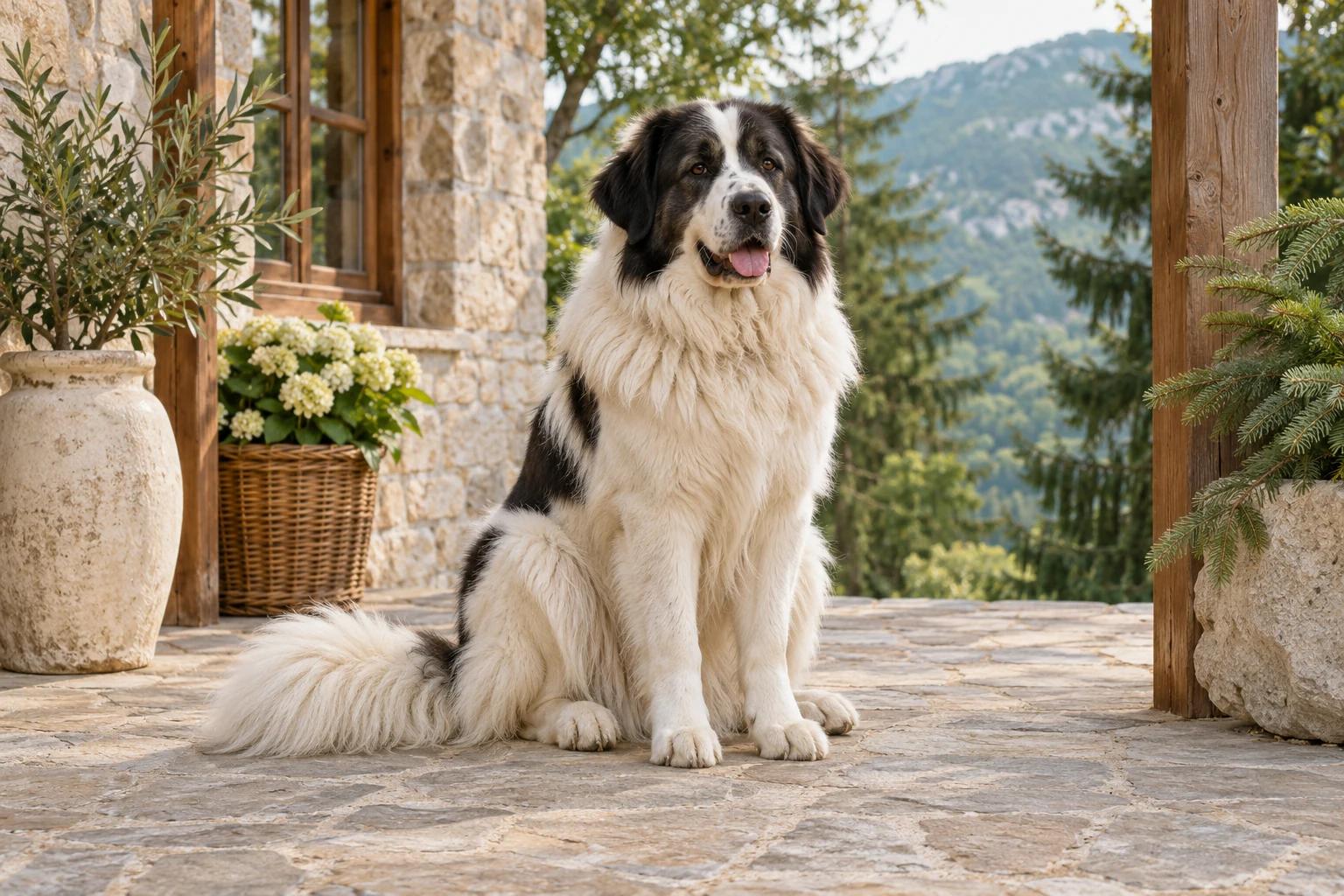
Tornjak temperament needs to be considered alongside the responsibility of living with a substantial dog. The current Tornjak profile identifies intelligence, friendliness and courage, with watchfulness strongly represented. Those words describe tendencies, not a complete prediction of how an individual will behave at a doorway, beside another dog or during an unfamiliar experience. The useful ownership question is how you will support the actual animal, rather than whether its impressive appearance matches an appealing label.
Tornjak temperament requires informed ownership
The Swedish Kennel Club advises that Tornjaks need experienced, responsible owners and early socialization and education. It stresses meaningful daily activity rather than choosing the breed solely as a companion with no purpose in its day. Swedish Kennel Club: Tornjak ownership guidance.
That is an important distinction for someone attracted to a calm-looking photograph. A dog can look settled in a familiar setting while still requiring knowledgeable handling and an appropriate life. Quiet appearance at one moment is not evidence that the owner's role is simple.
The club also recommends learning about the parents' temperaments, including meeting them in their everyday surroundings. That offers a more useful perspective than seeing only a staged introduction or an impressive description of their character.
Ask what ordinary life looks like, not whether a dog can be made to demonstrate a dramatic reaction. You are trying to understand the adults and the kind of home that suits their offspring. A responsible assessment should make the commitment clearer, rather than treating a powerful presence as entertainment or as proof that the dog will manage every situation correctly on its own.
Do not let a boundary become a rehearsal space
VCA explains that territorial responses can occur at windows, doors, fences and even places a dog occupies temporarily. Repeated unsupervised access to a triggering situation can allow those responses to intensify. It also warns that punishment can increase fear or anxiety while suppressing visible warning behavior. VCA: territorial behavior in dogs.
For a watchful Tornjak, this is a reason to pay attention to what happens around the edge of the property. A dog repeatedly reacting at a fence is not necessarily receiving useful exercise or becoming more comfortable with passersby. The situation may need to change rather than simply continuing every day.
This is general behavioral guidance, not a diagnosis that every Tornjak has territorial aggression. If a particular dog is lunging, threatening or difficult to interrupt, obtain professional help and prevent unsafe encounters. Do not use a visitor as a test of whether the dog has improved.
The practical aim is safe management and appropriate teaching, not proving authority through confrontation. A quieter display after punishment does not by itself establish that the dog's feelings about the situation have improved.
Prepare for care without making a character judgment
Dogs Trust explains that comfortable muzzle training can benefit any dog, including one needing urgent care when frightened or hurt. A suitable basket-style muzzle should allow panting, drinking and taking food; wearing it does not change the dog's feelings about a difficult situation. Dogs Trust: comfortable muzzle training.
For a large Tornjak, this can be a practical care skill rather than a statement that the dog is bad. Introduce equipment positively before an urgent situation makes preparation difficult. Early practice allows the dog to choose to investigate and put its nose in, with rewards, rather than having the muzzle pushed onto its face.
Do not rush to fasten straps before the dog is comfortable with the earlier stages. Nor should equipment become permission to expose the animal to situations that already worry it.
Dogs Trust advises professional support first where face handling is difficult or food guarding makes the exercise unsuitable. That qualification matters: a short description cannot replace an individual plan. The purpose is comfortable, safer care, not forcing a worried dog through a demonstration to prove that it accepts handling.
Other-dog compatibility is a separate question
The current Tornjak profile specifically advises particular care when considering a home with other dogs. A friendly impression toward a person does not answer the other-dog question. Nor does a quiet first sighting tell you how the same animals will behave when sharing familiar space or everyday resources.
For Tornjak personality, keep the different relationships separate. Ask about the dog's actual social history: which dogs it has lived with, what those arrangements involved and whether any difficulties were observed. A claim that it is simply friendly is less informative than experience with the kind of household you are considering.
The same distinction applies to interactions with children. The current profile makes compatibility an individual matter and calls for supervision and a quiet retreat. A breed's courage or intelligence is not a guarantee of tolerance in every interaction. Children should not be expected to manage a substantial dog's reactions or to resolve a difficult encounter.
Physical scale changes the practical responsibility
The current adult references are 62–88 pounds for females and 77–110 pounds for males. Those dimensions do not determine temperament, but they matter when considering the consequences of behavior. The person responsible for a Tornjak needs to be able to manage ordinary movement and encounters safely, not merely enjoy the dog when it is resting.
Choosing a female does not automatically remove that responsibility. The female and male weight ranges overlap, and neither sex is a substitute for knowing the individual. A smaller adult may still have strong preferences about a situation; a larger adult is not automatically more difficult because of the number on the scale.
Among Tornjak characteristics, the double coat and substantial shedding also belong in the ownership picture. A compatible relationship includes the care the dog needs, not just shared outings. Consider whether you can sustain the practical work as well as the moments that make the breed appealing.
The current profile places responsiveness to training in the middle of its scale. Treat Tornjak behavior as something to understand and teach, not as an automatic consequence of intelligence. A dog can be bright without knowing a household's expectations. The dog match quiz can help examine the overall fit. For a different subject, read the Tornjak recovery history.
FAQ
Does friendliness guarantee compatibility with another dog?
No. The current Tornjak profile treats other-dog compatibility as a particular consideration. Learn about the individual dog's actual experience rather than using its behavior toward a person to predict every animal relationship.
Is a female necessarily a small or simple companion?
No. The current female reference is 62–88 pounds, and sex alone does not determine temperament. The actual dog's behavior and the owner's ability to meet its needs remain central.
Does intelligence mean the dog already understands household expectations?
No. The current profile distinguishes intelligence from a middle-range responsiveness-to-training reference. A breed description is not evidence that a particular dog has learned the skills needed in your home.
Sources behind this article
- Swedish Kennel Club: Tornjak ownership guidance ↗
- VCA: territorial behavior in dogs ↗
- Dogs Trust: comfortable muzzle training ↗
Article source checked: November 16, 2026. Source checked 2026-11-16
Keep reading
Tornjak Size: Adult Weight, Height and Build
Read article →