Tonkinese Cat Shedding: Follow the Coat Through Seasonal Change
Explore Tonkinese cat shedding, rubber-brush care and seasonal observations while keeping source frequency references and individual needs distinct.
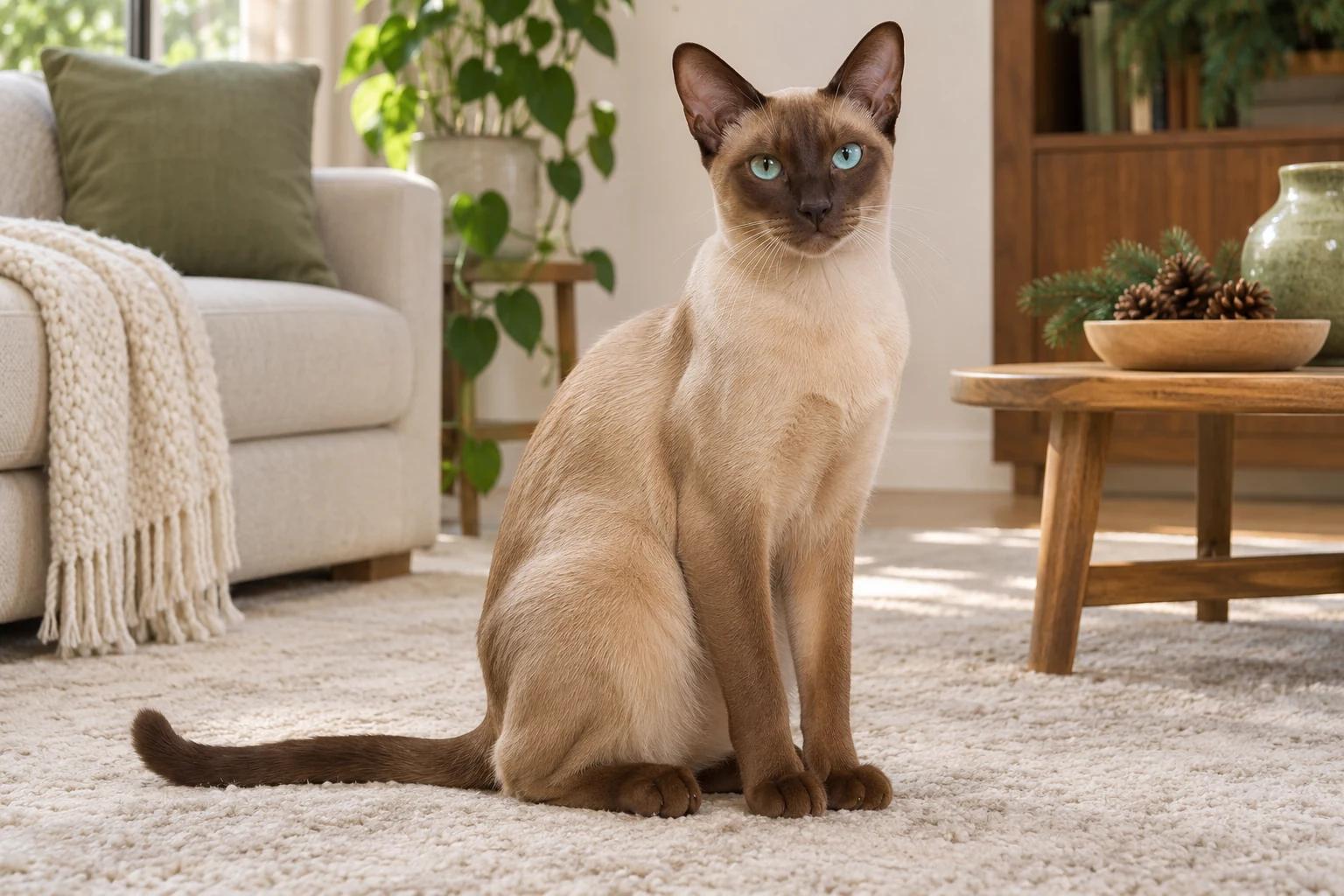
Tonkinese cat shedding is described by CFA in seasonal terms, but that does not supply a fixed amount of hair for every home. A short, silky coat can still leave loose hair, and one brushing session cannot establish what is ordinary for the individual. The useful starting point is the cat's existing routine and any change from it.
This guide explores tonkinese cat coat care without promising a hair-free household or a cosmetic finish. It focuses on the rubber-brush routine, seasonal observations and questions that need professional advice rather than stronger grooming.
Tonkinese cat shedding: begin with the familiar pattern
Ask the current caregiver what they usually notice through the year. CFA's account discusses seasonal changes; it does not quantify a universal rate or prove that every hair appearing outside a particular season is abnormal.
The Tonkinese profile uses gentle weekly rubber-brush attention as its care starting point. CFA describes rubber-brush attention less frequently than weekly, with several sessions per month. Keep the descriptions in their stated scope and learn what actually maintains this animal comfortably instead of blending them into a rigid prescription.
A dated note can help distinguish an ordinary change from something unfamiliar. Record what you saw and the cat's response, without selecting a cause from a breed label. Seek veterinary advice about unexplained hair loss, irritation or discomfort.
Understand the rubber brush before using it
VCA's general coat guidance emphasizes tools suited to the individual. Ask for a demonstration of the familiar rubber brush: how it is used, what a gentle pass looks like and when the task should pause. A tool's name does not establish that every design or pressure is appropriate.
Check its condition before care. Set rough, damaged or uncertain equipment aside rather than letting the cat test whether it is still usable. A compact kit that another responsible caregiver understands is more practical than several products with competing promises.
Collecting more hair is not automatically a better result. The goal is appropriate maintenance, not a target brushful. Do not increase pressure to make a short coat look particularly shiny for a photograph.
Let the cat's response shape the session
Prepare a familiar setting with supplies available and room for a break. A social Tonkinese may enjoy company while still preferring a pause from the tool. Nearby affection is not blanket permission for repeated grooming.
If the animal leaves, do not immediately have somebody else restart to finish a calendar target. Record what was comfortably completed and which concern needs advice. A short, understandable care arrangement is more useful than a session prolonged through resistance.
Adults should guide children's participation. Gathering equipment or reporting an observation can be helpful; holding the animal still or deciding whether an irritated area is normal should not be a child's responsibility.
Separate loose hair from a skin concern
Hair on bedding or clothing is one observation. Patchiness, a changed texture, discomfort or altered self-grooming introduces other questions. Contact your veterinarian rather than assuming more brushing will answer them.
Do not repeatedly reproduce a difficult response to strengthen a description. Tell the veterinary team what happened in ordinary care and follow its advice about what information is useful. A breed article cannot diagnose from a picture or a collected sample of hair.
A known seasonal tendency also should not make an owner ignore a change at the expected time. Timing can be useful context while the individual still needs assessment. Avoid both automatic reassurance and an unsupported diagnosis.
Keep household cleaning a separate job
A washable cover and ordinary cleaning can make loose hair easier for people to manage. Those tasks do not replace the cat's coat check or establish whether its condition has changed. Keep cleaning products distinct from animal-care supplies.
Avoid applying a household spray or unfamiliar grooming product because it claims to reduce visible shedding. Obtain appropriate advice about the actual product and animal when uncertain. Another owner's recommendation is not an individual care instruction.
In a shared routine, distinguish brushed comfortably from sofa cleaned. Otherwise another caregiver may assume the animal has been checked when only the room has been tidied. Clear wording prevents uncertainty from becoming a completed-care entry.
Bathing and diet need their own reasons
VCA explains that bathing needs vary. This guide sets no bathing interval and gives no treatment or household-mixture recipe. Ask for advice about a specific contamination, skin concern or necessary task rather than washing to achieve a shedding target.
If professional guidance calls for bathing, learn the products and appropriate handling for the actual cat. Do not continue through an uncomfortable response to make the coat match an online image. Necessary care should have suitable help available.
Loose hair alone also cannot select a supplement or a new feeding program. Explain the current diet and observations to the veterinary team. A short-coat description is not a nutritional prescription.
Include enjoyable contact outside care
The profile describes an involved companion, and FelineVMA's indoor-cat guidance places positive interaction alongside play, resources and rest. Let the cat approach for company without every encounter predicting a brush. Maintain other opportunities it chooses comfortably.
The existing Tonkinese string-toy article addresses a different routine. Grooming equipment should be stored appropriately too, but this coat guide does not substitute for toy inspection and supervision.
Use the cat quiz to consider the wider ownership commitment. Then ask about the actual animal's coat history and support when care becomes difficult. A useful plan accepts some loose hair while keeping changes visible and professional questions timely. It does not need to promise that seasonal shedding can be eliminated.
Frequently asked questions
Does CFA describe a precise shedding quantity?
No. Its seasonal description is background, not a measured allowance for every cat or household. Learn what is ordinary for the individual.
Do the site and CFA give identical grooming frequency wording?
No. The site uses weekly attention; CFA describes rubber-brush attention less frequently than weekly, with several sessions per month. Use appropriate advice for the actual coat rather than treating either as a universal prescription.
Should more pressure be used when hair increases?
No hair-removal target is prescribed. Review suitable technique and seek veterinary advice about an unexplained change or discomfort.
Is a supplement recommended for loose hair?
No. This guide gives no nutritional treatment. Discuss the current diet and concerns with your veterinary team.
Sources behind this article
Article source checked: November 20, 2026. Source checked 2026-11-20
Keep reading

Abyssinian Cat Grooming: Care for the Short Ticked Coat
Read article →