Tibetan Mastiff vs Newfoundland: Size and Daily Life
Compare Tibetan Mastiff and Newfoundland adult size, structure, social tendencies and daily care, with clear male and female reference figures.
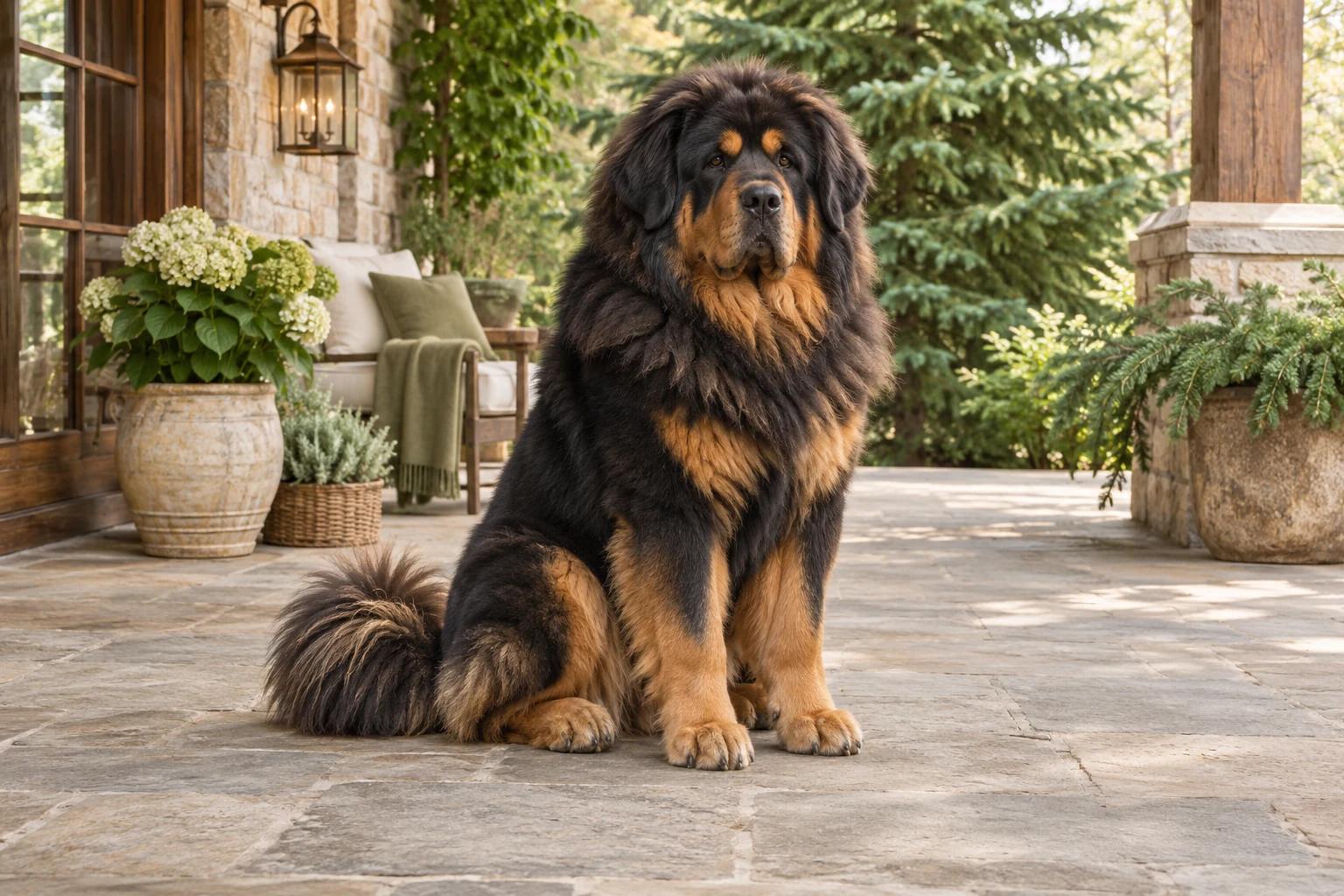
Tibetan Mastiff vs Newfoundland is not simply a contest between two impressive silhouettes. The current Tibetan Mastiff profile and Newfoundland profile describe different adult weight ranges, approaches to unfamiliar people and everyday care considerations. Both are substantial companions, but choosing between them requires more than deciding which photograph looks more appealing. Begin with the adult dog and the relationship you actually want.
Tibetan Mastiff vs Newfoundland: reading the Tibetan frame
The Tibetan standard describes a substantial, athletic dog with a body slightly longer than tall. Bone, muscle and body should contribute to that substance together. The chest extends a little below the elbows, the back is firm and level, and the abdomen has a definite but not exaggerated tuck. AKC: Tibetan Mastiff standard.
The head is broad, with a well-filled, square-looking muzzle and deeply set almond-shaped eyes. The ears hang close to the head. The tail curls over the back when the dog is alert or moving, although it may hang down during relaxation.
These details help distinguish body structure from a dramatic portrait. Look for the relationship between chest, legs and back rather than deciding that the dog with the largest-looking head must be the largest overall.
The standard values balanced, powerful movement over speed. A Tibetan Mastiff should not be imagined as an immobile sculpture. Watching the adult walk provides information a front-facing photograph cannot: the way the body is carried, the limbs coordinate and the topline remains steady through the stride.
The Newfoundland has its own substantial outline
The Newfoundland standard describes a deep-bodied, heavily boned and muscular dog, slightly longer than tall. It specifically places balance, construction and movement above size alone. A bigger outline is not automatically a better example of the breed. AKC: Newfoundland standard.
Its chest reaches at least to the elbows, and the back is broad and muscular. The head is massive, with a broad skull, a soft expression and relatively small ears lying close to the head. The face is described as free from wrinkles.
The tail hangs when relaxed and extends outward in movement or excitement without curling over the back. This is a useful visual distinction when comparing whole-body views rather than headshots alone.
The feet are webbed, and the standard describes smooth, rhythmic movement with reach and drive. Those physical details belong to a multipurpose working dog, not just a large companion with a gentle-looking face. They do not establish that an untrained individual can perform a task safely. Observe the actual dog's coordination and condition rather than turning a breed description into a certificate of working ability.
Newfoundland activities can include learning as well as movement
VCA describes the Newfoundland as a sensitive learner that responds well to reward-based teaching, including food rewards. It also emphasizes that obedience provides mental activity, not merely physical control. VCA: Newfoundland breed guide.
For an owner drawn to an easygoing appearance, that is an important correction to the idea that a large calm dog needs little education. Teaching everyday cooperation is part of sharing life with a powerful animal, not an optional competitive hobby.
VCA lists swimming among activities the breed often enjoys, while also noting difficulty with warm weather. An interest associated with the breed is not a reason to assume every Newfoundland will enjoy every stretch of water or be ready for strenuous activity. Ask about the particular dog's experience, fitness and comfort, and obtain veterinary guidance when needed.
The same source describes a calm housedog that still needs daily movement. Calmness indoors and an active routine are compatible. A relaxed adult on a home visit should not be interpreted as evidence that outings, teaching and shared activities can be omitted once it moves in with you.
Adult size: overlapping ranges, different reference points
In a Newfoundland vs Tibetan Mastiff weight comparison, the current female Tibetan range is 70–120 pounds and the male range is 90–150 pounds. Newfoundland females are listed at 100–120 pounds and males at 130–150 pounds. The Newfoundland ranges therefore sit within the upper portion of the Tibetan ranges rather than exceeding their maximums.
This is why it is misleading to say one breed is always heavier. A particular Tibetan Mastiff can outweigh a particular Newfoundland, while another can be considerably lighter. Compare males with males and females with females before making a general statement, then use actual measurements for a pair of adult dogs.
Height needs even more careful wording. The Tibetan reference gives minimums: 26 inches for males and 24 inches for females. The Newfoundland reference gives averages: 28 inches for males and 26 inches for females. A minimum and an average are not equivalent kinds of measurement. Subtracting them does not establish a fixed two-inch difference between all adults of the two breeds.
Nor should the upper end of a weight range become a goal for a puppy. These figures describe adult reference populations. They are not instructions to encourage faster growth or make an individual as heavy as possible.
Visitors, drool and the kind of company you want
A major difference between Tibetan Mastiff and Newfoundland is their current social description. The Tibetan profile presents marked reserve toward new people, while the Newfoundland profile describes a much more sociable tendency. If you frequently welcome unfamiliar visitors, that distinction deserves more thought than coat color or a preferred head shape.
It is still a tendency, not a prediction about every meeting. A Newfoundland need not welcome every approach, and a Tibetan Mastiff should not be required to perform enthusiasm for an unfamiliar person. Ask about the adult's actual experience with ordinary visitors and people met outside the home.
The current drooling reference is higher for the Newfoundland than for the Tibetan Mastiff. Neither is presented as a zero-drool choice. Someone deciding on a Tibetan Mastiff or Newfoundland should consider that everyday reality separately from adult weight. Two dogs can weigh the same yet make quite different demands on the person sharing the sofa and car with them.
Both profiles identify double coats. Learn the individual coat routine rather than judging maintenance from a photograph. The Tibetan Mastiff coat article explores a separate appearance question, while the dog quiz can help you weigh the broader commitment.
Frequently asked questions
Is a Newfoundland always heavier than a Tibetan Mastiff?
No. Their current adult weight ranges overlap substantially. Newfoundland females are listed at 100–120 pounds and males at 130–150 pounds, within the upper portions of the Tibetan ranges.
Do the height figures show a fixed difference?
No. The Tibetan figures are minimums, while the Newfoundland figures are averages. Those labels must stay attached to the numbers; they do not describe two fixed adult heights.
Which profile describes more openness to strangers?
The Newfoundland profile describes the more sociable tendency. The Tibetan Mastiff profile emphasizes reserve. Neither description removes the need to understand an individual dog's experience and comfort around new people.
Sources behind this article
Article source checked: November 16, 2026. Source checked 2026-11-16
Keep reading

Affenpinscher vs Brussels Griffon: Everyday Differences
Read article →