Tibetan Mastiff Temperament: Reserve and Independence
Explore Tibetan Mastiff temperament through independence, reserve, social education and the difference between calm behavior and genuine comfort.
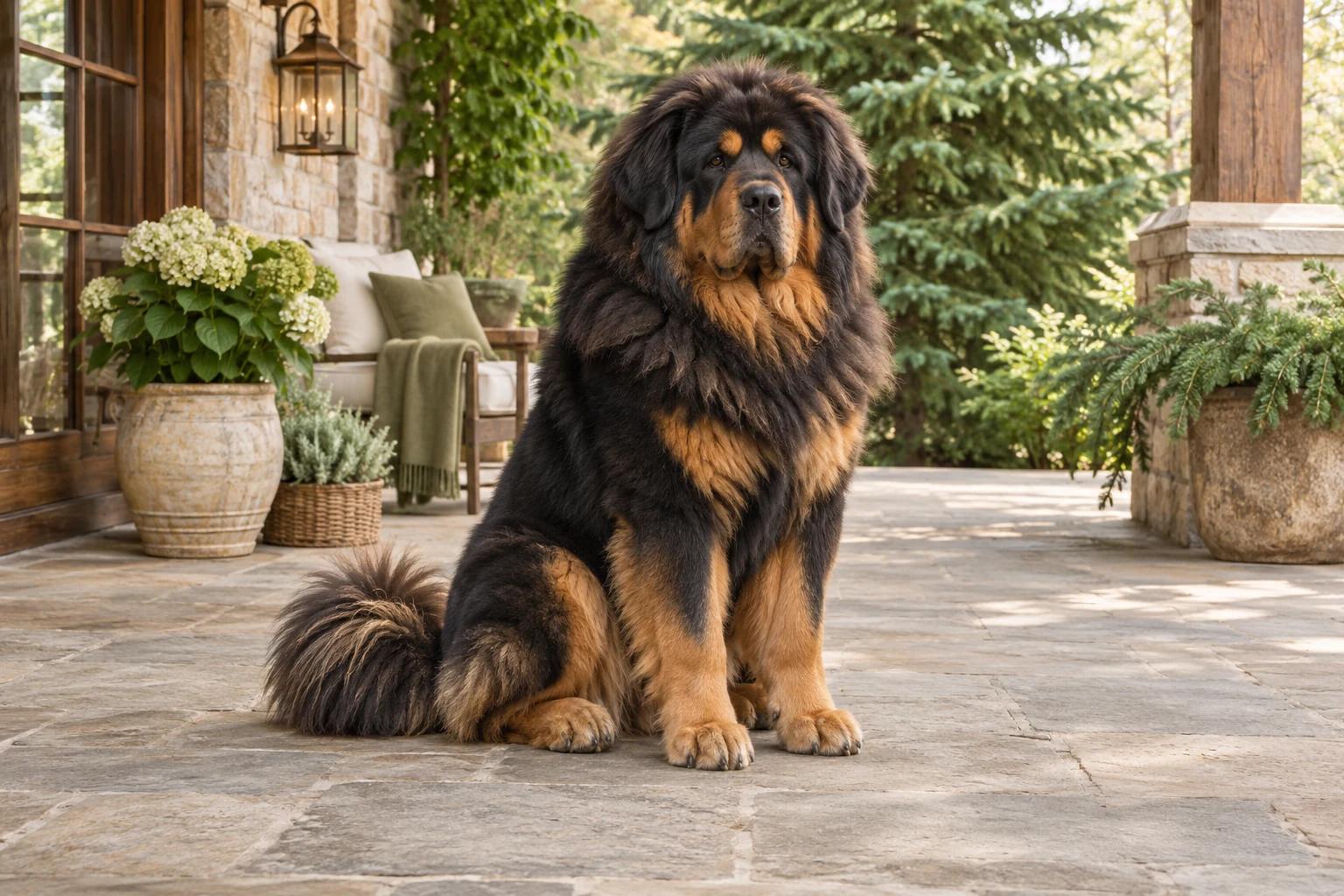
Tibetan Mastiff temperament is best approached as a set of tendencies, not a promise attached to an impressive appearance. The current Tibetan Mastiff profile describes reserve, independence and intelligence, with strong watchfulness and limited openness to unfamiliar people. Those qualities can matter during an ordinary visitor's arrival just as much as during a walk. Understanding them means looking beyond whether the dog seems quiet in one photograph or meeting.
Tibetan Mastiff temperament includes independent judgment
The Canadian Kennel Club describes a powerful dog inclined to think for itself and cautions that ownership can challenge even experienced people. It also links insufficient occupation with destructive behavior. Canadian Kennel Club: Tibetan Mastiff.
Independence is therefore not a decorative personality label. It can mean that a dog has its own response to a situation rather than automatically adopting the person's preference. An owner looking for effortless agreement in every setting should take that distinction seriously.
The club's emphasis on attention and occupation also argues against treating a large property as the complete answer to the dog's needs. Space and an interesting shared life are separate things. A dog can have room to move while still lacking worthwhile engagement.
For Tibetan Mastiff personality, the important question is not whether independence sounds admirable. It is whether you enjoy teaching and living with an individual whose decisions may differ from yours. Experience with another large breed does not automatically answer that question. Size familiarizes you with one practical demand, but it does not make all large dogs behave alike.
Social education concerns places as well as people
The American parent club discusses how a Tibetan Mastiff may become possessive of familiar places, including regularly used walking routes. It recommends varied outings rather than allowing the dog's world to contract to one repeatedly patrolled setting. American Tibetan Mastiff Association: living with the breed.
This gives social education a more useful purpose than collecting greetings. The dog needs experience of ordinary environments in which other people and animals also belong. Changing a route is not a guaranteed remedy for a behavior problem, but it highlights why familiarity with one street is not the same as comfort everywhere.
The club also advises supporting a youngster confronted with something unfamiliar rather than making it approach immediately. An unexpected object can require time to investigate. The goal is experience the dog can manage, not proving courage by bringing it closer than it wants to go.
Its discussion includes the possibility of teaching an older, previously untrained dog. Do not assume that useful education ends with puppyhood. Ask what an adult already knows and build from the individual, rather than deciding that its history makes further learning pointless.
A calm indoor impression has limits
VCA describes a Tibetan Mastiff that can be calm inside yet become frustrated when confined. It also notes that unfamiliar nighttime noises may prompt barking. VCA: Tibetan Mastiff breed guide.
These observations are useful without turning them into a universal schedule or a claim that every dog behaves identically. A relaxed dog in a familiar room has shown you one situation. It has not demonstrated comfort with prolonged restriction, an unfamiliar enclosure or every sound outside the house.
For Tibetan Mastiff behavior, distinguish what you actually saw from what you inferred. If an adult settled during a visit, ask what happens when access changes or an unusual noise occurs. The caregiver's account of those specific circumstances is more informative than the broad description “calm.”
VCA also emphasizes early basic education and reward-based methods. Size makes cooperation important, but it does not justify rough treatment. A person who can physically manage a young puppy still needs to teach the skills that will matter when the same dog is a substantial adult. Physical leverage is not a substitute for understanding a cue.
Fear requires a different response from enforced obedience
VCA distinguishes gradual exposure from simply keeping a dog near something frightening. Desensitization begins at an intensity the animal can manage, while counterconditioning pairs the trigger with something pleasant. VCA: desensitization and counterconditioning.
For a Tibetan Mastiff worried by an encounter, moving closer while repeatedly asking for a sit is not automatically progress. Distance, movement and sound can each change how difficult the situation feels. A qualified professional can help identify which part needs adjustment.
The guidance warns that continuing while the dog is uncomfortable can increase later reactions. Difficulty taking a normally welcome reward or settling can indicate that the exercise is too demanding. Stop rather than using food to coax the dog into an encounter it cannot handle.
If reactions intensify or progress stalls, consult the veterinarian and an appropriately qualified behavior professional. This is especially important when behavior could threaten another person or animal. The objective is a more comfortable emotional response, not merely a dog that remains outwardly still. A quiet posture and genuine ease should not be assumed to mean the same thing.
Separate the breed's characteristics before choosing
The current profile pairs strong watchfulness with a middle-range training reference. These are distinct Tibetan Mastiff characteristics. Attention to the surroundings does not establish that the dog is attending to a person's instruction, and intelligence does not remove the need for teaching. An alert dog and a responsive dog are not automatically the same description.
Mental engagement is emphasized more strongly than playfulness in the current reference. This helps distinguish an interesting shared life from a demand for constant boisterous games. Ask what the individual enjoys doing with familiar people rather than assuming that every large dog wants the same kind of play.
The adult weight reference is 70–120 pounds for females and 90–150 pounds for males. These figures do not predict temperament, but they clarify the scale of the companion whose behavior you are considering. A large appearance is not a reason to seek stronger guarding responses, nor does a smaller individual within the range necessarily have a softer personality.
Use the dog quiz to consider whether the wider commitment fits. The Tibetan Mastiff coat article addresses appearance separately; coat presentation should not stand in for a behavioral assessment.
Frequently asked questions
Is a Tibetan Mastiff expected to welcome every stranger?
No. The current profile emphasizes reserve and low openness to unfamiliar people. Assess the individual dog's comfort rather than expecting every greeting to look enthusiastic.
Does strong watchfulness mean the dog is already trained?
No. Noticing the surroundings is different from understanding a person's cues. The current profile treats watchfulness and responsiveness to training as separate tendencies.
Can adult size predict a gentler personality?
No. The listed weight ranges describe dimensions, not a temperament ranking. A lighter Tibetan Mastiff is not automatically more receptive to strangers or more responsive to instruction than a heavier one.
Sources behind this article
- Canadian Kennel Club: Tibetan Mastiff ↗
- American Tibetan Mastiff Association: living with the breed ↗
- VCA: Tibetan Mastiff breed guide ↗
- VCA: desensitization and counterconditioning ↗
Article source checked: November 16, 2026. Source checked 2026-11-16
Keep reading

Airedale Terrier Temperament: What Everyday Life Can Feel Like
Read article →