Tibetan Mastiff Exercise Needs: Walks and Mental Work
Understand Tibetan Mastiff exercise needs through varied walks, scent investigation, optional toy-name games and realistic individual activity goals.
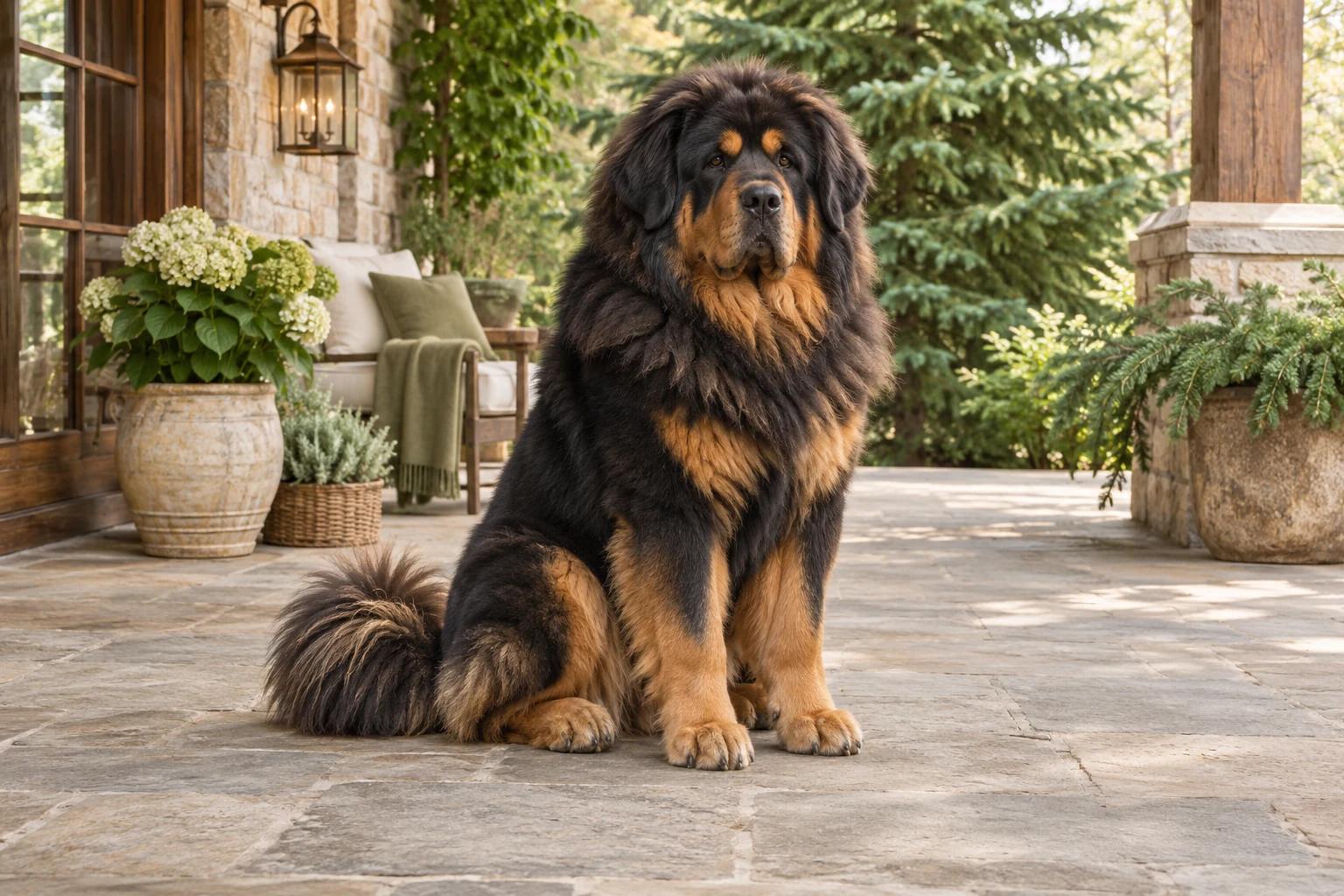
Tibetan Mastiff exercise needs include more than a distance covered on a lead. The current Tibetan Mastiff profile places physical activity in the middle of its reference scale and gives mental engagement a stronger emphasis. It describes an ordinary day with about an hour of activity, but that is a starting point for understanding the breed, not a compulsory workload for every puppy, adult or older dog.
Tibetan Mastiff exercise needs call for varied daily activity
PDSA recommends dividing activity among walks, play in a secure area and tasks that engage the brain. Its breed guidance also highlights the thick coat when discussing summer outings, favoring cooler parts of the day rather than the hottest hours. PDSA: Tibetan Mastiff care.
For an adult, this means an exercise day need not consist of one long, uninterrupted march. Separate outings and suitable play provide different experiences. A garden offers space, but merely opening the door is not the same as participating in an activity with the dog.
Weather changes what is sensible. Do not insist on completing a planned route because it was comfortable on a cooler day. Ask the veterinary team about an appropriate activity plan if the dog's age, condition or recent history makes the choice uncertain.
The breed guidance also includes training and puzzles. Those opportunities belong alongside physical movement rather than being treated as an emergency substitute only when a walk is missed. The useful objective is a day with appropriate movement and engagement, not achieving the largest possible exercise total.
Give a walk time for scent investigation
VCA describes a sniffing walk as an outing that emphasizes the smells encountered rather than speed or mileage. Dogs gather information through scent, and allowing pauses makes that investigation part of the activity instead of an interruption to it. VCA: sniffing walks.
A Tibetan Mastiff daily walk can therefore include stretches where the dog has time to examine an interesting patch rather than immediately moving on. Within safe, permitted space, allow some choice about where to investigate. You remain responsible for the route and surroundings; following a scent does not authorize entering a road or another person's property.
This changes how you judge the outing. A shorter distance does not necessarily mean that nothing worthwhile happened. The dog may have spent time processing an environment that looks uneventful to you.
Do not confuse a scent-focused outing with a test. The dog need not identify a named odor, locate a formally hidden object or earn a reward for every sniff. The opportunity to investigate is itself the point of this particular activity.
Offer a toy-name puzzle without demanding endless fetch
The AKC describes teaching a dog to distinguish toys by name, beginning with one favorite and using the same name consistently. Reward the dog for selecting that toy before introducing alternatives. AKC: teaching toy names.
For a Tibetan Mastiff that already enjoys bringing a toy, start with a single familiar object nearby. Once its name is understood, place it beside an uninteresting, safe object. Later, introduce a less-preferred toy as the alternative. Teach the second toy's name separately before asking the dog to choose between two named toys.
If the dog chooses incorrectly, return to the previous successful stage rather than repeatedly presenting the harder choice. Increase the number of objects gradually, and add distance only after the basic distinction is established.
This is optional mental activity, not a breed intelligence examination. A dog with limited interest in toys may need food rewards to find the task worthwhile, while a keen player may enjoy the selected toy as its reward. Keep the focus on recognizing the object, not turning each correct choice into a series of fast throws and abrupt turns.
Read the activity profile without confusing separate traits
Tibetan Mastiff activity level is not the same as watchfulness. The current profile pairs a middle-range activity rating with very strong attention to the surroundings. Standing and monitoring an entrance may look purposeful, but it is a different behavior from going on an outing or joining a game. Conversely, a dog resting between activities has not stopped being observant.
Playfulness also sits in the middle of the current scale. That does not promise a dog that wants to chase a toy whenever it is offered. The stronger mental-engagement reference suggests that a routine built only around exuberant play would leave an important question unanswered: what does this individual find interesting to do with a person?
For a prospective adult dog, ask about the activities it actually chooses, not just whether someone calls it “active.” Does it enjoy a familiar walk, an object game, a quiet learning task or some combination? Those answers distinguish useful opportunities from activities selected solely because another breed enjoys them.
How much exercise does a Tibetan Mastiff need?
The current profile's ordinary-day reference is about an hour, alongside its middle-range activity rating. Keep that context attached to the number. It is not evidence that every individual should complete the same pace, terrain and duration, or that a puppy should follow an adult itinerary.
The adult size reference spans 70–120 pounds for females and 90–150 pounds for males. Those broad ranges are another reason not to imagine one standardized dog behind every recommendation. Weight alone does not prescribe a route or establish fitness. The individual dog's life stage and veterinary advice matter more than matching an imaginary average adult.
The dog quiz helps place activity among the other ownership commitments. For a separate appearance topic, see the Tibetan Mastiff coat article.
Frequently asked questions
Is the Tibetan Mastiff described as needing maximum-intensity exercise?
No. The current profile places activity in the middle of its scale. That does not mean no exercise; it means the reference should not be read as a demand for constant high-intensity movement.
Does strong watchfulness replace an activity routine?
No. Watching the surroundings and participating in an outing are different behaviors. The profile describes both watchfulness and activity needs rather than treating one as a substitute for the other.
Is physical exercise the only engagement the profile emphasizes?
No. Mental engagement receives a stronger reference rating than physical activity. Consider opportunities to use the brain alongside the dog's appropriate movement routine.
Sources behind this article
Article source checked: November 16, 2026. Source checked 2026-11-16
Keep reading

Afghan Hound Exercise Needs: Build a Workable Active Day
Read article →