Thai Ridgeback vs Rhodesian Ridgeback: Key Differences
Compare Thai Ridgeback and Rhodesian Ridgeback adult sizes, body structure, social expectations and coat routines before choosing.
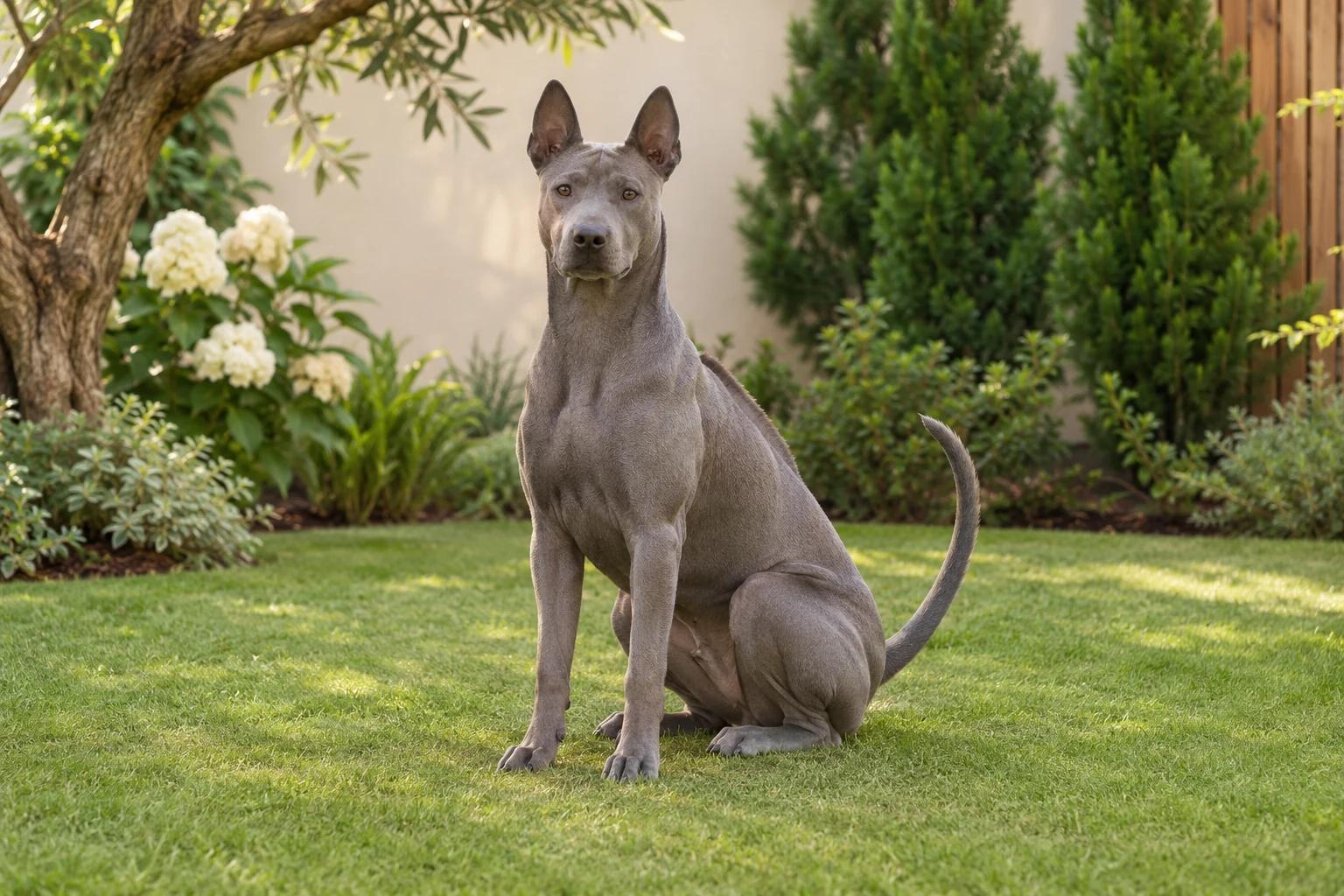
Thai Ridgeback vs Rhodesian Ridgeback is a comparison between two distinct breeds, not two sizes of the same dog. Start with their adult dimensions and everyday responses rather than the familiar name. The current Thai Ridgeback profile and Rhodesian Ridgeback profile show different weight ranges, different approaches to strangers and coat-care responsibilities. Neither name alone tells you how an individual will behave at home.
Thai Ridgeback vs Rhodesian Ridgeback: the Thai outline
The Thai standard describes a body slightly longer than shoulder height, with a length-to-height relationship of eleven to ten. Chest depth is half the height, reaching the elbows, while the abdomen is distinctly tucked. A level back and developed muscles complete the outline. FCI: Thai Ridgeback Dog standard.
This is useful when looking beyond a head portrait. A Thai Ridgeback should not be imagined as a square block or a low, elongated dog. Its combination of leg length, chest depth and tuck gives the body a particular balance.
The head has a wedge-shaped muzzle and naturally upright, triangular ears directed forward. Forehead wrinkles become apparent when the dog attends to something. These features can make an attentive expression especially striking, but an expression is not a temperament assessment.
The standard calls for balanced movement with parallel forelegs and hindlegs when viewed from the front and rear. Watch the whole dog moving rather than judging muscularity from one dramatic standing photograph. A still image cannot show how the limbs work together or whether the stride flows naturally.
The Rhodesian outline is more than a heavier version
The Rhodesian standard also describes a body a little longer than tall, but its details create a different silhouette. The chest is deep without excessive width; the back is strong, and the muscular loin has a slight arch. The muzzle is long, deep and powerful. AKC: Rhodesian Ridgeback standard.
Its ears are carried close to the head rather than standing upright. The tail narrows toward the tip and has a gentle upward curve, without curling. These features make a side view and a relaxed head view useful complements to a front-facing photograph.
The coat should feel short and dense, not woolly or silky. Movement is described as free and active, with reach and drive. That description concerns functional movement, not a demand that the dog move at speed throughout the day.
Comparing the two standards is therefore more informative than calling one dog a scaled-up copy of the other. Look at the chest, loin, head and ear carriage as separate features. Their shared name does not erase the differences in overall construction or the way each outline is assembled.
Rhodesian companionship includes teaching everyday manners
The American parent club describes a dog that can relax and then become alert quickly. It emphasizes basic obedience and consistent, positive teaching, and specifically advises against training a Rhodesian Ridgeback as a guard dog. Rhodesian Ridgeback Club of the United States: breed guide.
That distinction matters for a household attracted to an imposing appearance. Everyday cooperation is a more appropriate goal than encouraging suspicion or trying to make the dog more protective. A dog noticing something outside is not an invitation to rehearse confrontation.
The club also describes a strong appetite and the possibility of taking food from counters. Food within reach can become its own reward, so kitchen habits deserve attention before a large adolescent discovers what is available. Keep tempting food out of reach rather than relying on a verbal instruction after the dog has already obtained it.
Finally, the club's portrait includes a desire for human company and comfortable furniture. An owner seeking a detached outdoor ornament would be choosing for the wrong reasons. Consider the actual relationship the dog will have with people, not just the impressive outline seen in breed photographs.
Adult weights and heights make the scale clearer
For a Rhodesian Ridgeback vs Thai Ridgeback size comparison, keep the sexes separate. Current Thai figures are 35–55 pounds for females and 46–75 pounds for males, with a combined adult height reference of 20–24 inches. Current Rhodesian figures are 65–75 pounds and 24–26 inches for females, and 80–90 pounds and 25–27 inches for males.
These figures show why “both medium-to-large dogs” is not a very useful answer. The female weight ranges are separated, as are the male weight ranges. Yet a heavier male Thai and a female Rhodesian can overlap in weight. Sex and the individual dog's measurements matter when comparing two actual adults.
Height and weight are not interchangeable. A Thai at the top of its height reference does not automatically weigh the maximum, and the same is true of the Rhodesian. Do not assemble a hypothetical dog by taking every largest number in a table. The ranges describe populations, not a guaranteed combination of dimensions for a puppy.
Social expectations and coat routines differ
The current Thai profile describes considerable reserve around unfamiliar people, while the Rhodesian profile presents a more middle-ground response. The practical difference between Thai Ridgeback and Rhodesian Ridgeback is therefore not simply how much dog you can lift. Consider whether your home frequently includes new people and whether you expect a dog to enjoy being the center of those encounters.
Neither profile makes a reserved dog defective or a more receptive dog universally sociable. A quiet visit with a familiar person and a crowded gathering are different situations. Ask about the particular adult's behavior in both, rather than making a choice from appearance alone.
Both current profiles list moderate shedding. Both need an individual coat-care routine despite having short coats. Short hair does not settle every care question: the dog's comfort with handling and the actual routine still matter. Choosing a Thai Ridgeback or Rhodesian Ridgeback solely to avoid loose hair would miss that shared commitment.
The dog quiz can help compare these priorities. For the separate appearance topic, read the Thai Ridgeback ridge-shapes article.
Frequently asked questions
Which breed is heavier as an adult?
The current same-sex reference ranges are higher for Rhodesian Ridgebacks: females are 65–75 pounds and males 80–90 pounds, compared with 35–55 and 46–75 pounds for Thai Ridgebacks. Individual cross-sex comparisons can overlap.
Are their adult heights identical?
No. The Thai reference is 20–24 inches overall. Rhodesian females are listed at 24–26 inches and males at 25–27 inches. Compare actual adult measurements when evaluating a particular pair of dogs.
Is either breed a no-shedding choice?
No. Both current profiles describe moderate shedding. Their short coats should not be mistaken for an absence of loose hair or a reason to disregard regular coat care.
Sources behind this article
- FCI: Thai Ridgeback Dog standard ↗
- AKC: Rhodesian Ridgeback standard ↗
- Rhodesian Ridgeback Club of the United States: breed guide ↗
- Dogzone approximate adult reference — adult-weight reference ↗
- Embark adult reference — adult-weight reference ↗
Article source checked: November 16, 2026. Source checked 2026-11-16Article source checked: November 18, 2026. Source checked 2026-11-18
Keep reading

Affenpinscher vs Brussels Griffon: Everyday Differences
Read article →