Thai Ridgeback Shedding: Short-Coat Care Explained
Understand Thai Ridgeback shedding, short-coat growth, suitable grooming tools and the skin changes that deserve veterinary attention.
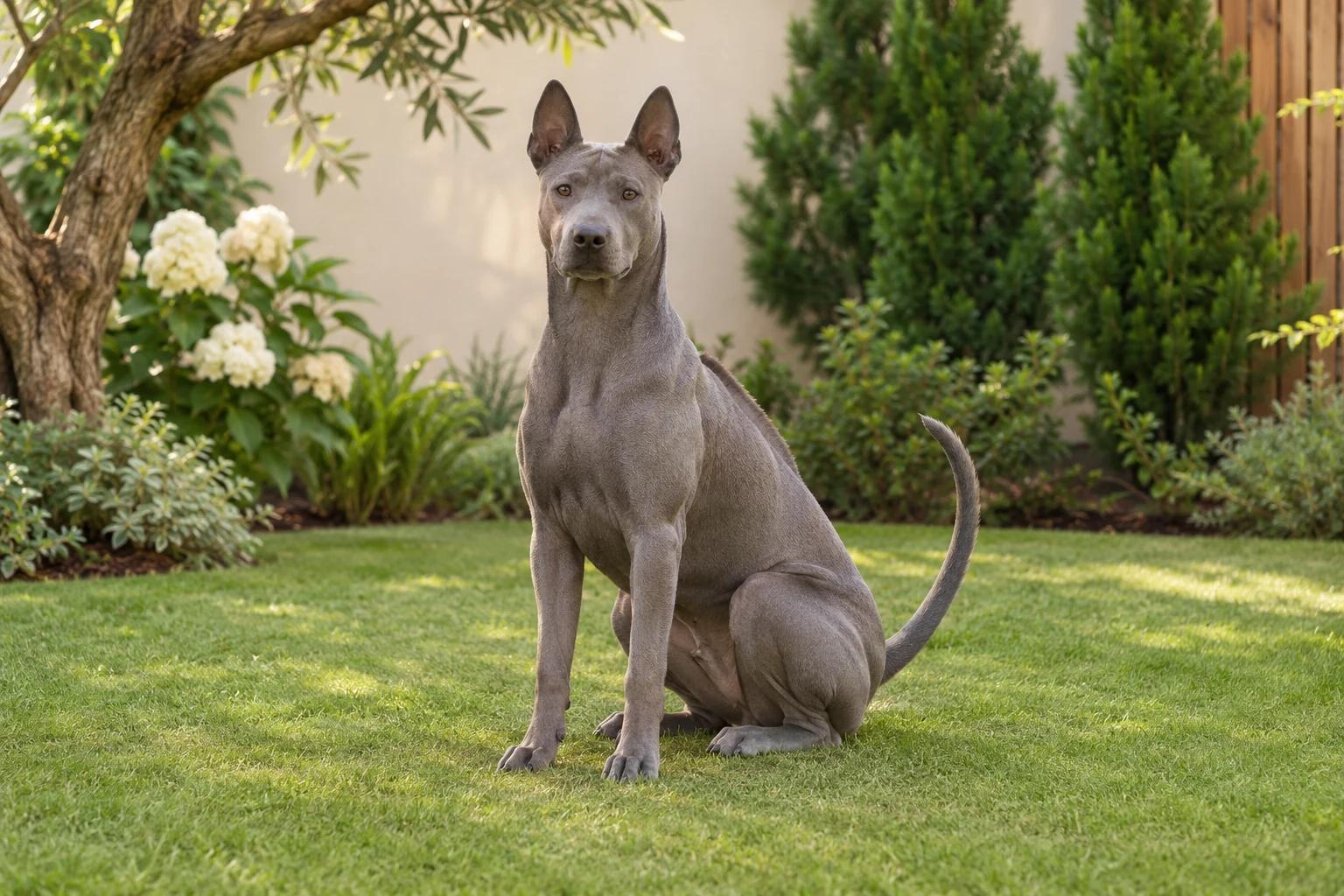
Thai Ridgeback shedding is a real part of ownership, despite the breed's close, smooth coat. The current Thai Ridgeback profile describes moderate shedding and loose hair appearing throughout the year. Its grooming reference is also moderate, not zero. That combination is a better starting point than assuming that a sleek-looking dog leaves no hair behind or needs no attention between baths.
Thai Ridgeback shedding begins beneath the visible coat
Merck explains that skin is a living protective organ, not merely a surface that holds hair. Its layers have different functions: the outer epidermis forms a barrier, the dermis supports and nourishes it, and deeper tissues provide cushioning and insulation. Merck Veterinary Manual: skin structure in dogs.
Sensory nerves in the skin and hair follicles register touch, pain, itch and temperature. A Thai Ridgeback's short covering does not make rough grooming harmless. The person holding a tool is working close to sensitive tissue, even when the coat looks easy to manage.
Oil glands supply sebum, which helps keep the skin pliable and contributes to coat sheen. A shiny appearance is therefore not simply something created by polishing the surface. Skin function and the condition of the hair both contribute.
This anatomy is useful when learning Thai Ridgeback coat care: inspect the skin as well as the loose hair. Treat a grooming session as contact with the dog, not a task performed on an inert fabric. Force and friction are not measures of thoroughness.
Short hair still has a growth cycle
The AKC's explanation of hair and fur describes both as keratin-based coverings. The practical distinction involves growth patterns: some coats grow to a limited length, while others continue lengthening for much longer. The growth cycle includes active growth, a transition and a resting stage; shedding is sometimes described separately as exogen. AKC: hair, fur and coat growth.
This helps explain why coat length and hair replacement should not be treated as the same question. A close-fitting coat can keep its familiar outline while individual hairs are replaced. You do not need to see the coat getting longer to encounter loose hair.
For a Thai Ridgeback owner, the useful distinction is between maintaining the existing short covering and managing an ever-lengthening hairstyle. The breed's smooth outline does not imply that each hair remains permanently attached. Equally, the presence of loose hair does not mean the whole coat needs to be cut shorter.
Words such as “hair” and “fur” are less useful than understanding the actual coat in front of you. Neither label, used casually, provides a reliable maintenance schedule for an individual dog.
Choose tools for the short surface, not a dramatic result
The AKC's shedding guide identifies natural-bristle brushes and grooming gloves as options for short coats. With a glove, it describes circular movements followed by smoothing in the direction of growth to collect loosened hair. AKC: managing dog shedding.
When deciding how to groom a Thai Ridgeback, begin with a tool suited to that close coat rather than copying equipment intended to reach through a much longer covering. More teeth, a sharper edge or a larger pile of collected hair does not automatically mean a better result.
The guide distinguishes ordinary loose hair from thinning, bald areas or irritated skin, which warrant veterinary advice. Do not keep brushing an unusual patch in the hope that it will turn into a normal shed. Stop and have the change assessed instead of trying to diagnose it from a grooming video.
Regular attention can remove loose hairs before they spread through the home, but it cannot promise a hair-free house. Judge the routine by appropriate care and the dog's comfort, not by whether the brush eventually comes away perfectly empty after repeated passes.
Seasonal changes do not explain every change in coat
AAHA notes that indoor conditions, including artificial light and steady temperatures, can make shedding more continuous. A calendar alone cannot determine what is normal for an individual dog. AAHA: why pets shed.
For a Thai Ridgeback already described as shedding throughout the year, this is a reason to notice its own pattern rather than waiting for one designated shedding month. A change from that familiar pattern deserves attention even if other dogs are also shedding at the time.
AAHA recommends contacting a veterinarian about a sudden major increase, patchy loss, redness, irritation or crusting. Such observations describe a reason for assessment, not a diagnosis. Several different problems can affect the coat, so a photograph or a quantity of hair on a blanket cannot identify the cause.
Bathing as needed is different from repeatedly bathing to chase away every loose hair. AAHA warns that excessive bathing can remove natural oils and leave skin dry or irritated. Ask the veterinary team about a suitable routine if the skin or coat has changed, rather than adding products or washing more often by guesswork.
Put the breed's coat description in perspective
The Thai Ridgeback's current profile lists a short, smooth coat in red, black, blue or fawn, also described as isabella. These are appearance descriptions, not separate shedding scores. Do not choose a color expecting it to eliminate the moderate shedding commitment shown for the breed.
Its coat also leaves much of the body outline visible. That can make the dog look less demanding to maintain than a heavily furnished breed, but the current grooming reference remains in the middle of the scale. Appearance and the amount of owner attention are not interchangeable categories. A sleek photograph shows a moment, not the routine that produced it.
The dog quiz helps put coat care alongside other ownership needs. The separate Thai Ridgeback ridge-shapes article explains that distinctive appearance feature without making it a shedding forecast.
Frequently asked questions
Does a Thai Ridgeback shed throughout the year?
The current breed profile describes year-round loose hair and a moderate shedding level. A short coat should not be interpreted as a no-shedding coat.
Is Thai Ridgeback grooming rated as negligible?
No. The current profile places grooming needs in the middle range. The close, smooth appearance does not mean care can be ignored between occasions when the dog looks visibly dirty.
Does coat color identify a lower-shedding Thai Ridgeback?
The current profile lists several colors but does not assign separate shedding levels to them. Its moderate shedding description applies to the breed generally, not to a favored color category.
Sources behind this article
- Merck Veterinary Manual: skin structure in dogs ↗
- AKC: hair, fur and coat growth ↗
- AKC: managing dog shedding ↗
- AAHA: why pets shed ↗
Article source checked: November 16, 2026. Source checked 2026-11-16
Keep reading

Affenpinscher Grooming: A Practical Coat-Care Routine
Read article →