Taiwan Dog Temperament: Alertness and Everyday Life
Explore Taiwan Dog temperament through alertness, body language, unfamiliar people and activities that suit the individual companion.
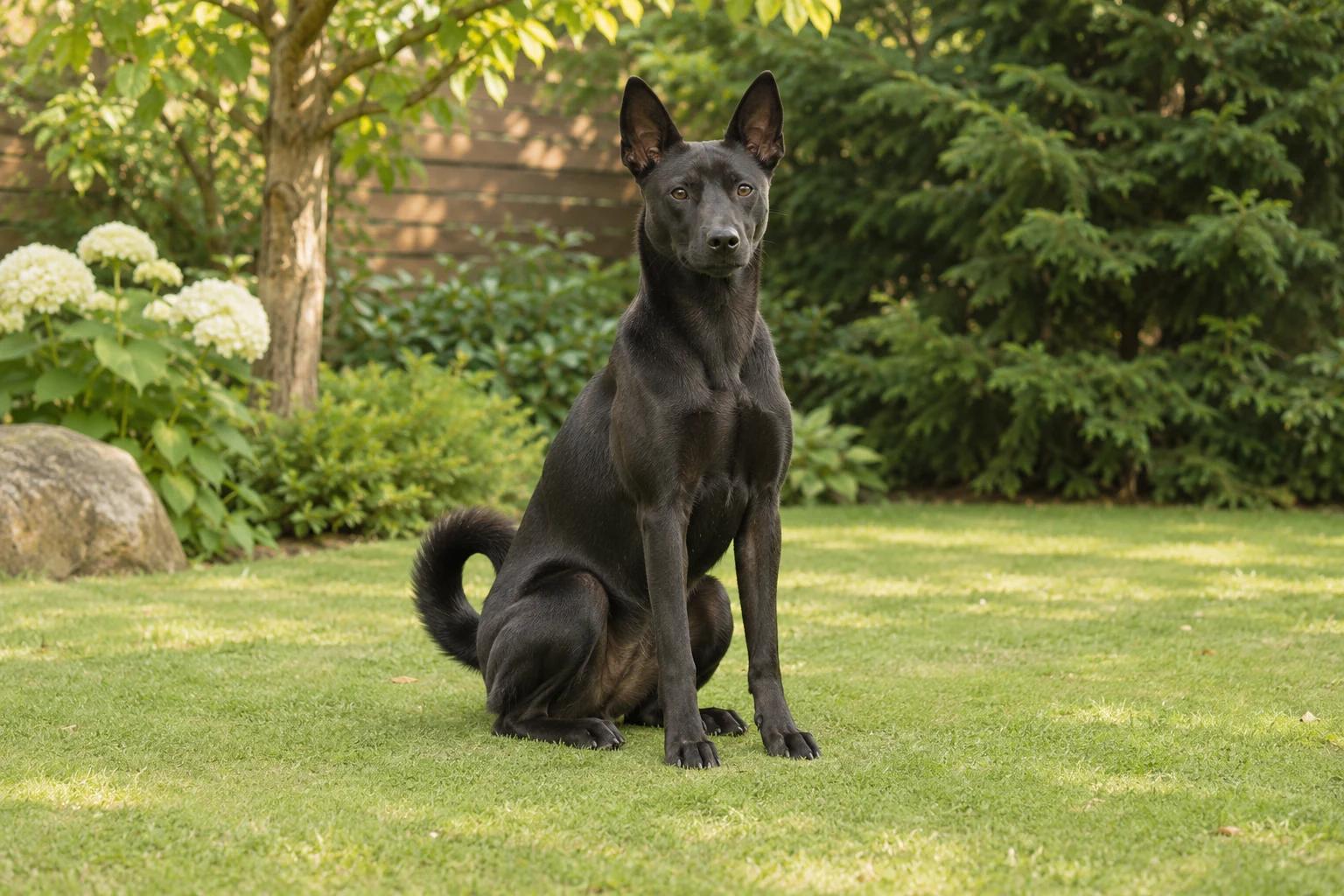
Taiwan dog temperament involves more than loyalty. The Taiwan Dog profile places watchfulness and activity toward the high end of its reference scale, while openness to unfamiliar people and interaction with other dogs sit in the middle. These are different parts of daily life. A dog can notice changes quickly without wanting close contact with everyone involved. Understanding those distinctions is more useful than assuming that one enthusiastic breed adjective predicts every encounter.
Taiwan Dog temperament: interpret the alertness ideal carefully
The FCI describes a Taiwan Dog that is attentive to its owner, keen in its senses and alert in movement. These are breed ideals, not a guarantee that an individual will feel confident in every situation. FCI: Taiwan Dog standard.
For a companion, the practical question is what the dog notices and how it responds. Do not use an ideal of boldness as a reason to dismiss discomfort or demand that a worried dog tolerate closer contact.
Read the whole interaction, not one impressive posture
Battersea explains that dogs use signals both to invite interaction and to ask for more distance. Context matters: rolling onto the back, for example, is not always an invitation to touch the stomach. Tension, a tucked tail or lifting a front paw while standing can indicate discomfort. Battersea: dog body language.
Applied to an alert Taiwan Dog, this means noticing the rest of the body rather than concentrating only on where the head is pointing. A dog may have detected something without feeling relaxed about it. Learn what this individual looks like during ordinary comfortable moments, then compare the whole picture when the situation changes.
During contact, pause after a few seconds and move your hands away. Give the dog a chance to show whether it wants to continue instead of treating the initial approach as unlimited permission. If it moves away or becomes tense, change the interaction. Quiet behavior alone is not proof of comfort. A dog that is hiding or trying to avoid someone needs space, not a person leaning closer to demonstrate friendliness. Observing these changes helps make the relationship responsive rather than one-sided.
Let unfamiliar people remain at a comfortable distance
Battersea's guidance for dogs worried by strangers emphasizes maintaining enough space and choosing quieter routes or times when necessary. The comfortable distance can change after stressful events; it is not a fixed boundary that the dog must accept every day. Battersea: confidence around strangers.
This is relevant to a Taiwan Dog whose profile does not promise instant sociability with unfamiliar people. It does not mean that every Taiwan Dog is fearful. It means that an individual showing concern should not be pushed into greetings to satisfy a description of confidence.
Notice the difference between a person walking away and someone coming directly toward the dog. If the latter is harder, preserve room to move rather than waiting until the person is within touching distance. Reward calm awareness and move away when that helps the dog remain comfortable. The objective is a more manageable experience, not a compulsory introduction. Persistent barking, lunging or difficulty coping deserves help from a qualified behavior professional. Do not assume that repeated close encounters will solve the problem simply because the dog has seen many people by the end of the week.
Give an active dog choices it can genuinely enjoy
VCA describes enrichment as opportunities that provide physical and mental engagement suited to the individual. Sniffing, exploring, suitable chewing and problem-solving can serve different interests. Social enrichment does not have to mean a crowd of unfamiliar dogs; for some individuals, time with trusted people is the better option. VCA: enrichment and predictability.
For a Taiwan Dog, this provides a useful way to interpret an active profile without relying only on more distance or more visitors. Offer a manageable puzzle or a chance to investigate safely, then watch whether the dog actually engages. A difficult food toy that produces frustration is not automatically enriching because it occupies time.
Choose toys and activities that the individual can use safely, and supervise items that might be torn apart or swallowed. VCA recommends veterinary advice about the suitability of particular chewing items. The aim is not to assemble the largest collection of equipment but to discover satisfying actions the dog can perform. A familiar companion, a sensory activity and a new learning problem are different opportunities. None should be judged successful merely because the dog remains busy while the person does something else.
Separate Taiwan Dog personality from a single social label
The profile's middle references for unfamiliar people and other dogs are useful precisely because they do not promise universal sociability. They leave room for individual differences. A known household relationship, a passing stranger and a potential canine housemate are not the same test.
The activity reference is also separate from playfulness. The current profile lists activity at 5/5 but playfulness at 3/5. An involved daily life therefore need not resemble constant exuberant play. Likewise, responsiveness to training at 4/5 describes a tendency, not a list of skills already installed in a puppy.
When considering Taiwan dog characteristics, include physical scale: females are listed at 26–35 pounds and males at 31–40, with an overall adult height interval of 17–20 inches. These dimensions matter alongside behavior, but they cannot predict the personality of the individual you meet.
Use the breed quiz to consider the wider fit. The separate Taiwan Dog tail article explains an appearance detail; it does not establish temperament from a silhouette.
Frequently asked questions
Does Taiwan Dog behavior around strangers match behavior with familiar people?
Not necessarily. The profile treats openness to new people as its own category. A familiar household relationship should not be used to predict how the same individual will respond to every visitor or passerby.
Does the high activity reference mean nonstop play?
No. The current profile lists activity at 5/5 and playfulness at 3/5. These are separate tendencies, not interchangeable measures of how a dog spends every moment.
Is the Taiwan Dog physically small enough to choose without considering handling?
The current adult reference is 26–40 pounds overall: females 26–35 and males 31–40. It is a substantial companion, and its dimensions should be considered alongside the individual dog's behavior and experience.
Sources behind this article
- FCI: Taiwan Dog standard ↗
- Battersea: dog body language ↗
- Battersea: confidence around strangers ↗
- VCA: enrichment and predictability ↗
Article source checked: November 16, 2026. Source checked 2026-11-16
Keep reading
Taiwan Dog Size: Adult Weight, Height and Build
Read article →