Taiwan Dog Size: Adult Weight, Height and Build
Understand Taiwan Dog size with sex-specific adult weight, height, body proportions, condition and the difference between puppy and adult references.
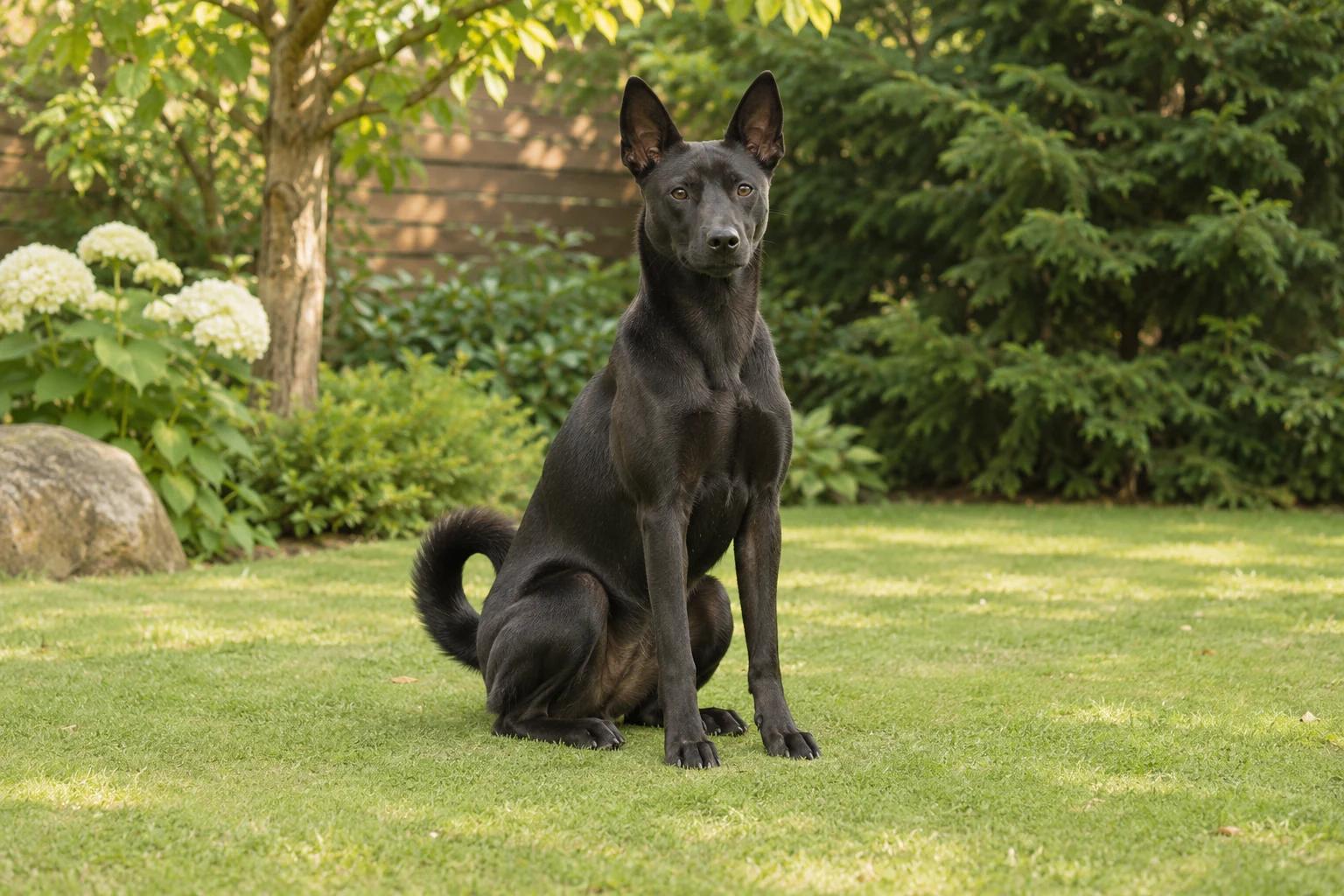
Taiwan dog size is best described with both weight and height. The Taiwan Dog profile lists females at 26–35 pounds and males at 31–40 pounds, with an overall adult height interval of 17–20 inches. These references describe a substantial companion without placing it among giant dogs. They are adult ranges, not a target that every puppy must reach or a promise that every male will outweigh every female.
Taiwan Dog size includes a distinctive body outline
The FCI describes a muscular, sinewy body that is nearly square, with a height-to-body-length ratio of 10:10.5. A short, straight back, muscled loin and tucked-up underside contribute to the outline. The chest is fairly deep without reaching the elbow. FCI: Taiwan Dog standard.
These features help explain why the same weight can look different on different dogs. The Taiwan Dog's outline is not intended to be a broad, heavily padded rectangle. Look at proportions as well as the number on a scale, while leaving assessment of an individual's condition to its veterinarian.
Understand what the height measurement actually measures
The AKC glossary defines height as the vertical distance between the withers and the ground. The withers are the highest point of the shoulders; the top of the head and ear tips are not the measuring point. AKC: glossary.
This distinction matters when interpreting Taiwan dog height. A dog looking upward can seem much taller than one looking down, even though its shoulder height has not changed. Measuring to the ears would answer a different question from the adult reference. Likewise, a picture taken close to the ground can exaggerate apparent leg length compared with a photograph taken from above.
For a useful comparison, establish which dimension someone is reporting. A seller's informal “height” may refer to an estimate made from a photograph rather than a measured shoulder height. Ask what was measured, not merely for a second number. The glossary also identifies a wicket as a device used for measuring at the withers. You do not need to turn an ordinary ownership decision into a show examination, but consistent measuring points prevent a misleading comparison between two dogs or between a dog and a published reference.
Weight and body condition answer different questions
WSAVA's canine body-condition chart considers the covering over the ribs, the waist seen from above and the abdominal outline seen from the side. It distinguishes animals below, around and above an ideal condition using more than total body weight. WSAVA: canine body condition chart.
For a Taiwan Dog, that is an important limit on the usefulness of a breed interval. An adult can fall within the published pounds and still need individual assessment. Conversely, being near an endpoint does not by itself explain whether the dog has a smaller frame, a different condition or another reason for its weight.
Ask your veterinarian to demonstrate how body condition is assessed on your dog. Do not try to make the animal resemble a particular photograph or force its weight toward the middle of the breed range. A side view and an overhead view provide different information, and coat appearance cannot replace an examination. The chart is a shared language for discussing condition, not a feeding prescription. If weight or shape changes unexpectedly, bring that change to your veterinary team rather than treating the reference interval as reassurance that nothing needs attention.
An adult-looking puppy may still be developing
VCA explains that growth and maturity vary with breed and expected adult size. The end of rapid growth is often used as an indication of adulthood, but a single birthday does not fit every dog. Its guidance recommends asking the veterinary team for an estimate suited to the individual. VCA: puppy growth and maturity.
For someone asking how big do taiwan dogs get, this separates an adult reference from a puppy prediction. A young dog reaching a familiar height is not proof that all development has finished. Nor does a puppy being smaller than the adult interval indicate that it must catch up immediately.
Keep the dog's age attached to any weight you discuss. A measurement from an early visit and a measurement near adulthood describe different stages, even if both are accurately recorded. Your veterinary team can interpret the pattern rather than relying on one snapshot. Avoid choosing a definite maturity date from a general size category and applying it to every Taiwan Dog. Growth varies, and an estimate should remain an estimate until the individual dog's development provides better evidence. Adult food labels also do not independently establish physical maturity.
Interpret the female and male ranges without exaggerating the gap
The current Taiwan dog weight reference gives females a 26–35-pound interval and males a 31–40-pound interval. Their overlap runs from 31 to 35 pounds. Therefore, a female near the upper end can weigh more than a male near the lower end without either falling outside the listed reference.
A hypothetical 33-pound adult fits within both sex-specific intervals. The number alone would not tell you its sex, exact height or personal history. Equally, comparing only a 26-pound female with a 40-pound male illustrates the extremes of the references, not the difference you should expect between every pair.
The overall height reference is 17–20 inches. The current profile presents this as a combined interval rather than separate male and female height ranges. Keep that distinction when repeating the figures: the weight information is sex-qualified, while the displayed height information is not.
These details make “medium-sized” more useful. It is a broad description, but the actual pounds and inches explain the physical commitment more clearly than a category label alone. Meet an adult where possible rather than relying on the proportions of a young puppy or an illustration.
Use the breed quiz to place size alongside the rest of ownership. The separate Taiwan Dog tail article examines another appearance feature without substituting it for a complete understanding of the individual.
Frequently asked questions
What is the adult Taiwan Dog weight range?
The current reference lists females at 26–35 pounds and males at 31–40 pounds. The combined interval is 26–40 pounds, but keeping the sex qualifiers makes the information more useful.
Are all males larger than all females?
No. The current weight intervals overlap from 31 to 35 pounds. These ranges describe adults broadly and do not rank every possible male and female pair.
How tall is an adult Taiwan Dog?
The current profile gives an overall adult height interval of 17–20 inches. It does not split that displayed interval by sex. Use it as a reference, not a guarantee of a particular puppy's eventual size.
Sources behind this article
- FCI: Taiwan Dog standard ↗
- AKC: glossary ↗
- WSAVA: canine body condition chart ↗
- VCA: puppy growth and maturity ↗
Article source checked: November 16, 2026. Source checked 2026-11-16
Keep reading
Taiwan Dog Temperament: Alertness and Everyday Life
Read article →