The Swedish Vallhund’s Viking connection is a question, not a settled travel story
The Vallhund’s FCI history leaves its relationship with Corgi-type dogs uncertain. It offers a more specific account of recovery work in Sweden in the early 1940s.
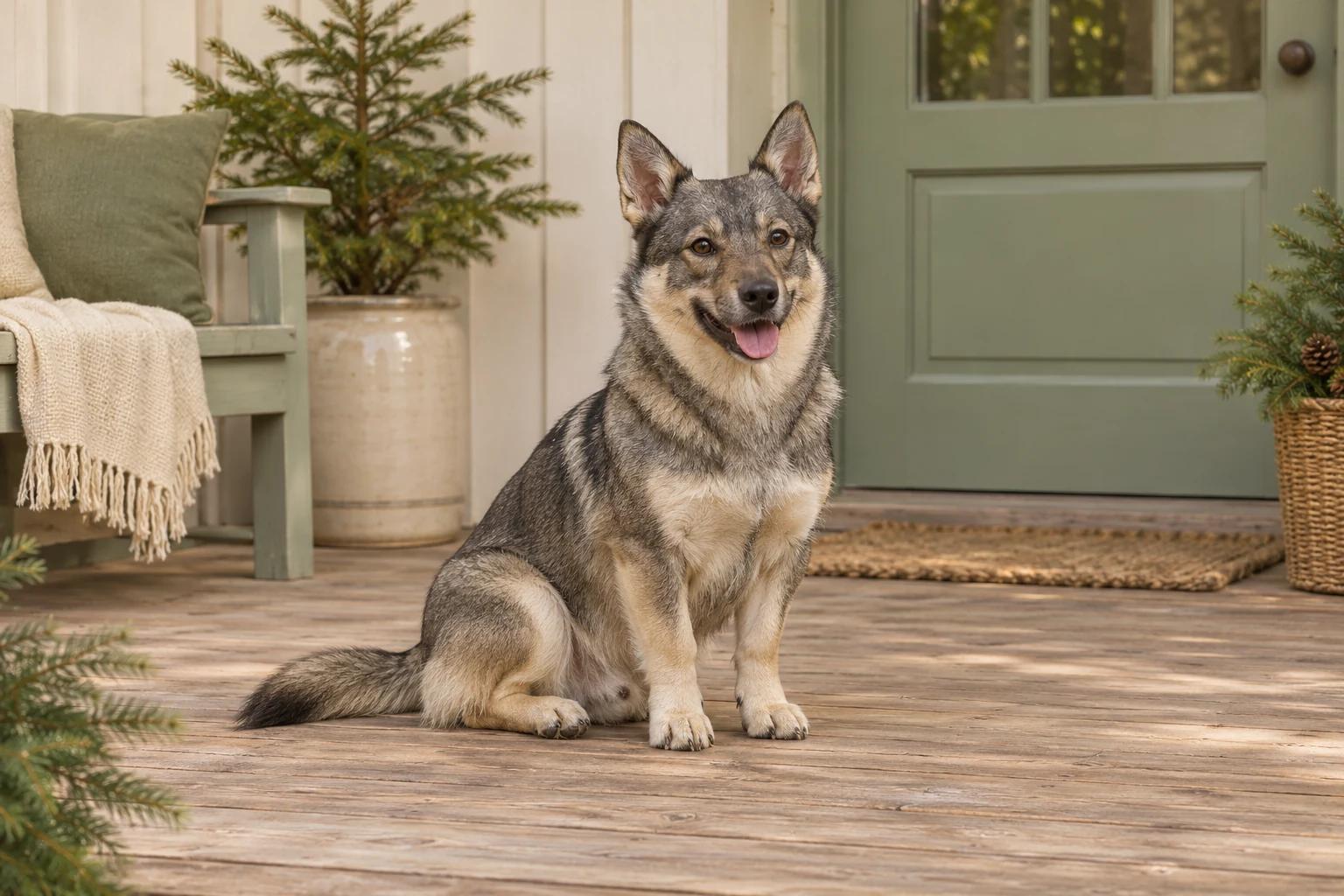
Keep the uncertainty in the origin account
The FCI Swedish Vallhund standard identifies the breed as Swedish while acknowledging uncertainty about its relationship with Corgi-type dogs. It raises both possible directions of Viking-era movement between Sweden and the British Isles. It does not establish one of those journeys as the settled explanation.
Use the better-defined recovery story
The same account credits Count Björn von Rosen and headmaster Zetterstén with the breed’s recognition. It describes an early-1940s investigation in West Gotha, particularly the Vara plains, where enough dogs of a consistent type were found for breeding to begin.
For a short history, separate that recovery account from the older origin question. The distinction lets you discuss the named people and places without supplying invented certainty about what happened centuries earlier.
Treat resemblance as a prompt for research
A low-built silhouette may make a comparison interesting, but resemblance alone cannot prove which population descended from which or who transported the dogs. Keep that boundary when writing a caption or repeating a popular anecdote.
A useful introduction can acknowledge the Viking question and then state what this source actually recounts. Readers gain a clearer history when uncertainty stays visible, rather than being replaced by a memorable voyage that the cited document does not verify.
Sources behind this article
Article source checked: October 20, 2026. Source checked 2026-10-20
Keep reading
Swedish Vallhund vs Cardigan Welsh Corgi: A Comparison
Read article →