Swedish Vallhund Grooming: Coat, Bathing and Nail Care
Plan Swedish Vallhund grooming with realistic shedding expectations, appropriate brushing, comfortable bathing and individual nail-care needs.
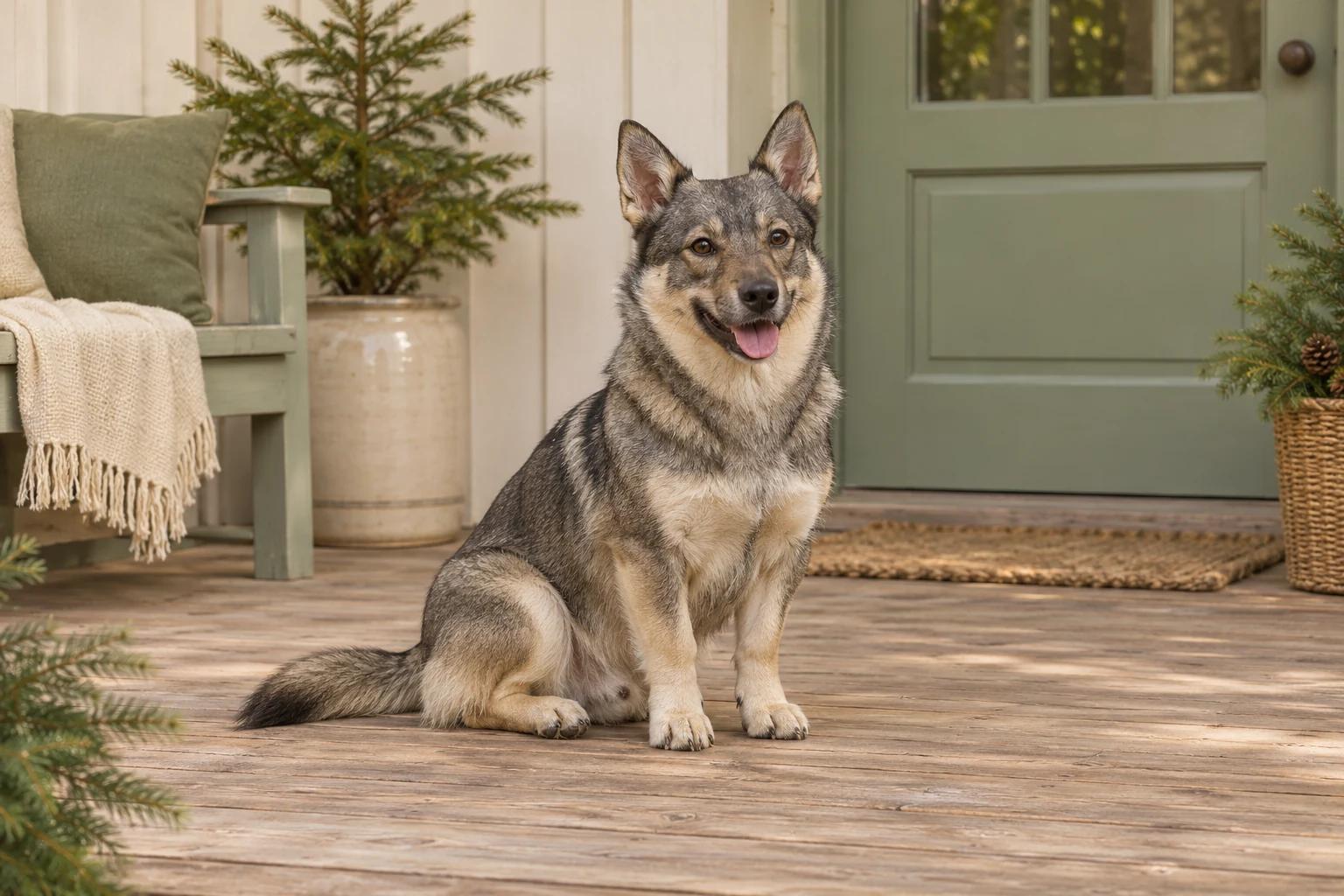
Swedish vallhund grooming is not the same commitment as maintaining a long decorative coat, but it still belongs in everyday ownership. The Swedish Vallhund profile records a short double coat, shedding at 4/5 and grooming frequency at 2/5. Read those together: a relatively low frequency rating does not mean little loose hair. This guide looks at the difference between the coat's outwardly straightforward appearance and the work of keeping an individual dog comfortable during care.
Swedish Vallhund grooming includes a realistic view of loose hair
In the Swedish Vallhund Society's collection of owner accounts, Debbie Howe describes substantial loose undercoat during moulting. Doug Pazineza similarly describes heavier shedding periods while discussing an otherwise straightforward coat. These are owners' experiences, not a measured prediction of how much hair every Vallhund will lose. Swedish Vallhund Society: living with the breed.
Their accounts make a useful distinction for prospective owners: an easy-looking coat can still make its presence felt on furniture and clothing. The work is not necessarily elaborate styling. It may be dealing with a change in the amount of loose hair while the dog's general appearance remains familiar.
Before committing to Swedish vallhund coat care, see an adult during ordinary home life as well as after a tidy-up. Ask about that particular dog's heavier periods rather than expecting every owner to report the same experience. The useful lesson from these accounts is to take shedding seriously without turning one household's description into a universal calendar, an exact volume of hair or a promise that professional grooming will never be needed.
Match the brush to the actual coat
The ASPCA explains that brushing removes loose material and distributes the coat's natural oils, while the appropriate tool depends on coat type. It recommends asking a veterinarian or groomer to identify a suitable brush or comb for the individual dog. ASPCA: dog grooming tips.
For a Vallhund, do not choose solely from a label saying “short hair.” The double coat is relevant, and a tool that glides over the outside may not do the same job as one selected to address loose coat beneath it. Ask for a demonstration of how the tool should move, rather than buying several implements and assuming stronger pressure will make them work better.
Grooming also provides a chance to notice the skin. The ASPCA advises veterinary attention for changes such as bald areas, irritation or persistent scratching. If the coat looks different, do not simply add more vigorous brushing. Swedish vallhund shedding is an expected ownership issue, but the breed name cannot explain every new patch of hair loss. Describe what has changed to your veterinarian and let that assessment guide any further care instead of choosing a treatment from the appearance alone.
Keep water and products manageable during a bath
VCA's bathing guidance recommends gentle pouring rather than directing a spray at a pet that finds it frightening. It also emphasizes pet-appropriate products, rewards and thorough rinsing according to the product's directions. VCA: bathing routine.
For the low-standing Vallhund, consider the actual washing position before water starts flowing. The point is not to copy a dramatic grooming video but to arrange a situation in which the dog can remain comfortable. A container that lets you control a small flow can be more manageable than a forceful shower setting. Give the dog time to become comfortable with what is happening rather than treating food as permission to continue through distress.
Use a product selected for the dog, and ask your veterinarian when there are skin concerns or uncertainty about suitability. Do not substitute a human shampoo because the scent seems appealing. After washing, remove the product thoroughly rather than judging completion only by whether the visible foam has disappeared. If home bathing is becoming a struggle, seek advice about a suitable alternative approach. The goal is effective, comfortable cleaning, not winning a contest over who can keep the dog still.
Include the nails without turning care into a wrestling match
VCA explains that nail wear varies with activity and surfaces. Nails that contact the ground or click on a hard floor warrant attention; a veterinarian or groomer can help assess and manage them. Dewclaws, when present, do not wear through ordinary ground contact. VCA: nail care.
An active Vallhund is therefore not automatically maintaining every nail merely by going for walks. Inspect the individual rather than assuming that a busy routine has completed the task. If you do not know how to judge length or use a tool safely, ask for a demonstration instead of guessing where to cut.
VCA recommends gradual handling practice and rewards, with progress at the dog's pace. Comfortable foot handling can come before an attempt at a complete trim. It may be appropriate to work on one nail rather than every foot in a single sitting. When care is urgently needed but the dog cannot comfortably cooperate, obtain professional help instead of forcing the lesson to happen immediately. A successful short practice and a completed necessary trim are different goals, and sometimes they need to be handled separately.
Interpret the grooming reference alongside the adult dog
When learning how to groom a swedish vallhund, remember the adult weight interval of 20–35 pounds. The profile does not divide that weight reference by sex. Its height references are sex-specific: males 12.5–13.75 inches and females 11.5–12.75. A puppy's appearance does not show the full adult coat-care commitment.
The profile's short-coat classification is useful, but it is not an instruction to ignore the double-coat designation. Nor does the 2/5 grooming-frequency reference cancel the 4/5 shedding reference. These describe different aspects of ownership rather than contradicting one another.
Use the breed quiz to consider coat care alongside the wider commitment. The Vallhund history article covers a separate origin question, not instructions for maintaining the coat.
Frequently asked questions
Does short coat mean non-shedding?
No. The current profile identifies a short double coat and a 4/5 shedding reference. Short hair and little loose hair are not interchangeable descriptions.
Is the grooming-frequency reference a promise of no work?
No. The profile gives grooming frequency 2/5, which should be read alongside the separate shedding reference. It is a broad ownership indicator, not a complete care schedule for an individual.
Are male and female weight ranges different in the current profile?
The current adult weight reference is 20–35 pounds without separate sex-specific intervals. Height is split by sex: males 12.5–13.75 inches and females 11.5–12.75 inches.
Sources behind this article
- Swedish Vallhund Society: living with the breed ↗
- ASPCA: dog grooming tips ↗
- VCA: bathing routine ↗
- VCA: nail care ↗
Article source checked: November 16, 2026. Source checked 2026-11-16
Keep reading

Affenpinscher Grooming: A Practical Coat-Care Routine
Read article →