Saint Bernard Exercise Needs: Walks, Scent and Safe Activity
Understand Saint Bernard exercise needs through individual walks, working activities, simple scent games and sensible changes for heat and growth.
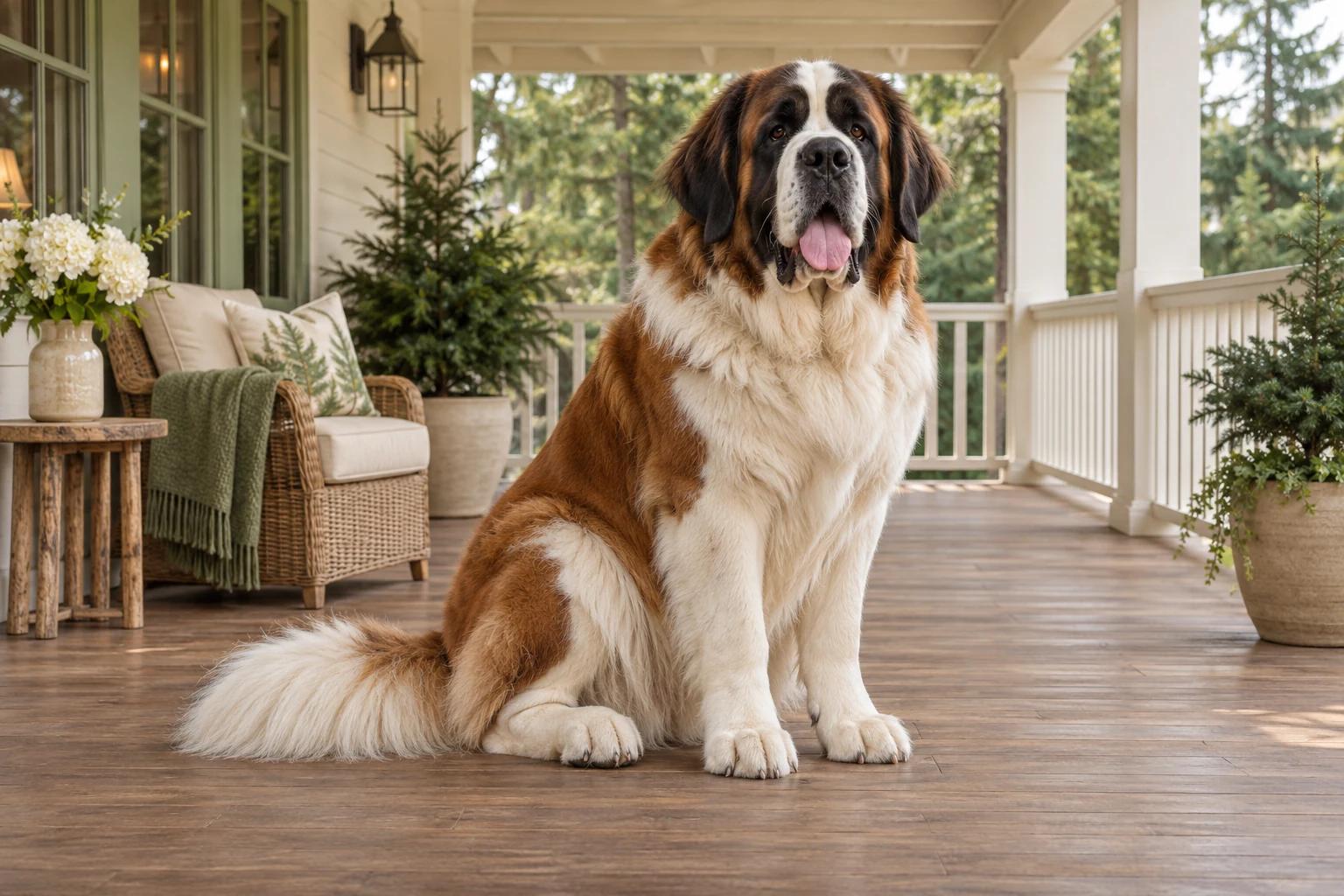
Saint bernard exercise needs should be considered alongside the adult you are choosing: the current breed profile gives a weight reference of 120–180 lb and an activity rating in the middle of its scale. That combination describes neither a miniature walking companion nor a dog selected primarily for high-intensity sport. The individual still matters more than the stereotype of a giant asleep beside a fireplace.
Saint Bernard exercise needs change with the individual
VCA describes moderate daily exercise, with walks and controlled activity particularly relevant during growth. It also connects activity with body condition: exercise and nutrition should be considered together rather than treating either as an isolated solution. For a Saint, chasing a distance target is less useful than a plan appropriate to its stage of life and physical comfort. VCA: Saint Bernard.
A puppy's apparent enthusiasm is not a prescription for an adult workout. Ask your veterinarian about suitable activity as the dog develops, particularly before introducing demanding exercise.
Regular, appropriate activity belongs in its life. A saint bernard daily walk is one part of an individual routine, not a universal distance that every owner must reproduce regardless of the dog's condition.
Working activities are about teamwork, not maximum pulling
The Saint Bernard Club of America describes participation in obedience, tracking, agility and draft activities. Its draft-work explanation emphasizes cooperation between dog and handler, willingness to work, and understanding the equipment. It explicitly states that test regulations are not a training guide. Saint Bernard club: working activities.
That distinction is important if carting appeals to you. Seeing a Saint pull a cart does not tell you how the dog was prepared, whether yours is ready, or what equipment would fit. Find experienced instruction rather than attaching a load and testing what happens. Physical suitability is a separate question to discuss with your veterinarian before demanding work.
The club's account also describes maneuvering a cart through turns, not simply moving the heaviest possible object. Think of the activity as a coordinated task. An owner interested in that kind of partnership may enjoy learning about the discipline even without competing. A Saint does not need a pulling title to be properly occupied, and a trial result is not a daily exercise prescription for every member of the breed.
Add a search task without turning it into a race
ASPCApro offers a simple scent game using several cardboard boxes and a strongly scented food reward. With the dog out of view, put the reward in one box. Let the dog investigate, then praise and reward its find. Reload the same box and rearrange the group for another search. Work with one dog at a time. ASPCApro: scent games.
For a Saint, arrange the boxes so it can move among them without squeezing through a crowded obstacle course. Use safe, open containers and supervise; this is a searching activity, not an invitation to swallow packaging. Stop if the materials are becoming a chewing or ingestion problem.
Give the dog time to solve the task instead of constantly pointing out the answer. The activity adds a different kind of engagement from walking a route, and another dog's presence is unnecessary. ASPCApro also encourages sniffing opportunities on walks. Investigating a familiar patch of ground can be part of the outing rather than a delay to be eliminated so that the distance looks more impressive.
Heat changes the plan
Cornell advises limiting activity to cooler parts of the day, providing shade and water, and avoiding strenuous exercise in hot or humid conditions. During extreme weather, staying cool indoors may be preferable. Check the actual conditions rather than assuming that a scheduled walk must go ahead unchanged. Cornell: summer heat safety.
For an owner of a Saint, the practical question is whether the outing is appropriate now, not whether the dog completed the same route yesterday. Pavement can become much hotter than the surrounding air, and access to a drink does not make intense activity safe. Do not leave the dog unattended in a vehicle while finishing another part of the outing.
If you have concerns about heat or your Saint’s comfort during activity, talk with your veterinarian. Do not push ahead with an outing simply to complete a planned route.
Interpret the Saint Bernard activity level as a starting point
The Atlas profile rates activity, playfulness and mental engagement at three out of five. These describe different aspects of everyday life. A walk is not the same experience as a game, and neither rating measures the particular dog's preferences. The family-affection reference is higher, at five, so choosing this breed should include interest in a shared life rather than only admiring its appearance.
The profile also lists hip, elbow and cardiac evaluations among questions to raise with a breeder and veterinarian. Screening information is distinct from an activity rating. Ask about actual records and individual limitations instead of assuming that a middle activity reference removes the need for those discussions.
Use the breed quiz for the broader ownership match. The existing Saint coat-and-cleanup article addresses another commitment, separate from deciding what sort of activity you and your dog will share.
Frequently asked questions
How much exercise does a Saint Bernard need?
There is no single distance appropriate to every Saint. The profile gives a middle activity reference; the individual dog's life stage, health and current comfort need to guide the actual plan with veterinary input.
Does the Saint Bernard activity level describe playfulness too?
No. Activity and playfulness are separate profile categories, although both have a middle rating for this breed. A particular dog's enthusiasm for a game is not measured by the activity score alone.
Does a high family-affection rating make a Saint an athlete?
No. Interest in family company and physical activity are different traits. The profile rates the former higher than the latter; neither predicts a particular dog's ability in a sport.
Sources behind this article
- VCA: Saint Bernard ↗
- Saint Bernard club: working activities ↗
- ASPCApro: scent games ↗
- Cornell: summer heat safety ↗
- AKC sex-qualified adult reference — adult-weight reference ↗
- Barry Foundation Swiss origin reference — adult-weight reference ↗
Article source checked: November 16, 2026. Source checked 2026-11-16Article source checked: November 18, 2026. Source checked 2026-11-18
Keep reading

Afghan Hound Exercise Needs: Build a Workable Active Day
Read article →