A short-haired Saint Bernard still needs a cleanup plan
A short coat does not make a Saint Bernard shed-free or dry-mouthed. Plan household cleanup around the individual instead of promises attached to coat length.
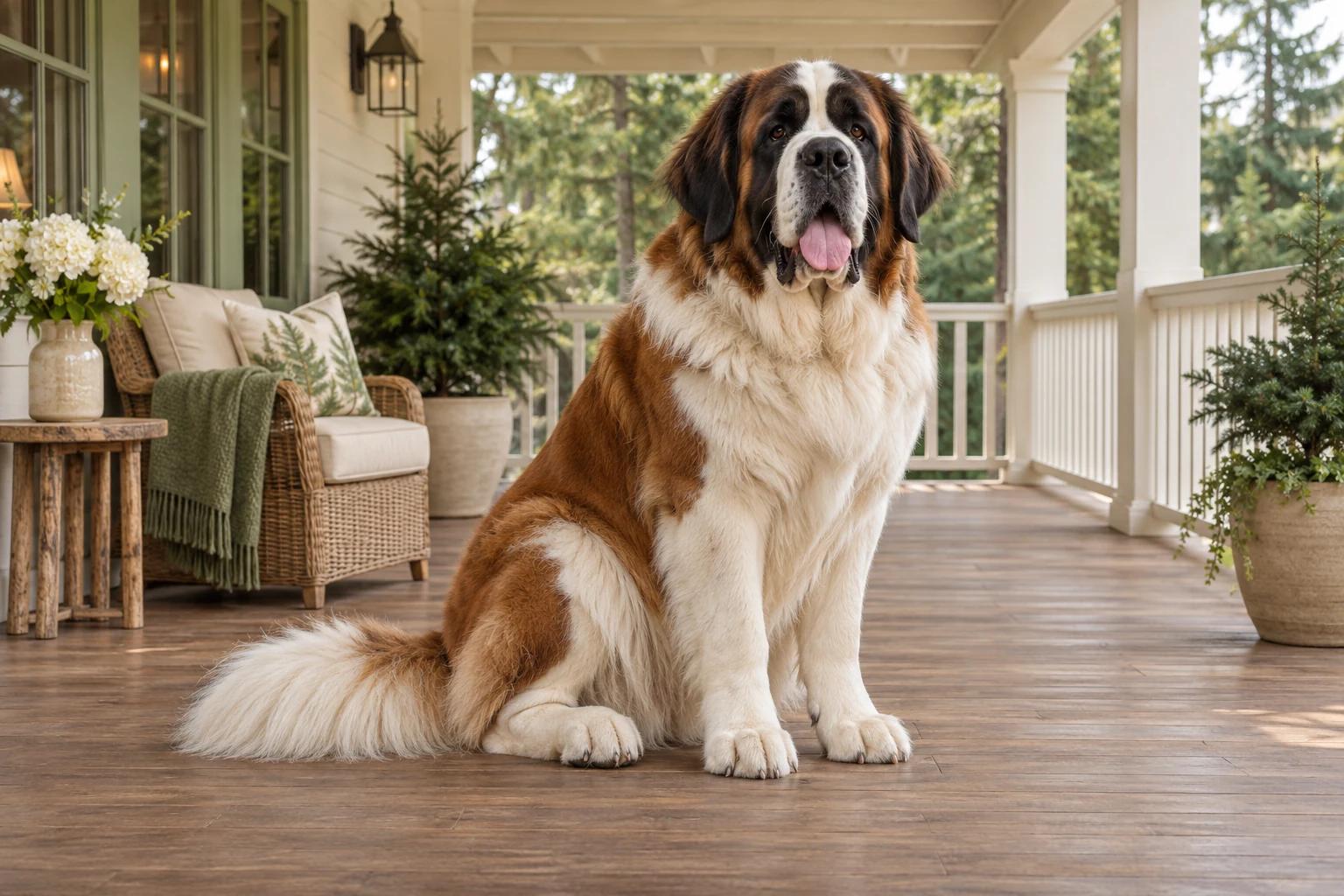
Separate coat length from the promise of less mess
If the long-haired Saint Bernard seems like too much cleanup, the short-haired variety may look like an easy solution. It is worth separating the shorter appearance from the promises you might attach to it. The Saint Bernard Club of America's breed brochure says both coat types shed and need regular grooming. It also rejects the idea of a dry-mouth Saint Bernard.
That gives you two different household questions: how you will manage loose hair, and how you will manage drool. Choosing a shorter coat does not erase either question. An advertisement implying that coat length buys a clean-floor guarantee should prompt a more detailed conversation, not an assumption that routine care has been solved.
Look at ordinary life, not only a freshly groomed photograph
The AKC breed standard describes both a shorthaired and a longhaired Saint Bernard. The short coat is dense and lies smooth; the long variety has longer, somewhat wavy hair. Those descriptions help explain the visual difference. They do not quantify cleaning time or establish how much an individual dog will drool in your home.
Ask a caregiver to describe a normal day between grooming sessions. Where does loose hair collect? Which items need washing? What happens around the water bowl and after outings? The point is not to demand a precise mess forecast. It is to replace a polished image with a practical account of the work someone already does for a real dog.
Make a plan you would actually keep using
As an illustrative setup, you might keep washable cloths near the places where cleanup is commonly needed, choose washable covers for a dog's usual resting area, and work regular coat care into your household schedule. Check that the person doing that work is comfortable with it. Buying supplies is easier than agreeing who will maintain them week after week.
Do not reduce access to drinking water to protect the floor, and do not treat every change as ordinary breed-related drool. Contact your veterinarian if drooling increases or differs from your dog's usual pattern. Call immediately if the increase is sudden, the drooling becomes continuous, or your dog also seems ill, distressed or in pain. For choosing a companion, the useful conclusion is modest: either coat type requires acceptance of cleanup. Meet individual dogs and discuss their care before deciding whether the shorter appearance really addresses your concern.
Sources behind this article
- Saint Bernard Club of America: Breed Brochure ↗
- PDSA: Drooling in Dogs ↗
- Dogs Trust: Toileting in the House ↗
- AKC: Saint Bernard Standard ↗
Article source checked: October 20, 2026. Source checked 2026-10-20
Keep reading
Saint Bernard vs Great Dane: Size and Everyday Life
Read article →