The Spanish Mastiff’s livestock history includes the journey between pastures
The Spanish Mastiff’s FCI account connects guarding with seasonal livestock movement, especially Merino flocks. Its role extended along the route as well as at pasture.
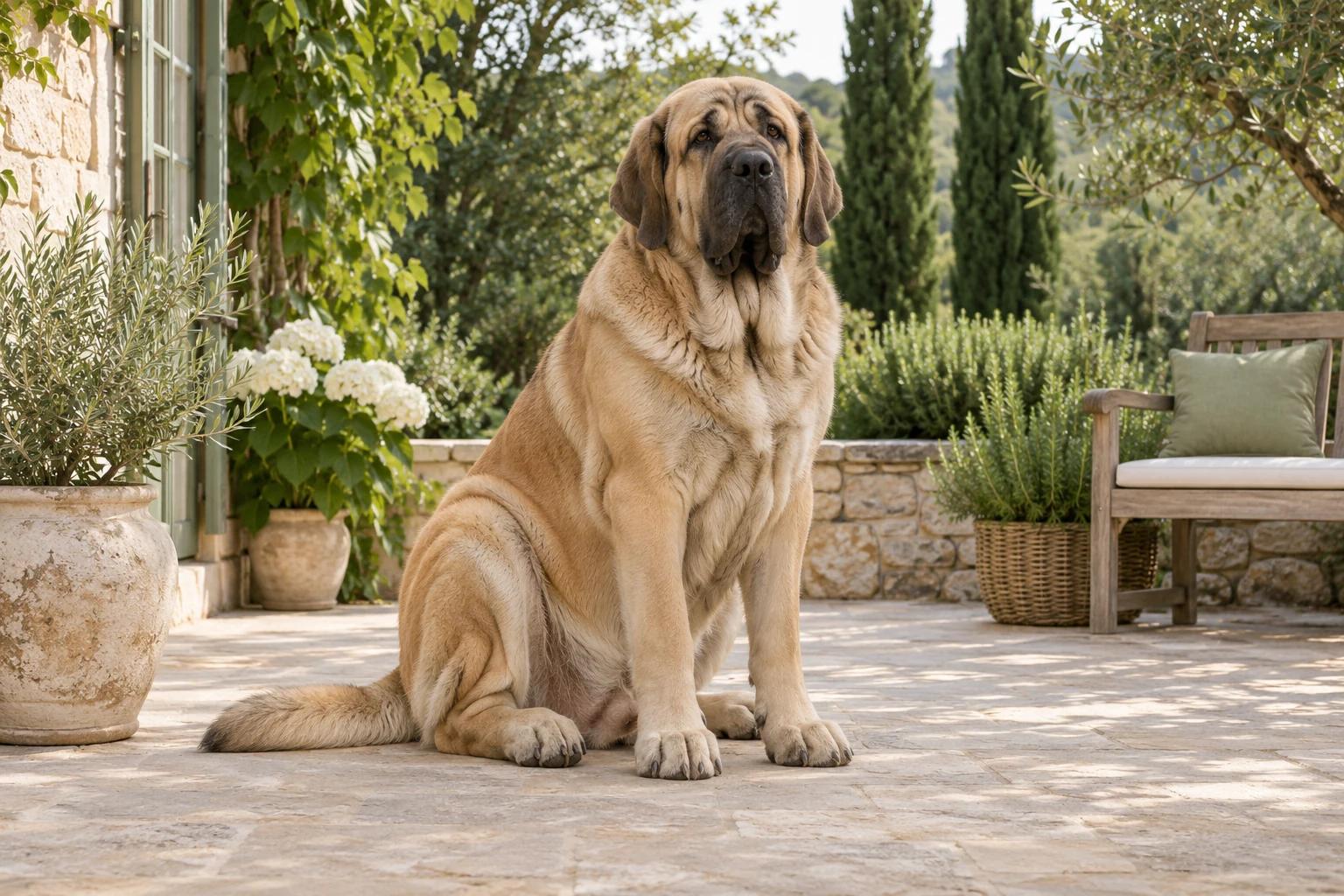
Picture a moving flock, not only a farmyard
The FCI Spanish Mastiff standard connects the breed with seasonal livestock movement, particularly Merino livestock. It describes dogs accompanying herds during the medieval Mesta period and defending them against predators along the journey as well as on grazing ground. Movement between places is part of the account, not merely background scenery.
Keep guarding and moving livestock distinct
In a short introduction, describe the protective role the source assigns to the dogs. Do not silently turn accompanying a flock into a claim about gathering or steering it in the manner of a different working role.
When looking at an old image, note whether its caption identifies a route, pasture or settlement. The setting can help explain the scene, but a dog standing beside sheep is not enough to prove its exact task or registration.
Bring the history back to an individual conversation
For a modern dog, ask about its actual experience with livestock, people, boundaries and daily handling. A historical account cannot demonstrate that a particular animal is ready for unsupervised work or suited to every household.
The source helps explain why a Spanish Mastiff introduction should include the landscape and travel of pastoral life. It offers context for questions about experience; it does not substitute for training, management or an individual placement assessment.
Sources behind this article
Article source checked: October 20, 2026. Source checked 2026-10-20
Keep reading
Spanish Mastiff vs Pyrenean Mastiff
Read article →