Snowshoe Cat vs Birman: White Feet, Different Coats and Care
Compare Snowshoe cat vs Birman markings, coat care and everyday company, then assess each individual and the routine your household can support.
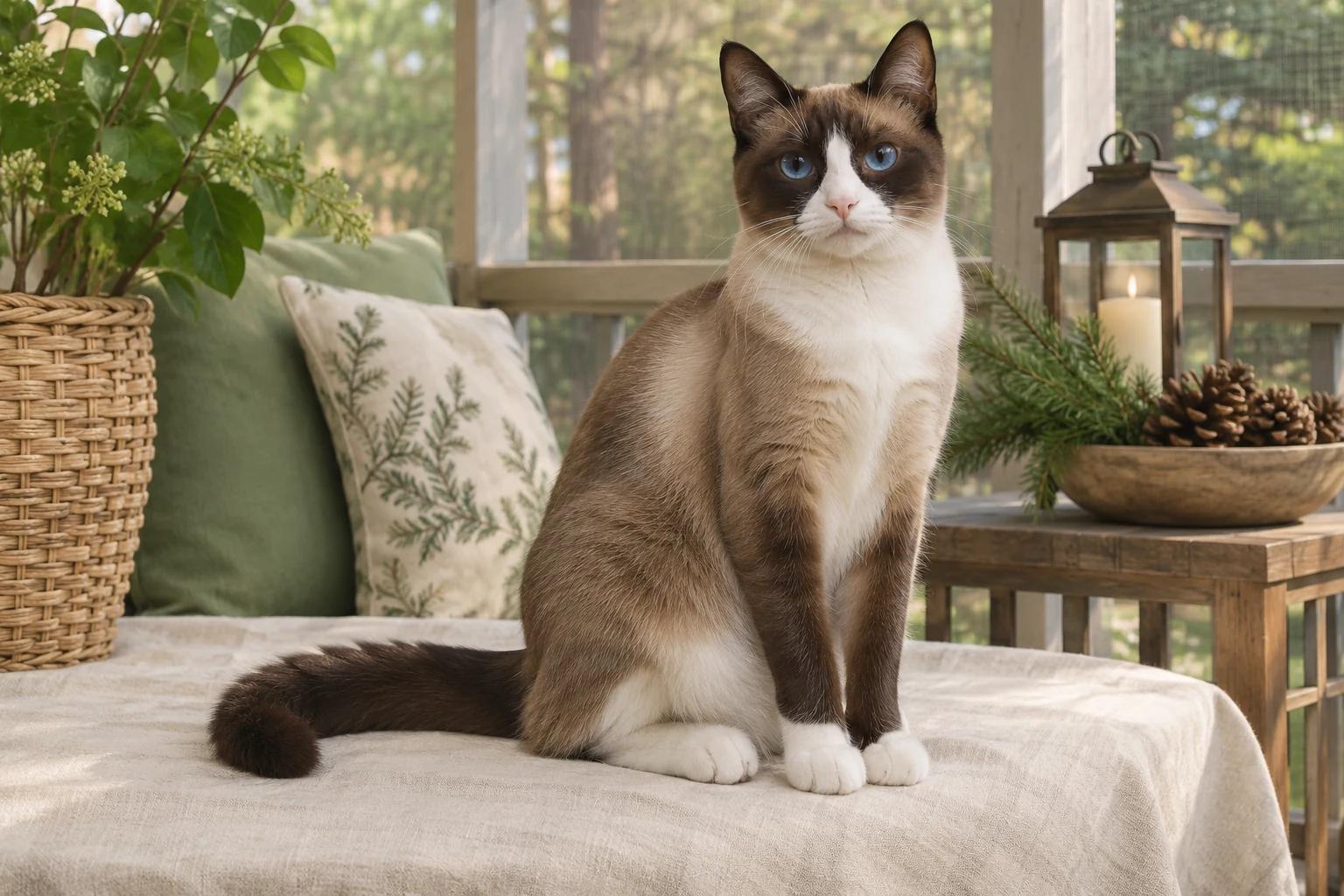
Snowshoe cat vs birman comparisons often start with blue eyes, darker points and white feet. Those shared visual features do not make the names interchangeable. TICA describes the Snowshoe as shorthaired with a modified-wedge head and variable white markings; CFA describes the Birman with a longer, flowing coat, a broader rounded head and its characteristic gloves and rear laces.
If you are considering a snowshoe cat or birman, look beyond a matching color impression. Coat work, individual contact preferences and a realistic daily routine will matter after the novelty of the markings becomes familiar.
Snowshoe cat vs Birman: compare more than the paws
Read the Snowshoe profile and Birman profile with the individual records. White feet alone cannot authenticate either breed. Ask what background is documented and preserve uncertainty where records are incomplete.
TICA traces Snowshoe development through white-footed Siamese offspring and shorthaired crosses. CFA's Birman account describes a separate history whose earliest stories include uncertainty. A similar pattern does not establish that the animals share the same development or should receive identical care.
The difference between snowshoe cat and birman is therefore more useful as a set of questions than a photographic identification game. Ask about coat texture, accepted maintenance and ordinary behavior rather than requiring the animal to resemble a perfect illustration.
Make the coat commitment visible
The Snowshoe's current reference starts with weekly brushing to remove loose hair. The Birman's profile describes weekly combing of its longer coat and says routine bathing is generally unnecessary. Similar calendar words can still involve different equipment, areas and accepted handling.
Ask each caregiver to explain the actual routine. What tool is familiar, how are breaks handled and who helps if a tangle exceeds ordinary care? A source calling a coat easy cannot guarantee that every individual stays free of knots or accepts every technique.
Do not choose an animal on a promise that white paws will always look immaculate. Color is not a cleaning instruction, and an unfamiliar product should not be used to match a photograph. Seek appropriate advice about contamination, skin findings or a changed response to care.
Compare interaction in familiar circumstances
TICA's Snowshoe account allows for reserve around unfamiliar people, while CFA describes people-oriented companionship in the Birman. Those broad accounts cannot establish which candidate will greet a guest first or enjoy being carried.
Ask the same practical question for each: what happens when someone settles in the evening? Learn whether the cat chooses nearby rest, touch, play or a separate place. Ask how an interaction ends as well as how it begins.
At a meeting, provide room to approach and withdraw. A quiet encounter is not evidence of a poor relationship, and an enthusiastic greeting does not promise unlimited handling. Neither animal should be passed around to demonstrate a gentle reputation.
Discuss calling without promising silence
The Snowshoe profile explicitly keeps voice variable. CFA describes a generally softer Birman voice, but an individual still needs its own history. A birman vs snowshoe cat decision should not rely on an unsupported guarantee about which will remain quiet during work or sleep.
Ask about sound in ordinary settings, including unfamiliar events and absences. Keep the context attached instead of judging from one recording or a silent first visit. Tell the caregiver honestly what your household can accommodate.
Seek veterinary advice about a new or concerning change. A known breed tendency is not a diagnosis and should not explain away a response that differs from usual. This comparison supplies no plan to suppress calling or promise that another pet will solve it.
Plan activity without ranking intelligence
Both profiles support interactive opportunities. Ask which games the actual cat understands and returns to, and how it chooses to finish. A puzzle result during a visit cannot rank the breeds or measure overall suitability.
FelineVMA's indoor-cat guidance combines play with retreat and resources. Prepare those choices for either candidate. A busy room may contain plenty of human activity while offering the cat little control over its own contact and rest.
Follow instructions for raised furniture and keep essentials accessible. A social animal can still need an undisturbed route to a resting place, particularly when another pet is nearby. Do not rely on a reputation for adaptability to resolve competing access.
Keep the transition individual
The existing Snowshoe litter-change guide addresses a specific care transition. The lesson is not that every new home should change supplies; it is to learn what the animal already uses and seek appropriate guidance where a change is needed.
Ask both caregivers about familiar food, trays, equipment and handling. Record actual products and instructions clearly enough that another adult can continue care. Avoid treating a new breed choice as a reason to replace everything immediately.
Resident animals require their own introduction planning. A favorable description cannot certify compatibility with your dog or cat. Arrange appropriate separation, resources and guidance, and supervise children's interactions rather than expecting the newcomer to manage them.
Use a comparison sheet that records responsibilities
For each candidate, write one established coat task, one preferred activity, one contact preference and any unresolved care question. Include who will provide help during absences. This keeps the shortlist grounded in what the household can maintain.
The cat quiz can help organize broader preferences before that conversation. It cannot interpret veterinary records or establish a health ranking between the breeds. Discuss individual medical questions with the appropriate professional.
A workable decision may remain undecided until more information arrives. Shared white feet are a reason to notice the cats, not a reason to overlook their different coats, histories and present needs. The useful outcome is an informed responsibility rather than a winner chosen from appearance.
Frequently asked questions
Do white feet and blue eyes identify either breed?
Not by themselves. TICA and CFA describe distinct breeds with other features and histories. Ask about the individual's records rather than authenticating it from appearance.
Does the same weekly reference mean identical grooming?
No. The Snowshoe's short coat and Birman's longer coat involve different practical questions. Learn the actual tool, technique and accepted routine.
Is one guaranteed to be quieter or more affectionate?
No individual ranking is established here. Ask about familiar daily behavior and respect the animal's choices during contact.
Can a friendly visit establish compatibility with another pet?
No. The actual residents and introduction arrangements need consideration, with resources, retreat and suitable guidance for every animal.
Sources behind this article
Article source checked: November 20, 2026. Source checked 2026-11-20
Keep reading

Abyssinian vs Somali: Coat, Size and Everyday Company
Read article →