Slovensky Kopov Temperament: Family Life and Learning
Understand Slovensky Kopov temperament, social tendencies, introductions, and calm behavior without mistaking breed ratings for individual promises.
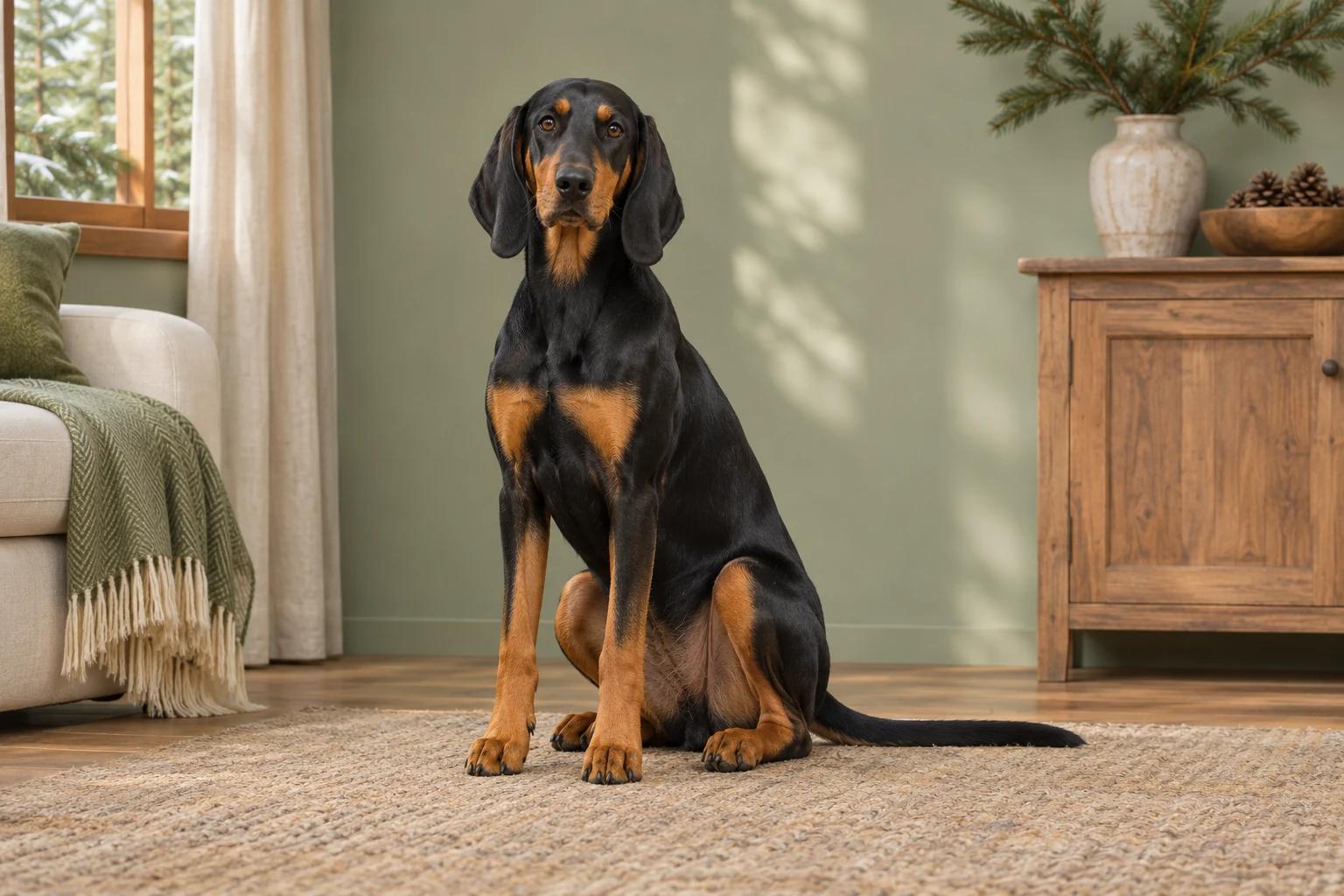
Slovensky Kopov temperament deserves a more useful description than simply “a hunting dog.” The Slovensky Kopov profile combines strong family affection with relatively good responsiveness to training and a middle rating for everyday activity. Those traits describe different parts of life, not a single easy-or-difficult score.
Slovensky Kopov temperament through the growing years
The Swedish breed club describes a sociable, affectionate dog with willingness to work, while noting that young Kopovs can be impulsive and headstrong. That combination makes more sense than treating affection and independence as opposites. A young dog can enjoy being with you and still find it difficult to interrupt an absorbing activity.
Age therefore matters when discussing Slovensky Kopov personality. An adult resting beside its owner does not show you everything that raising its puppy involved. Equally, a lively youngster is not a finished demonstration of its adult manners. Ask to see ordinary interactions with both younger and mature dogs, rather than expecting the same presentation from each.
The useful distinction is between willingness to engage and the ability to sustain a particular response. A Kopov may readily join an activity without already understanding how to participate politely. Treat the breed's social interest as an opportunity for shared learning, not evidence that lessons can be skipped. This leaves room for the individual without dismissing the club's description of a purposeful, involved dog.
Living with another dog
A favorable dog-social rating is not a compatibility test. VCA's introduction guidance emphasizes the resident dog's health, activity and personality, as well as the newcomer's. An exuberant young Kopov and an older dog wanting quiet may need very different kinds of company.
Start meetings in neutral surroundings with enough space to avoid crowding. If the dogs prefer to look elsewhere rather than immediately interact, that is acceptable. Keep initial sessions brief enough that they can separate and rest. Give each dog individual attention instead of requiring every enjoyable event to happen together.
Inside the home, provide separate meals and separate resting opportunities. The Kopov being friendly outdoors does not tell you how either dog feels about sharing a bowl or a favored bed. Watch for discomfort rather than waiting for a confrontation to prove there is a problem. Do not punish warning communication. If tension persists, seek qualified help with the pair rather than assuming that one dog must simply tolerate the other. Successful companionship includes room to disengage.
New people without pressure
The profile's middle rating for openness to new people leaves room for different greetings. If a Kopov is worried about visitors, Cornell's guidance on fearful dogs supports voluntary approaches rather than forced encounters. Confidence with familiar people does not require immediate contact with strangers.
For a dog concerned by someone leaning over it, a seated visitor who initially ignores the dog changes the interaction. The Kopov can investigate without a reaching hand following its face. Do not lure it into contact that it is then unable to leave. Progress should remain comfortable, with rewards accompanying manageable experiences rather than a crowd arriving to “get it used to people.”
This is an individual adjustment, not a claim that every Kopov is fearful. A dog that readily greets guests needs a different arrangement from one that withdraws. Neither should have its response judged against an imagined breed performance. If fear interferes with ordinary life, consult your veterinarian about appropriate behavioral support. Courage as a breed description is not a reason to override a dog's evident discomfort.
Teaching a real pause
Slovensky Kopov behavior at rest is worth developing as deliberately as active skills. VCA's calm-training guidance distinguishes a relaxed dog from one merely holding a position while waiting intensely for food.
After the dog has had an opportunity for appropriate activity and toileting, sit beside a mat in a quiet place. Reward lying down by quietly placing a small treat between the front feet. Choose rewards that do not create excessive excitement. Gradually notice softer postures, such as shifting onto a hip, rather than rewarding only an alert stare at your hand.
Keep your own delivery quiet. Increase the gaps between rewards gradually, and make the exercise easier again when adding a distraction. The point is not to demand immobility from a dog that is uncomfortable or bursting with unmet needs. It is to help an already comfortable Kopov discover a restful way of sharing space. If settling remains unusually difficult, veterinary assessment can help distinguish a training problem from physical or emotional discomfort requiring different support.
Read the whole personality profile
Among the recorded Slovensky Kopov characteristics, family affection scores five out of five, while playfulness and mental engagement sit at three. That is a useful combination for someone who wants company but should not be interpreted as a promise of constant toy play. A dog may value being included without wanting every interaction to become a game.
Watchfulness is also midscale. Do not choose a Kopov on the assumption that it will provide a particular security service, or judge it a disappointment because its response to an arrival differs from another dog's. The vocal rating is midscale too; the sound of one memorable encounter cannot describe all household behavior.
For a separate explanation of working terminology, read the existing article about giving tongue. The dog quiz can help compare your priorities with the wider breed library, including how much daily companionship you actually want.
Frequently asked questions
Is the Slovensky Kopov affectionate?
The breed profile records strong family affection. Think about whether you enjoy a dog being involved in ordinary shared time, not just whether you want an enthusiastic greeting. Affection is not a measurement of how a particular dog will cope with your absence.
Does a high training rating mean an easy first dog?
No. The profile gives responsiveness to training four out of five, but that describes a tendency rather than completed skills. Your experience, the dog's existing education and the particular situations you need it to handle remain relevant to the match.
Is every Kopov constantly playful?
No. The recorded playfulness rating is in the middle of the scale. Do not substitute an endless fetch routine for learning what the individual actually enjoys. Interest in family interaction and interest in a particular toy are different aspects of companionship.
Sources behind this article
- Swedish Slovensky Kopov Club: breed character ↗
- VCA: introducing a new dog ↗
- Cornell: fearful dogs ↗
- VCA: teaching settle and calm ↗
Article source checked: November 16, 2026. Source checked 2026-11-16
Keep reading
Slovensky Kopov Size: Weight, Build and Everyday Fit
Read article →