Slovensky Kopov Size: Weight, Build and Everyday Fit
Explore Slovensky Kopov size, adult weight, body shape, puppy growth and walking-equipment fit for this medium-sized Slovakian hound.
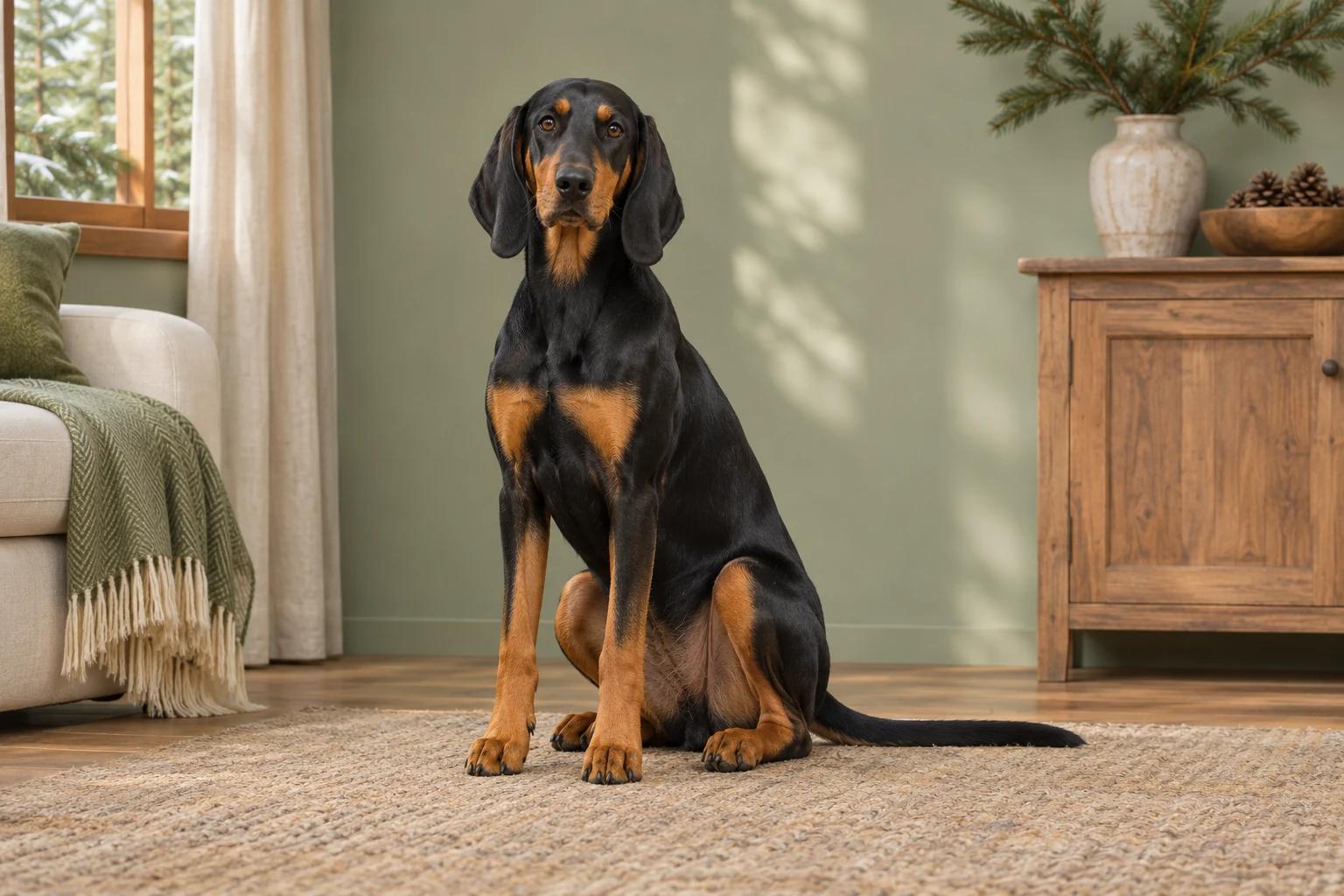
Slovensky Kopov size is medium rather than miniature: the breed profile lists an adult weight of 33–44 pounds and height of 16–20 inches. Those figures describe a reference range, not the dimensions of every dog or a target that a puppy must reach on schedule.
Slovensky Kopov size includes its outline
The FCI standard describes a somewhat elongated rectangle with relatively light construction but substantial bone. The back is straight, the loin muscular, and the chest combines breadth with moderate depth.
Look beyond the black-and-tan coloring to understand the outline. The neck is fairly short and muscular; the ears lie alongside the head. The tail reaches the hock, contributing to the dog's overall space without being part of shoulder height.
Those details explain why two dogs of similar weight need not look alike. A Kopov's body length, chest and limb proportions matter alongside the scale reading. The standard calls for balanced, lively movement rather than a heavy, cumbersome impression. More bulk is not automatically a better expression of the breed, and a photograph alone cannot establish the dimensions or condition of an individual dog.
Growth is not a monthly multiplication problem
If you are wondering how big do Slovensky Kopovs get, separate the adult reference from your puppy's current stage. VCA's discussion of maturity explains that growth and the end of puppyhood vary with expected adult size. Medium dogs commonly approach adulthood around a year, but there is no precise birthday that fits every individual.
That broad guide is not a breed-specific growth chart. Doubling a puppy's weight because someone uses that shortcut for another breed can give a misleading sense of certainty. Your veterinarian can give a more useful assessment using the actual dog's development rather than a single arithmetic rule.
Physical size also should not be mistaken for a complete definition of adulthood. A youngster approaching its adult outline is still the dog in front of you, not a deadline to change every part of its care. Discuss development with the veterinary team instead of treating the first adult-looking photograph as proof that the puppy phase has ended. Keep the question focused on this dog's progress, not another litter's timetable.
A weight range is not an individual ideal
Slovensky Kopov weight needs interpretation, even when the number falls inside the reference band. The FDA's veterinary guidance explains that ideal weight depends on factors including body type and age, and encourages owners to discuss body condition with their veterinarian.
Ask the vet to demonstrate the scoring system used for your Kopov. A number written beside “condition” means little unless you understand what was assessed. The view from above, the outline from the side and how readily the ribs can be felt contribute different information. Do not infer condition merely from the dog's dark coat or its position relative to the top of a breed weight range.
The practical goal is an appropriate condition for that individual, not making every Kopov equally heavy. Discuss unexplained changes, including weight loss, rather than correcting them yourself with a guessed feeding adjustment. Food-package quantities also need interpretation for the particular dog. This is a conversation about growth, condition and health together, not a contest to reach the largest permitted number.
Fit walking equipment to today's dog
A medium-sized adult label is no reason to put adult-sized equipment on a puppy. RSPCA Australia's equipment guidance recommends comfortable, correctly adjusted gear and frequent fit checks during growth. A collar should generally allow two fingers to slide underneath comfortably.
For a growing Kopov, inspect the actual fit several times a week rather than waiting until the item visibly looks small. A harness also needs reassessment. Buying something with adjustment available can be useful, but leaving it loose now in anticipation of growth is not the same as fitting it correctly.
The leash and fittings must suit the dog as well. An unnecessarily weighty clip can burden a small puppy, while inadequate fittings are unsuitable for a stronger dog. A reward-based trainer can help assess walking equipment and demonstrate its use. Do not choose painful restraint devices to compensate for a dog becoming larger. Size changes the practical demands of handling, but equipment still needs to be comfortable and paired with teaching rather than force.
Medium size does not mean minimal involvement
The Kopov profile combines its physical range with strong family affection and a relatively responsive training rating. In practical terms, choosing this breed because it is smaller than a very large dog does not remove the need to enjoy an involved companion. The space occupied by a resting dog is only one part of the match.
For someone comparing homes, distinguish physical space from the activities that take place there. An open floor area does not itself tell you whether you want a dog joining daily life. Equally, a modest home is not described adequately by its square footage alone. Consider the individual dog's ordinary activity and the kind of shared time you can offer, alongside its dimensions.
The dog quiz can help you compare those priorities. For the breed's working vocabulary rather than measurements, the existing giving-tongue article covers a separate aspect of its background.
Frequently asked questions
Does Slovensky Kopov height describe how much company it needs?
No. Shoulder height measures a physical dimension, while the breed profile records strong family affection. A dog taking up less room than a giant breed can still be a substantial presence in everyday family life. Treat those as separate ownership questions.
Is the smallest puppy automatically the easiest match?
No. A puppy's relative size does not describe its personality or your compatibility. The profile includes distinct ratings for activity, playfulness, watchfulness and training responsiveness. None of those is established by being the smallest puppy you happen to meet.
Is a Kopov's care commitment mainly about its size?
No. The profile records a relatively low grooming-frequency rating alongside some shedding, plus a middle vocal tendency. Those characteristics affect life with the breed independently of its dimensions. Choose for the whole dog rather than using a medium-sized outline as shorthand for low effort.
Sources behind this article
- FCI: Slovakian Hound standard ↗
- VCA: puppy growth and maturity ↗
- FDA: healthy pet weight ↗
- RSPCA Australia: walking equipment ↗
Article source checked: November 16, 2026. Source checked 2026-11-16
Keep reading
Slovensky Kopov Temperament: Family Life and Learning
Read article →