Slovakian Wirehaired Pointer Temperament in Daily Life
Explore Slovakian Wirehaired Pointer temperament through responsive learning, purposeful activity and practical games with your dog.
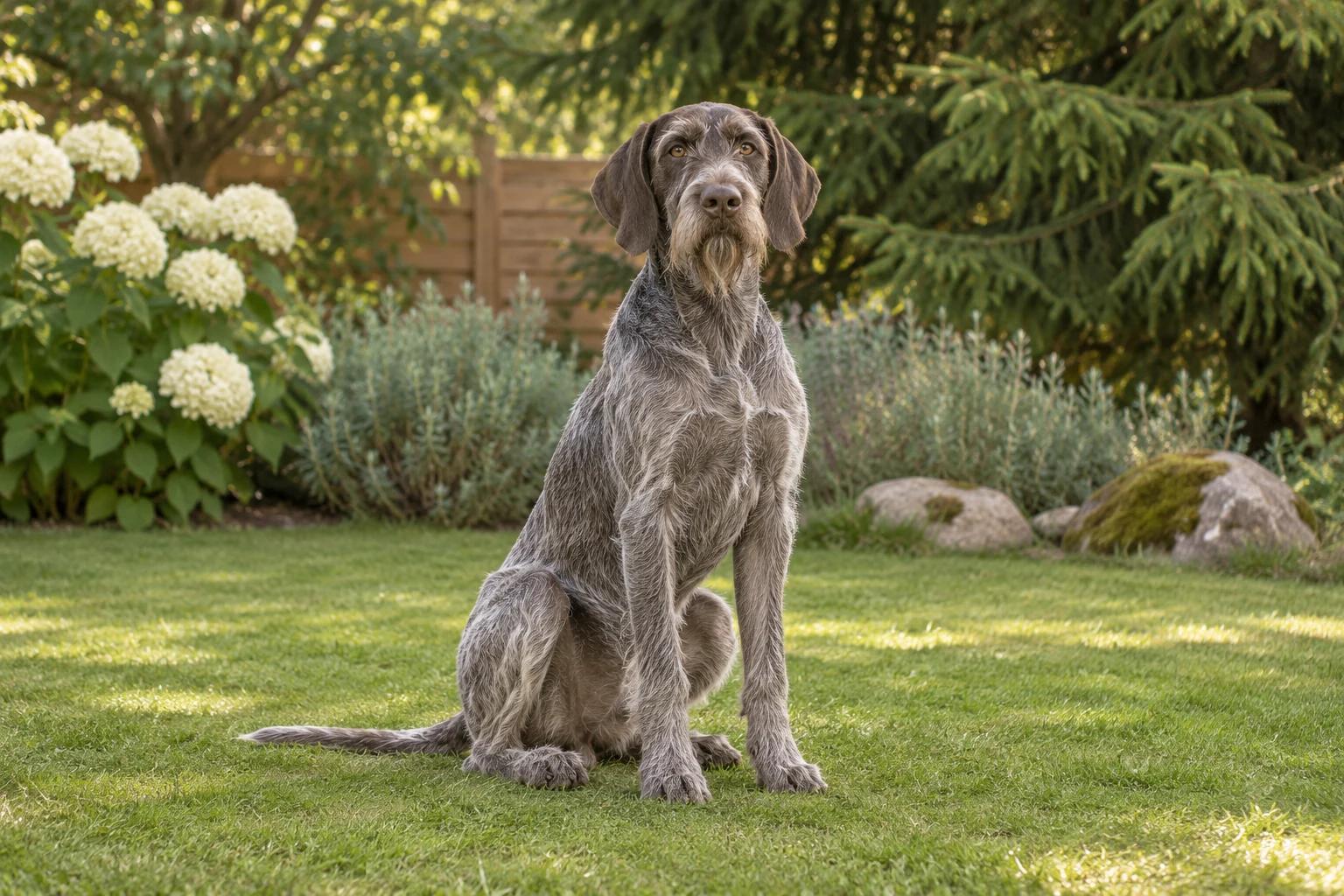
Explore the
Slovakian Wirehaired Pointer
Background, care, and everyday considerations.
View breed profile →Slovakian Wirehaired Pointer temperament is best understood through participation rather than a list of flattering adjectives. The breed profile combines a high responsiveness-to-training reference with strong family affection and higher activity needs. That points toward a dog to do things with, not a dog whose appealing personality replaces the need to teach it.
The profile's middle playfulness and mental-engagement ratings also deserve attention. Responsive does not mean that every game will be equally interesting, or that learning must occupy every waking moment. Look for the individual dog's preferred ways of engaging, and develop a few useful activities well.
Slovakian Wirehaired Pointer temperament: sensitive cooperation
The BASC breed spotlight describes a sensitive side to the breed and emphasizes consistent, rewarding teaching rather than pushing the dog into cooperation. It also warns that a companion dog's hunting interests do not simply disappear. Being responsive with a familiar person is different from being unaffected by an interesting scent outdoors.
For everyday handling, this means separating willingness from difficulty. If a dog responds in the garden but becomes absorbed elsewhere, the change of setting matters. It is not evidence that kindness has failed or that the dog needs a more forceful person.
Work at a level where the dog can take part, and maintain safe management while skills develop. A successful easy repetition teaches more than repeatedly asking for something the dog cannot currently manage. This is especially relevant when a responsive puppy begins exploring more intensely: preserve the cooperative relationship instead of turning every distraction into an argument.
Purposeful activity is broader than one kind of work
The breed club's working-trials account describes three areas: control, agility and nosework. Experienced Slovakian handlers discuss teamwork, and one specifically notes that keeping her dog focused could be challenging. That is a useful corrective to the assumption that a trainable breed never needs help with attention.
The combination shows how several abilities can be developed within one activity. Following a person's direction, negotiating a physical task and using scent are not the same skill. A dog that enjoys one part may need more time with another.
You do not need to begin by entering a trial. A suitable instructor can help you explore foundations and identify what your dog enjoys before considering progression. Watch how the dog responds to the individual tasks rather than expecting enthusiasm for the whole package at once. The point is shared work with room for learning, not proving that a particular pedigree guarantees a particular sporting result.
A small movement lesson: one step backward
The AKC's back-up teaching article offers a reward-based method from a standing position beside the handler. With the dog comfortable and a treat near its nose, move the lure slightly backward and reward even a small backward foot movement. Begin with that tiny success, not a long reverse march.
For an active Slovakian, this can be a focused lesson in moving deliberately rather than always surging ahead. Use an open, nonslip area; do not crowd the dog into a narrow gap. The lure is an invitation to move, not something to press against the face.
Once a single step is understood, build gradually and add a consistent cue. If the dog turns or sits, simplify the request rather than physically arranging its legs. The interesting part is the dog discovering which movement earns the reward. Keep the task modest enough that it remains cooperative and stop before repeated failures take over.
A ground-level game for handler attention
The AKC introduction to agility at home includes teaching a dog to go around an object. This gives a responsive learner something more specific than “use up energy.” A stable cone can become a clear, uncomplicated task without requiring jumps or a complete obstacle course.
Start by rewarding interest in approaching the object. Gradually reward movement farther around it until the dog can complete the route and return to you. Let that understanding develop before adding distance or expecting a faster response. A broad, comfortable turn is enough for an introductory game; precision can wait.
For a Slovakian learning to follow your direction, notice where you stand and where the reward appears. Those details help the dog distinguish going around the object from simply coming straight to your hand. If it becomes confused, return to an easier part of the route. A small, understandable success is more useful than making the exercise look impressive.
Affection, sociability and voice are separate traits
The Atlas profile's strong family-affection reference does not mean that a Slovakian must greet every newcomer with equal enthusiasm. Openness to new people sits in the middle of the scale. A dog can be involved with familiar people while responding differently to a visitor, a crowded setting or someone handling it for the first time.
Other-dog interaction is rated relatively highly, but that is not a substitute for considering the actual pair. Watch whether both dogs choose to continue an interaction, rather than assuming that the Slovakian's breed description makes every match suitable. A social tendency describes an opportunity, not an obligation to play with every dog encountered.
Vocal tendency and watchfulness are both in the middle of the reference range. Some barking is therefore compatible with the profile, and silence is not the definition of a good Slovakian Wirehaired Pointer personality. Ask what situations bring out the dog's voice and whether its response changes with familiarity.
These Slovakian Wirehaired Pointer characteristics fit together without creating a single fixed temperament. The individual dog's experience remains essential. For a different angle, read the article on its work description, then use the dog match quiz to compare your preferred daily involvement with other breeds.
Frequently asked questions
Does Slovakian Wirehaired Pointer behavior suit frequent teaching?
The Atlas profile rates responsiveness to training highly, so owners should expect to invest in teaching rather than assume it is unnecessary. The individual dog's motivation still matters. A favorable breed tendency is not a guarantee that every task will be equally easy.
Is the breed playful all the time?
The Atlas playfulness reference is in the middle of the scale, below its activity rating. Enjoying movement does not necessarily mean wanting endless toy games. Notice which invitations the dog accepts and which activities genuinely hold its interest.
Does affection mean instant friendship with visitors?
No. The breed's high family-affection reference sits alongside a middle openness-to-new-people rating. Those describe different relationships. Get to know how the individual responds to newcomers rather than expecting household attachment to predict every greeting.
Sources behind this article
- BASC: Slovakian rough-haired pointer breed spotlight ↗
- Slovakian Rough Haired Pointer Club: Working Trials ↗
- AKC: Teach Your Dog to Back-Up ↗
- AKC: Get Started in Dog Agility at Home ↗
Article source checked: November 16, 2026. Source checked 2026-11-16
Keep reading
Slovakian Wirehaired Pointer Size: Build and Practical Fit
Read article →