Slovakian Wirehaired Pointer Size: Build and Practical Fit
Understand Slovakian Wirehaired Pointer size, adult weight, body shape, equipment measurements and comfortable resting space.
Explore the
Slovakian Wirehaired Pointer
Background, care, and everyday considerations.
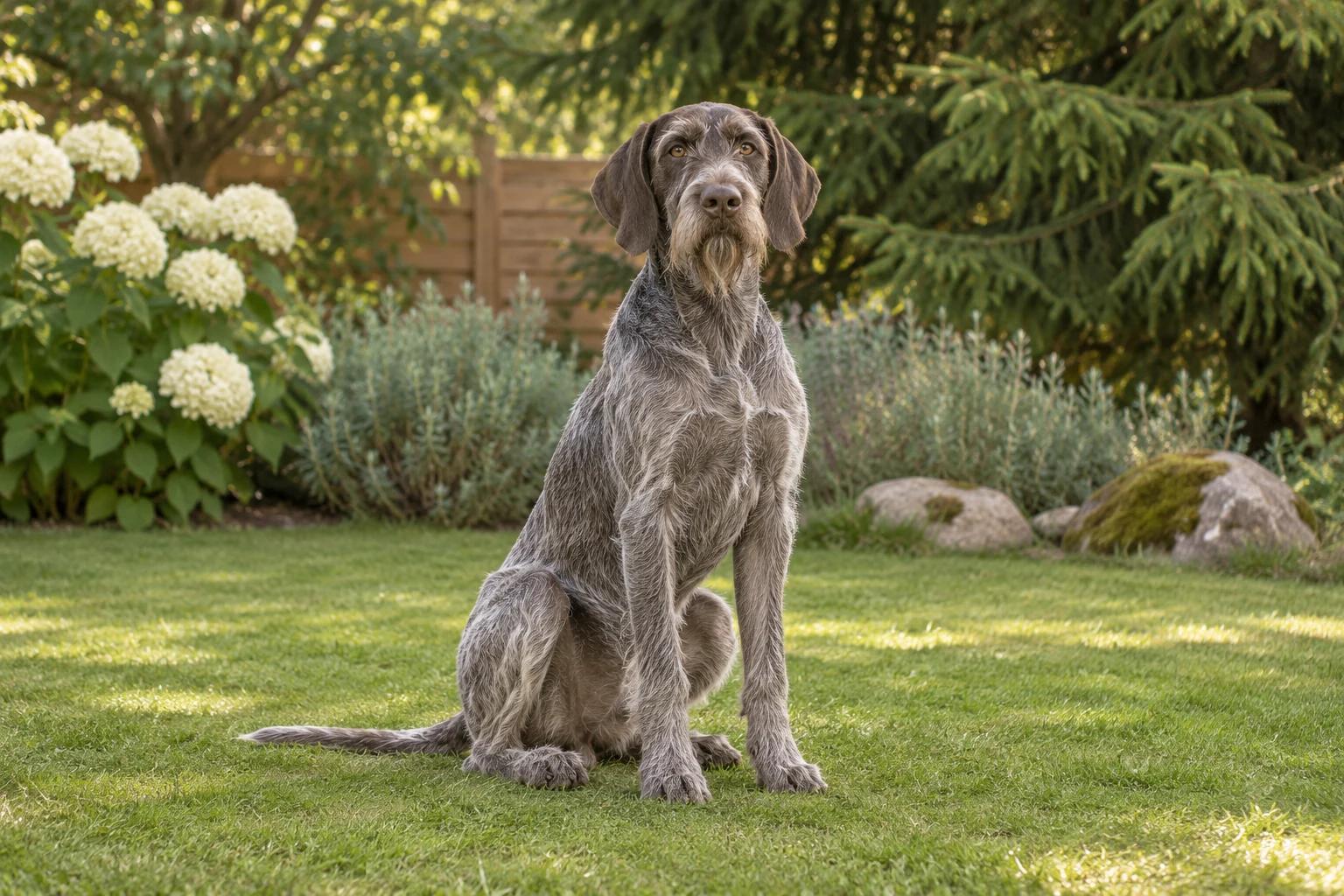
View breed profile →Slovakian Wirehaired Pointer size is a practical consideration for walking, travel and the space a dog occupies at home. The current breed profile gives an adult weight reference of 50–65 pounds, approximately 23–29.5 kilograms. That is a substantial companion, not a small dog hidden underneath a rough-looking coat.
The range is a description of the breed reference, not a target every individual must reach. A puppy is not a failed adult because it weighs less, and an adult at one end of the range is not automatically preferable to another. Start with the dog's actual build and measurements, then consider the job each measurement must do.
Slovakian Wirehaired Pointer size includes body shape
The FCI breed standard describes a solid but not heavy type, longer in body than in height. The chest is oval, reaches to the elbow and has well-sprung ribs; the abdomen is moderately tucked. These features explain why body mass alone cannot represent the dog's shape.
Picture the chest, back and legs together rather than treating the dog as a single weight category. Two dogs with similar readings on a scale can still occupy their space differently. Size includes proportions as well as pounds.
Measure the dog for equipment, not the breed name
The AKC measuring guide distinguishes chest girth, neck girth and back length. For chest girth, measure around the largest part of the rib cage, usually behind the front legs, while the dog stands naturally. For clothing length, measure from the base of the neck to the base of the tail.
This is more useful than ordering a “pointer size.” A Slovakian's chest and back need to fit the actual design, and brand labels are not standardized. Read whether a chart describes the dog's measurements or the item's own dimensions. Those are not interchangeable numbers.
Keep the tape comfortable rather than tightening it to compress the dog into a smaller category. The guide recommends allowing space when measuring circumferences. Check the relevant manufacturer instructions as well, particularly for adjustable equipment. If one part fits but another does not, a different shape may be needed rather than simply choosing the next label up and hoping.
Getting a useful weight reading
Dogs Trust's scale-training guide recommends introducing veterinary scales gradually, with a stable nonslip surface and rewards. Ask the clinic about a quiet opportunity to practice. A dog that walks onto the platform willingly is easier to weigh than one being pulled toward it.
Begin with exploration near the scales. When the dog is comfortable, reward stepping onto them, then reward a brief pause. Build enough stillness for a reading without holding the dog in place by force. If the platform itself is worrying, the guide suggests beginning with a familiar mat on the floor and progressing gradually.
For a dog of this size, clinic equipment can be more practical than attempting to lift it onto household scales. Do not turn weighing into a balancing exercise for the handler. If the dog remains worried, ask the veterinary team for help. The purpose is a reliable reading obtained considerately, not completing the task at any cost.
Resting space must accommodate more than a curl
The RSPCA's dog-bed guidance recommends enough space for different natural sleeping positions, including stretching out. A Slovakian that can tuck itself into a compact circle has not demonstrated that a small bed meets every resting preference.
Watch the dog lying on its side with its legs extended as well as curled up. Consider the usable sleeping surface, especially when thick raised sides reduce the space inside. A mattress-style bed and a sided bed offer different ways to rest; the dog's actual preferences matter more than a breed label printed on the packaging.
Place a suitable resting option where the dog can relax without being repeatedly disturbed. The RSPCA also recommends a choice of locations, including a quiet area and somewhere near family activity. For a companion with a strong family-affection reference, shared-room resting space should be genuinely usable, not a small leftover patch between furniture that the dog must squeeze into.
What the adult weight range does and does not tell you
The 50–65-pound reference spans 15 pounds. That difference is large enough to make “about the same size” an imprecise description when comparing two adults. Ask for the individual's recent weight rather than assuming that every Slovakian occupies the middle of the range. If the dog is still growing, discuss its development with the veterinarian rather than calculating a final size from one reading.
Slovakian Wirehaired Pointer weight also does not describe temperament. The Atlas profile combines this physical size with high responsiveness to training and higher activity needs. A comparatively lighter adult may be highly engaged and energetic; a heavier one is not necessarily calmer. Choose activities and teaching for the dog, not merely for the number on the scale.
The same distinction applies to handling around the home. The breed has a middle playfulness reference, not a promise of either constant boisterousness or permanent stillness. Observe the individual turning through doorways, moving beside a person and choosing where to lie. Those ordinary movements give a much better impression of living with its size than a photograph beside an unknown person.
For Slovakian Wirehaired Pointer height in practical planning, the actual dog is the relevant reference: a low opening or narrow route cannot be assessed from weight alone. Consider clearance and turning space without treating a breed-range endpoint as an equipment specification.
Read the separate article on the breed's work description for background, and use the dog match quiz to compare activity and companionship alongside physical size.
Frequently asked questions
How big do Slovakian Wirehaired Pointers get?
The current Atlas adult weight reference is 50–65 pounds. It describes a substantial dog, but does not predict a particular puppy's final size. For an adult, use its actual measurements and recent weight rather than assuming it matches the midpoint.
Does a smaller adult need less teaching?
No. Physical size does not replace the breed's high responsiveness-to-training and higher activity reference points. A lighter individual still needs appropriate learning and engagement. Evaluate its actual behavior rather than assigning expectations by weight alone.
Does a rough coat make the breed high maintenance?
The Atlas profile gives grooming frequency a low reference rating despite the wiry coat type. Physical size and coat-care frequency are different considerations. Neither tells you how much active participation the individual dog will want throughout the day.
Sources behind this article
- FCI: Wirehaired Slovakian Pointer standard ↗
- AKC: How to Measure Your Dog for Clothes and Gear ↗
- Dogs Trust: Getting used to weighing scales ↗
- RSPCA: Choosing a dog bed ↗
Article source checked: November 16, 2026. Source checked 2026-11-16
Keep reading
Slovakian Wirehaired Pointer Temperament in Daily Life
Read article →