Skye Terrier vs Scottish Terrier: Daily Life Compared
Compare Skye Terrier vs Scottish Terrier companionship, learning, physical outline and everyday care beyond a shared Scottish background.
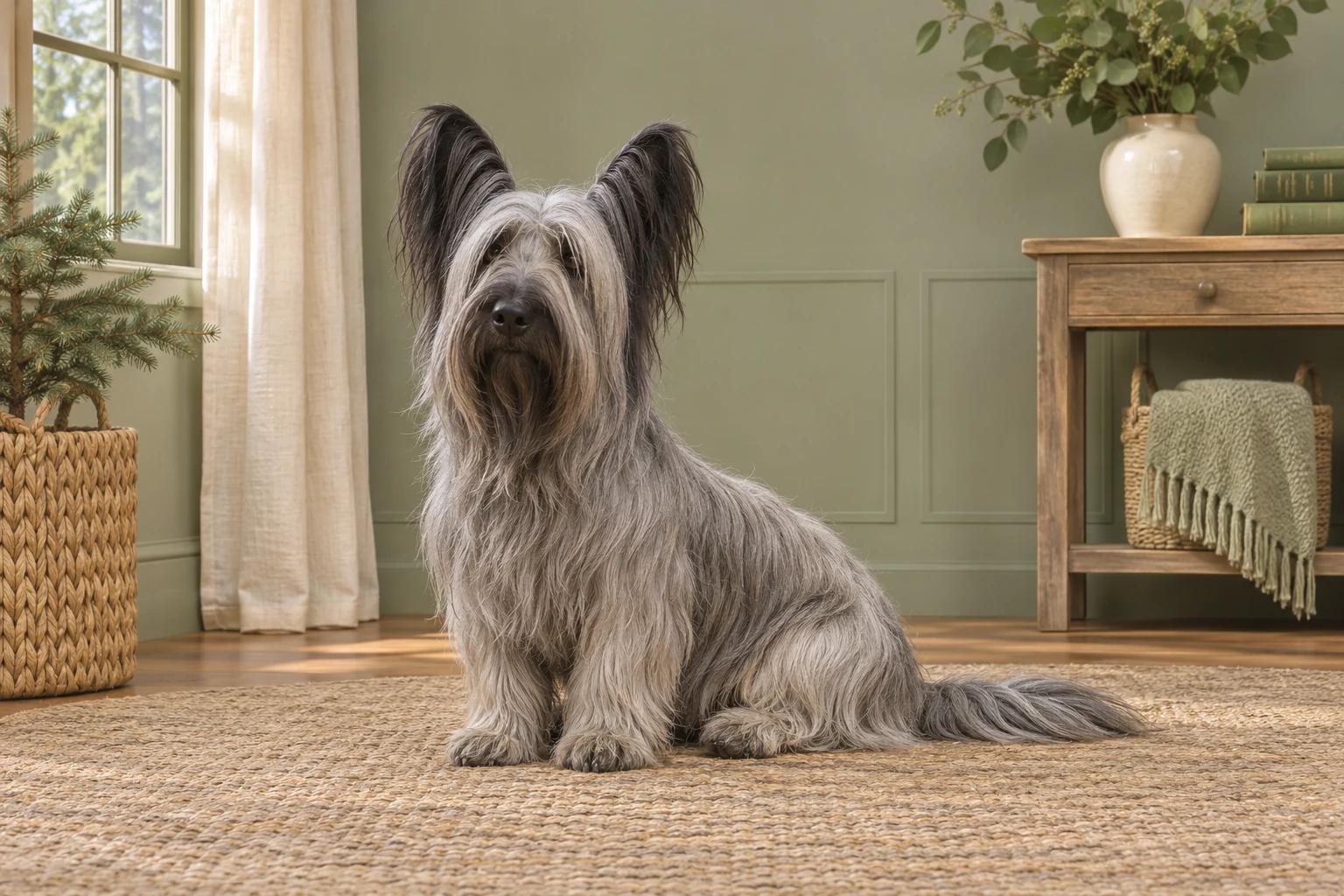
Skye Terrier vs Scottish Terrier is not a choice between two interchangeable Scottish dogs. Their My Breed Atlas profiles describe different combinations of voice, watchfulness, playfulness and other-dog interaction. Both have strong family-affection ratings, but that common ground leaves plenty to consider.
Start with the Skye Terrier profile and Scottish Terrier profile. Consider physical outings and opportunities to learn as separate parts of the day, without ranking mental engagement between the breeds. Think about the interaction you enjoy offering, rather than assuming that two short dogs must have the same preferences or social style.
Skye Terrier vs Scottish Terrier: the Skye’s social world
The Skye Terrier Club describes a strongly person-oriented dog that values familiar company. It also distinguishes initial caution with strangers from the enthusiasm that can follow familiarity. A reserved first encounter does not necessarily describe the relationship you would develop over time.
For someone choosing Skye Terrier or Scottish Terrier, ordinary visits help. Watch what the Skye does around the people it already knows, rather than making immediate attention to you the test of affection. A dog choosing to remain near its owner is giving information about an existing relationship, not necessarily rejecting a future one.
The club describes enjoyment of play and participation in learning, too. Companionship need not mean sitting still together all day. An interactive game or familiar lesson can be part of shared time. Avoid assuming that affection guarantees instant compliance: enjoying a person and understanding that person’s request are different things. The useful question is whether this style of company appeals to you.
The Scottie’s outline is compact and substantial
The AKC Scottish Terrier standard describes a compact body with substantial bone, short legs and a deep, broad chest. Its long head is prominent in relation to the body. The muzzle and skull form approximately parallel upper planes, with the eyes set under the brow.
A strong neck and muscular hindquarters contribute to the impression of power. This is not merely a beard attached to a tiny body. The forechest projects in front of the legs, while the back remains firm and level. Looking at a standing adult from the side reveals more than a close crop of its face.
The coat has a hard, wiry outer layer over a softer, dense undercoat. The beard and lower furnishings may feel somewhat softer than the body coat. When examining the difference between Skye Terrier and Scottish Terrier, distinguish the underlying frame from the grooming outline: furnishings can change the visual impression without changing the dog underneath.
Scottie independence does not mean indifference
The Scottish Terrier Club of America describes independent dogs that nevertheless value being with their people. Some prefer resting nearby to occupying a lap. If you measure attachment only by physical contact, you may overlook a dog whose chosen place is at your feet.
The club also recommends short, positive and enjoyable lessons. A Scottie may have its own priorities, and a long sequence of identical requests can lose its interest. Make the task understandable and the outcome worthwhile rather than assuming independence means there is no point teaching.
This is an important distinction in Scottish Terrier vs Skye Terrier discussions: neither learning style should be reduced to a battle over who is in charge. For a Scottie, the club’s emphasis is on engaging practice and patience. Observe a familiar exercise with its owner if possible. How the dog participates, pauses and returns to the task tells you more than a label such as stubborn or clever.
The Skye’s curiosity also needs an outlet
VCA’s Skye Terrier account describes digging and small-animal pursuit alongside independence. An affectionate relationship does not remove those interests. A dog can be devoted to a person and still become absorbed in something moving or smelling interesting outdoors.
Use secure exercise space and a lead where needed rather than interpreting indoor attentiveness as proof of dependable behavior around wildlife. The Skye’s interest in a small animal should also be considered separately from its relationship with humans. Household affection is not a compatibility test for another species.
The account recommends keeping training interesting and rewarding. Changing the focus can help make a lesson more engaging than repeating one task until either participant becomes frustrated. In choosing a breed, consider whether you enjoy working with an independent investigator. A Skye is not an appealing choice only because of its appearance; the way it explores and learns belongs in the decision as well.
Compare voice, care and social expectations
The Atlas profiles give the Scottie higher watchfulness and vocal ratings than the Skye. If noise is an important constraint, that difference deserves attention, but it does not promise a silent Skye. Both can communicate vocally. Ask about an adult dog’s actual behavior around visitors, outdoor movement and ordinary household sounds.
The Scottie’s other-dog rating is lower, while the Skye’s sits in the middle. Neither rating establishes compatibility with a particular resident dog. It does mean that a confident human greeting should not be used to answer an entirely different question about dog-to-dog interactions.
Both profiles describe regular grooming, though the Scottie has the lower shedding rating. Choose based on the care you can sustain, not on a single attractive photograph. Use the dog quiz to compare the broader lifestyle fit. For a separate appearance detail, read the Skye Terrier ear article.
Frequently asked questions
Is the Scottie’s independence a lack of affection?
No. The breed club describes attachment to people alongside a preference, in some dogs, for resting nearby rather than on a lap.
Is a Skye’s quiet first greeting unusual?
Not necessarily. The Skye club describes caution with unfamiliar people that can change with familiarity. Judge the relationship in context rather than demanding immediate enthusiasm.
Which has the lower vocal rating?
The Atlas reference places the Skye below the Scottie for vocal tendency. That comparison is not a prediction of how loudly a particular dog will respond in your home.
Sources behind this article
- Skye Terrier Club: About Skyes ↗
- AKC: Scottish Terrier standard ↗
- STCA: Scottie character ↗
- VCA: Skye Terrier ↗
Article source checked: November 16, 2026. Source checked 2026-11-16
Keep reading

Affenpinscher vs Brussels Griffon: Everyday Differences
Read article →