Singapura vs Munchkin: Small Build and Short Limbs Are Different
Compare Singapura vs Munchkin body and coat descriptions while separating small size, short limbs, welfare concerns and individual care.
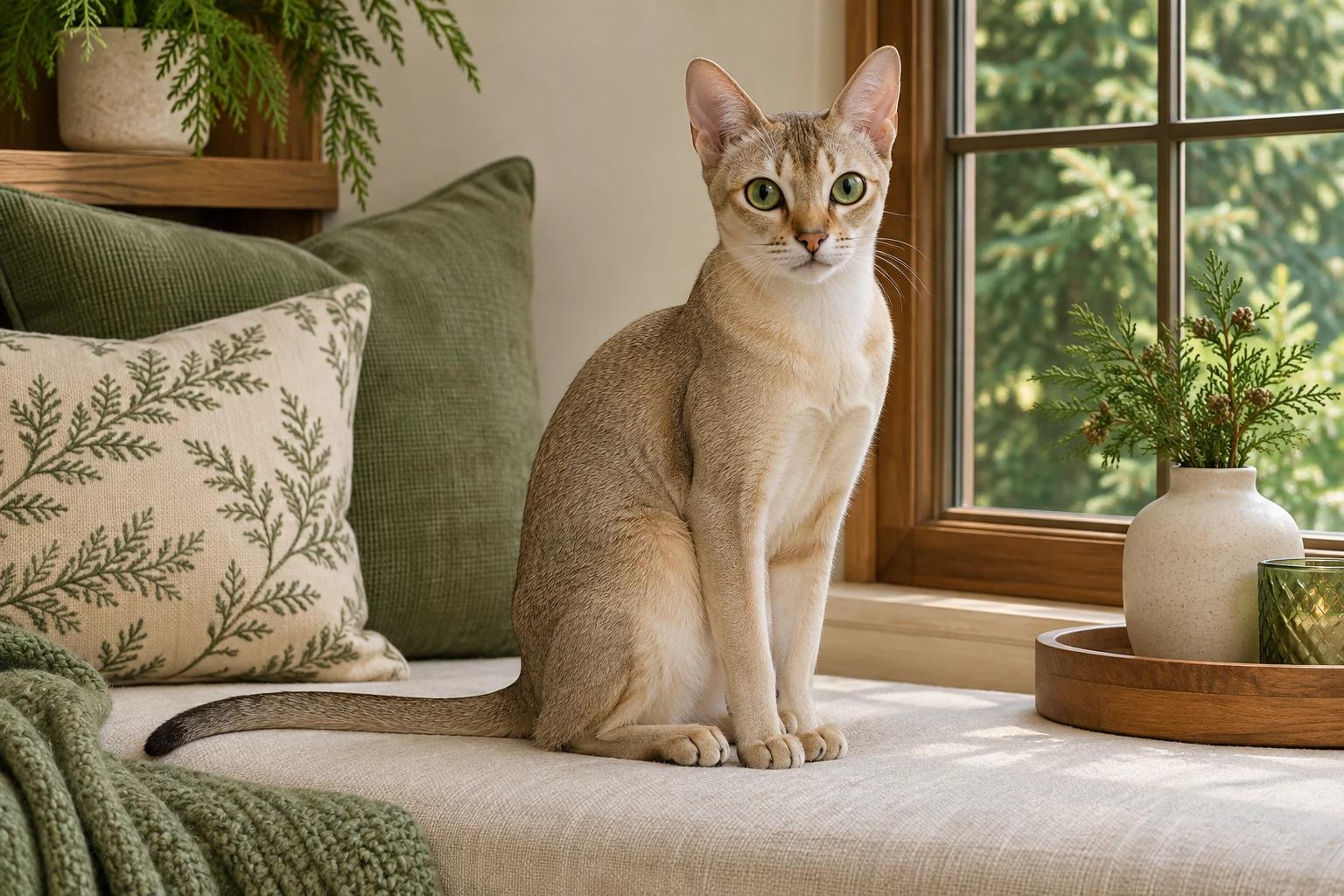
Singapura vs munchkin is a comparison in which the word small can hide two different ideas. The Singapura has a compact, muscular body and a short ticked coat. The Munchkin is distinguished by disproportionately short limbs, with both short and long coat varieties. Short legs do not mean that an adult retains a kitten's body, and the trait should not be discussed only as an appealing silhouette.
If you are considering a singapura or munchkin, separate appearance from individual comfort and care. This guide explains the distinction without promoting breeding, diagnosing an animal from its shape or claiming that registry recognition settles welfare questions.
Singapura vs Munchkin: identify what is actually different
TICA describes the Singapura through its compact form, large eyes and ears, and ticked coloration. Its Munchkin account describes a short-legged cat with an adult body of ordinary proportions apart from the limbs. These descriptions concern different physical features, not two degrees of the same miniature size.
Read the Singapura profile and Munchkin profile. Ask about the particular animal's documented background rather than identifying a breed from a short video. A label attached to a photograph is not an individual veterinary assessment.
The difference between singapura and munchkin also changes which practical questions deserve attention. A small-bodied cat still needs activity and suitable space; a short-limbed cat needs its actual access and comfort considered rather than assumptions about what its appearance allows.
Keep the welfare question visible
Cats Protection warns that dwarfism can affect movement and health and recommends choosing cats without extreme physical traits. That position should remain part of an informed discussion. It cannot be replaced by an assurance that a playful example proves every animal with the trait is unaffected.
At the same time, an online comparison should not pronounce an individual painful or prescribe treatment from body shape alone. The current Munchkin profile distinguishes evidence about the trait from diagnosis and asks for veterinary assessment of movement, comfort and body condition.
This article gives no breeding advice or method of selecting the trait without concern. If you already care for a short-limbed cat, bring individual questions and existing records to your veterinary team. The immediate responsibility is appropriate care, with uncertainty stated honestly.
Ask about ordinary access without staging a test
For either animal, learn how it reaches food, water, litter and familiar resting places. Ask the caregiver to describe everyday arrangements. Do not provoke a high jump or lead the cat through an awkward opening to decide which candidate is more capable.
The Munchkin profile recommends reachable platforms rather than requiring high jumps. The Singapura profile includes secure climbing and interactive play. Neither description certifies a particular shelf, and neither makes essentials an appropriate obstacle course.
Review furniture stability, usable surfaces and a manageable route down. Follow installation and load instructions and ask for individual advice where movement is uncertain. A changed ability to use something familiar belongs in a veterinary conversation, not a competition between breed labels.
Compare involvement without ranking affection
Registry accounts describe curiosity and social interest in both breeds. Ask what those words look like during an ordinary day: following a person, watching a task, requesting a game or choosing nearby rest. Ask about absences as well as the most sociable moments.
A munchkin vs singapura decision cannot be settled by asking which animal tolerates more carrying during a visit. Let each choose contact and distance. Being interested in a person does not mean accepting every kind of handling.
Adults should guide children and protect retreat. Relevant history with another pet can inform a conversation, but it does not guarantee compatibility with a new resident. Prepare introductions for the actual animals rather than relying on a general promise of friendliness.
Coat variety changes the comparison
A Singapura's short coat and a longhaired Munchkin are different grooming commitments. Even the two Munchkin coat varieties should not be collapsed into one routine. Ask what tools and handling are already familiar and who provides help when ordinary maintenance is difficult.
The Singapura profile uses weekly brushing as a starting reference. The Munchkin profile asks for gentle care suited to the individual and checks for tangles. Those are care descriptions, not a guarantee of no shedding or a reason to persist through an uncomfortable session.
Discuss a changed coat or handling response with the appropriate professional. Do not choose stronger equipment solely because an animal looks sturdy, or assume a short coat means no care is needed. Appearance does not supply a product plan.
Equipment fit is a separate decision
Ask about familiar carriers and litter trays rather than buying everything from the word small. A carrier needs suitable interior room and access as well as an adequate load rating. A tray's entrance and usable space matter to the actual cat, not simply its advertised breed category.
Think about the person transporting the animal and how necessary travel works. Review secure handling and manufacturer instructions before the trip rather than experimenting while someone is waiting at a clinic.
The existing Singapura small-gaps guide addresses a different task: inspecting household openings without using the cat as a test. This comparison does not reproduce that audit or give a universal gap measurement.
Make the decision from responsibilities, not novelty
The cat quiz can organize your preferences about everyday care. Bring those answers back to each individual's history, accepted handling and support needs. Ask which responsibility a new household is most likely to underestimate.
An honest answer may include a difficult task or an unresolved clinical question. Keep it visible before commitment rather than allowing a striking appearance to turn uncertainty into reassurance. The animal's actual needs matter more than whether a comparison produces a simple winner.
Frequently asked questions
Are a small body and short limbs the same feature?
No. TICA describes a compact Singapura and a short-limbed Munchkin. Neither description should be turned into a promise about an individual's health or movement.
Does playful behavior prove there are no welfare concerns?
No. One activity cannot settle an individual clinical question or remove concerns about a selected physical trait. Discuss the actual animal with a veterinarian.
Should a visit include a jumping test?
No. Learn ordinary arrangements without provoking a difficult movement. Ask for appropriate assessment if access or comfort is uncertain.
Is either guaranteed to accept children or another pet?
No. Assess individual history and plan supervised contact and gradual introductions with suitable resources and retreat.
Sources behind this article
- TICA: Singapura ↗
- TICA: Munchkin ↗
- Cats Protection: Dwarfism in cats ↗
- FelineVMA: Indoor cats position statement ↗
Article source checked: November 20, 2026. Source checked 2026-11-20
Keep reading

Abyssinian vs Somali: Coat, Size and Everyday Company
Read article →