Shikoku Ken vs Kai Ken: Build and Everyday Character
Compare Shikoku Ken vs Kai Ken through their outlines, movement, social preferences and outdoor habits before meeting individual dogs.
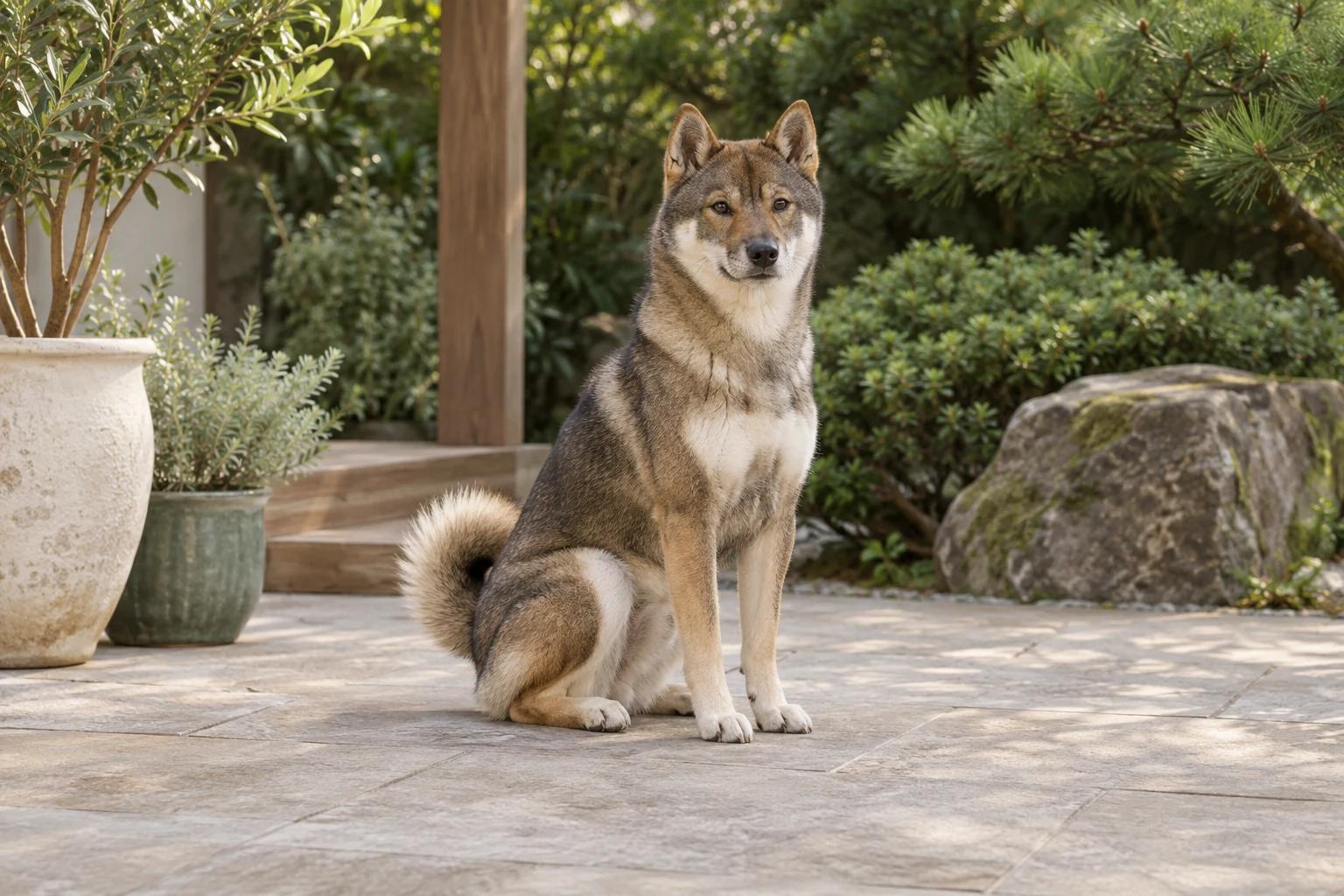
Shikoku Ken vs Kai Ken is a comparison worth making with more than two attractive photographs. Start with the Shikoku Ken profile and Kai Ken profile, then separate appearance from the experience of sharing a home. Which details would you notice on a walk? What would an ordinary introduction look like? A useful comparison gives you something concrete to investigate, without turning either breed into the automatic answer for every household.
Shikoku Ken vs Kai Ken: read the Shikoku outline
The FCI Shikoku standard describes a compact, muscular dog whose body is a little longer than its shoulder height. Small triangular ears lean slightly forward, while the thick tail curls or curves above the back. The muzzle is relatively long and wedge-shaped, beneath a broad forehead with a shallow but distinct transition to the muzzle.
The chest is deep, the back straight and the loin muscular. Close-knit, arched toes and thick pads complete the picture of a well-supported frame. In motion, the standard calls for light, resilient action and quick turning rather than a heavy, lumbering stride.
Its coat has a straight, relatively harsh outer layer over softer dense undercoat, with longer hair on the tail. Sesame combines dark, red and white hairs; red and black-and-tan are also listed. A curled tail alone tells you little about the whole outline. Look at a relaxed side view and ordinary movement, rather than expecting a dramatic headshot to explain the dog's physical proportions or the way it travels.
Look beyond the Kai's striped coat
The FCI Kai standard also describes a sturdy, muscular dog slightly longer than tall, with particularly developed hind limbs. The back is short and straight, the chest deep, and the neck powerful. Triangular ears tilt forward and the thick tail may be curled or carried in a sickle curve. The muzzle is pointed but moderately thick, with a more abrupt stop beneath the forehead.
Brindle, red brindle and black brindle are the listed colors. Beneath the harsh straight outer hair is a soft, dense undercoat; the tail hair stands out and is relatively long. Light, resilient movement matters alongside the pattern.
When looking at a Kai, give yourself a view of its whole body rather than stripes. Watch how the rear limbs follow the front and how the dog carries itself while moving naturally. A dark photograph may conceal the outline, while a striking pattern can draw attention away from it. Ask to see the dog in ordinary light and from more than one angle before deciding that two pictured animals have the same build.
Shikoku companionship is not an off-lead guarantee
The Canadian Kennel Club's Shikoku introduction describes affectionate contact with familiar people, including leaning close, alongside a hunting dog's willingness to follow a trail. It notes that unfamiliar dogs can be a more difficult social category. An affectionate greeting at home should therefore not be interpreted as proof of reliable outdoor recall or automatic friendship with every dog.
For a prospective owner, this makes an ordinary outing especially informative. Ask the caregiver how walks are managed when an interesting trail appears and what secure opportunities the dog has to move freely. Do not release an unfamiliar dog simply to see whether it returns.
Ask separately about its experience with canine visitors, walking companions and resident dogs. The article also describes a contrast between energetic outdoor activity and quieter indoor behavior. Meet the individual in an everyday setting as well as an exciting one, and ask what happened before the visit rather than assuming that a single sleepy or animated moment represents the entire day.
Kai companionship without constant contact
The Kai Ken Club of Great Britain describes affection toward familiar people without constant physical attachment, reserve with strangers and individual variation in food or toy motivation. It also emphasizes prey interest and lead management around wildlife. These are useful considerations when asking about the difference between Shikoku Ken and Kai Ken, not a ranking of which dog loves its family more.
A Kai that elects to stay nearby without demanding touch can still be participating in family life. Let the caregiver describe how that particular dog seeks company, and avoid judging a first meeting only by whether it comes directly into your hands. A stranger's greeting is not the same relationship as the one built over time at home.
For learning, ask what the dog actually finds rewarding instead of assuming a treat or thrown toy will always win its attention. For outings, ask about the environments where the caregiver keeps the lead attached. The club's account makes clear why an attractive outdoor photograph should not be mistaken for evidence that unsupervised freedom is suitable.
Shikoku Ken or Kai Ken: decide what you are comparing
A Kai Ken vs Shikoku Ken shortlist is not a contest between photographs. Before choosing, consider what drew you to each candidate and whether that impression came from meeting the dog or from somebody else's description. Keep those two kinds of information separate.
Use the dog matching quiz to consider your own expectations. For a separate historical question, the Shikoku regional-name guide explains terminology without turning names into an individual character assessment.
Frequently asked questions
Does the Shikoku standard describe a square body?
No. Its stated proportions are slightly longer than tall, with a compact, muscular overall frame.
Does a Kai have only a curled tail?
No. The standard also permits a sickle-shaped carriage above the back.
Does affection at home establish safe off-lead behavior?
No. Familiar affection and reliable response around outdoor distractions are different questions; do not test them by releasing an unfamiliar dog.
Sources behind this article
- FCI: Shikoku standard ↗
- FCI: Kai standard ↗
- Canadian Kennel Club: Shikoku introduction ↗
- Kai Ken Club of Great Britain: Living with a Kai ↗
Article source checked: November 16, 2026. Source checked 2026-11-16
Keep reading

Affenpinscher vs Brussels Griffon: Everyday Differences
Read article →