Shih Poo vs Maltese: Coat, Play and Companionship
Compare Shih Poo vs Maltese through coat structure, parent context, play and learning, with practical questions for meeting individual dogs.
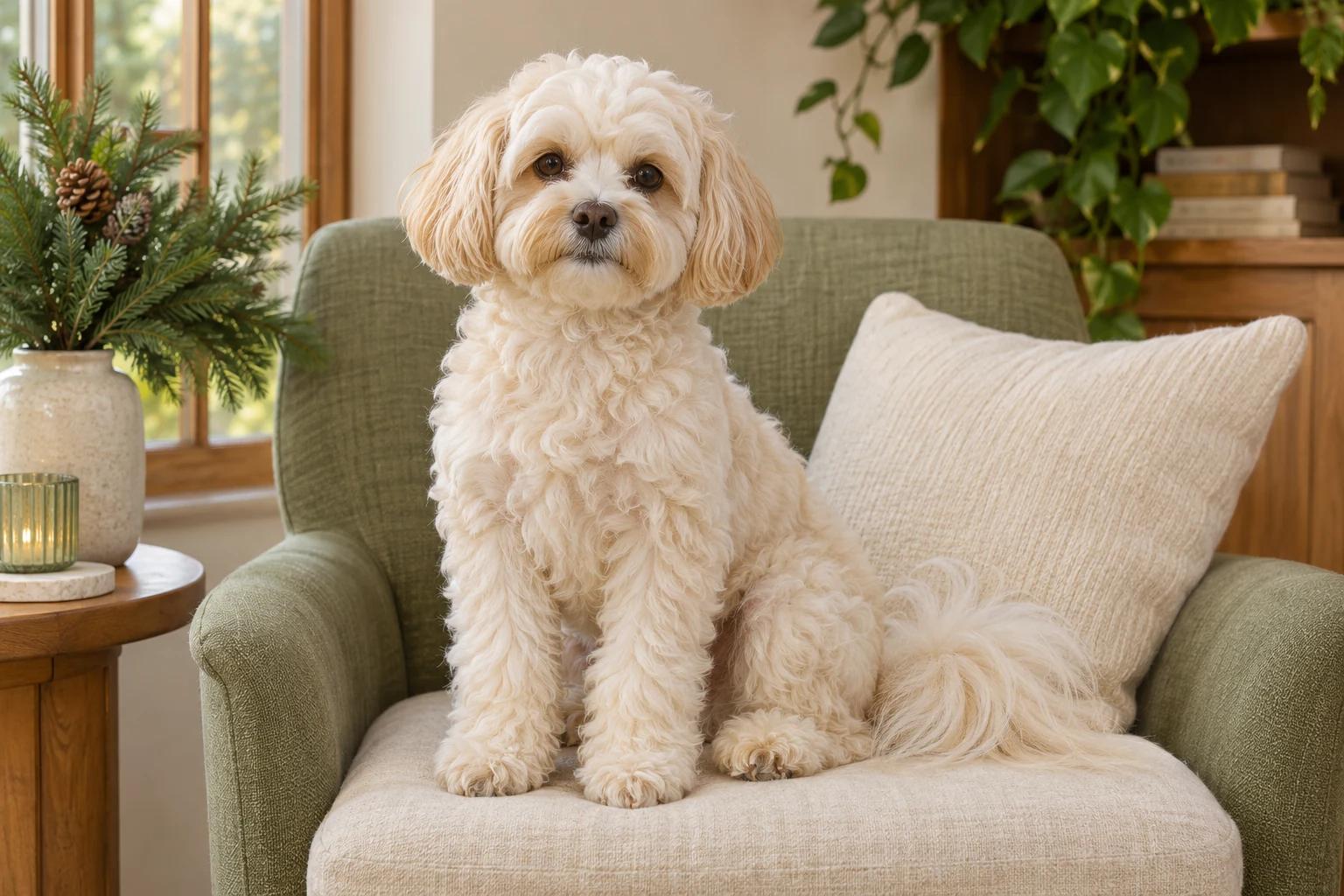
A Shih Poo vs Maltese choice brings together a Shih Tzu–Poodle cross and an established toy breed. The Shih-poo profile describes straight or curly coats and a companion-oriented dog; the Maltese profile describes a silky-coated companion. Start with those practical differences, then look at the particular adults you can meet. A similar pet haircut can make two dogs look alike while concealing different coat texture, body proportions and experience of daily life.
Shih Poo vs Maltese: look beneath the haircut
The AKC Maltese standard describes a compact toy with a level back, fine-boned legs and a long-haired tail carried over the back. Its coat is long, flat and silky, without an undercoat. The ideal color is white. These features describe more than the familiar round face created by a short pet trim.
When meeting a Maltese, look at the body while the dog stands naturally, then watch it move. The standard describes smooth, flowing movement. Ask the caregiver to explain the current haircut so you can distinguish what has been shortened from the underlying coat texture.
This gives you a more useful comparison with the Shih-poo you are considering than matching two photographs labelled “teddy bear.” If you prefer a particular appearance, ask what maintaining that appearance involves on the actual dog instead of assuming the same trim name represents the same work on both animals.
Use Shih Tzu ancestry as context, not a promise
VCA's Shih Tzu guide describes an affectionate, playful companion that can learn quickly but may require patience. It favors reward-based teaching through food or games over force. Its coat discussion describes long, dense, fairly straight hair and notes that many owners choose a professionally maintained shorter trim.
These are descriptions of one Shih-poo parent breed, not a specification for every cross. Use them to frame questions about the particular dog's family and current care. Ask which parent is the Shih Tzu, what the parents are like in everyday interactions and what the caregiver has actually observed in this dog. Do not simply transfer a parent description into a guarantee.
For a puppy, ask to see suitable adult relatives where possible and discuss what is known about the other parent. For an adult, the dog in front of you offers direct information about its present coat and learned skills. A familiar game or an ordinary grooming demonstration can answer questions that an ancestry label leaves open.
Compare activities, not just the word small
VCA's mixed-breed guide explains that activity needs vary with ancestry, size and athletic build. It also points out that small dogs still benefit from walking and exploring beyond the home, even when games provide part of their physical activity. Small living space and small body size do not remove the need to offer experiences.
For the Shih-poo you meet, ask what a normal outing involves: steady walking, frequent investigation or a short journey followed by play. Watch the dog rather than assigning the same plan to every Shih Tzu–Poodle cross. The length of its legs, its current condition and its experience all matter when choosing an activity together.
Compare that real routine with the Maltese's routine, not with an imaginary dog that needs no outings because it fits on a lap. A comfortable indoor game and an outdoor exploration are different opportunities. Ask the veterinary team about the individual's physical limits before adding strenuous exercise; an appealing cross name is not a fitness assessment.
Maltese learning and social style
VCA's Maltese guide describes an affectionate playmate that can be bold and curious while remaining reserved with unfamiliar people. It recommends reward-based teaching using food or games and notes that learning can require persistence despite the dog's ability to learn quickly. Those qualities are worth investigating separately rather than compressing them into “friendly.”
Ask the caregiver to show how the dog joins a familiar activity. A dog that enjoys play with its person may not want an unfamiliar visitor to reach immediately over its head. Let the caregiver arrange the introduction instead of treating a hesitant first greeting as evidence that the dog cannot form a close relationship.
For a Maltese vs Shih Poo comparison, notice what makes each dog choose to participate. Does the keeper invite a game, use a known cue or wait for an approach? Compare the teaching you see rather than trying to rank the dogs with repeated commands. You will be living with a developing relationship, not a score for instant compliance.
Choosing Shih Poo or Maltese
The difference between Shih Poo and Maltese is useful only if it leads to questions you can answer. Ask to see the particular care task you are unsure about, not simply whether the dog is “easy.” If you are comparing a puppy with an adult, recognize that you have different kinds of information about them.
The dog matching quiz can help clarify your preferences before a visit. Reward planning is a separate subject: the existing Shih-poo training treat guide covers that issue without needing to turn this comparison into a feeding plan.
Frequently asked questions
Does a short haircut change the Maltese coat type?
No. A shorter trim changes the outline, not the underlying silky, single-coat structure.
Does Shih Tzu ancestry guarantee a Shih-poo's personality?
No. A parent description provides context, not a promise about the individual cross you are considering.
Does a small dog still need outdoor experiences?
Yes. Indoor games and opportunities to walk and investigate outside offer different experiences; small size does not make them interchangeable.
Sources behind this article
Article source checked: November 16, 2026. Source checked 2026-11-16
Keep reading

Affenpinscher vs Brussels Griffon: Everyday Differences
Read article →