Shih Poo Grooming: Tools, Handling and Coat Checks
Plan Shih Poo grooming around the actual coat, suitable tools and comfortable handling, with practical checks between professional appointments.
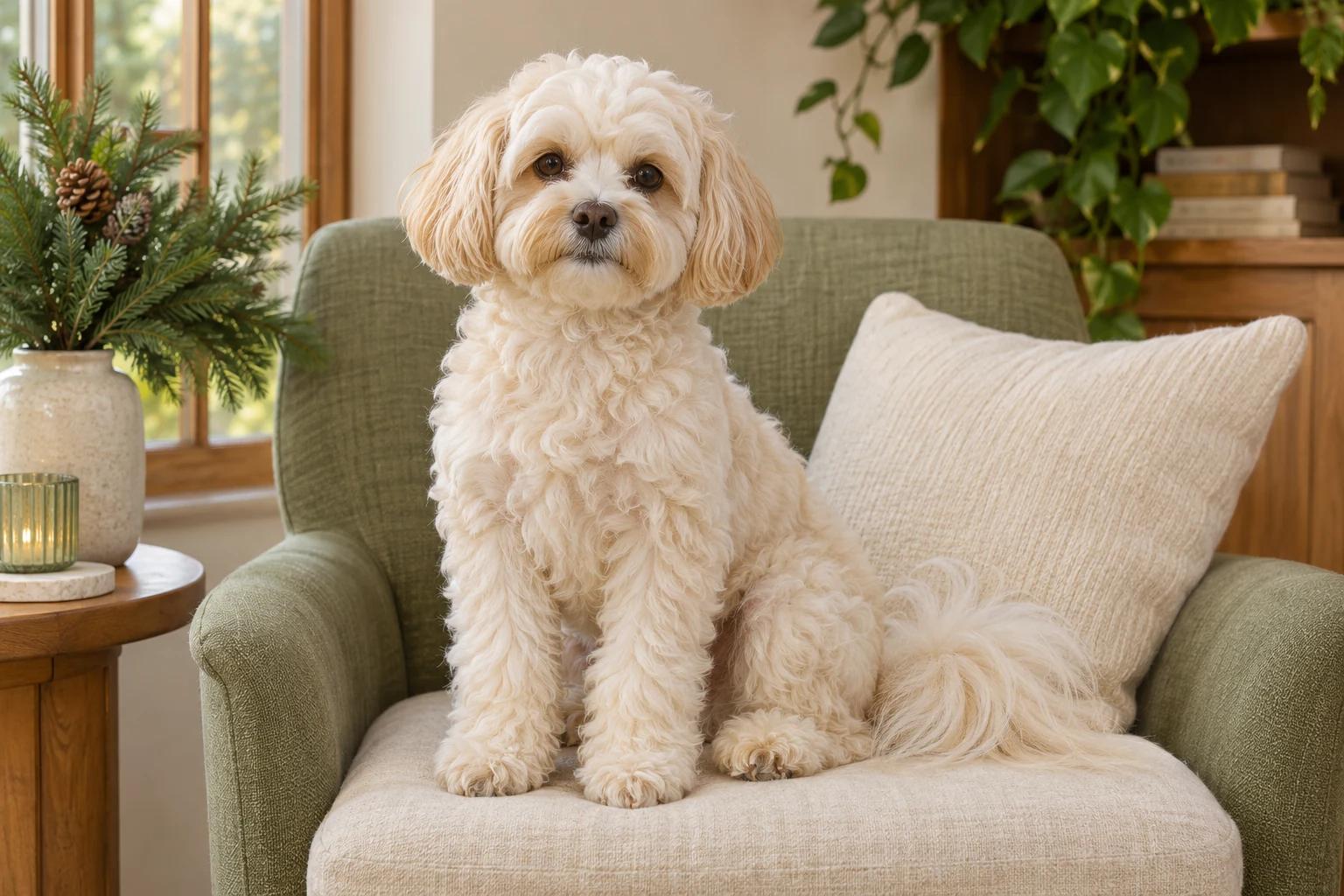
Shih Poo grooming should fit the coat you can actually see and feel, not a haircut chosen from a photograph of another dog. The Shih-poo profile describes straight or curly hair and a substantial grooming commitment. Ask a groomer to assess your individual dog's texture, length and current condition before choosing tools or a maintenance plan. A useful routine is one you understand well enough to recognize when something needs professional help.
Shih Poo grooming starts with the right tool
The AKC's brush guide distinguishes tools by coat and purpose. Slicker brushes use closely spaced wire pins and can suit longer or curly hair, but require a light touch. Pin brushes are often used to finish longer coats; a smooth-looking surface is not proof that every deeper area has been checked.
Have the groomer demonstrate the selected tool on your Shih-poo. Ask how the pins should travel through this coat and how much pressure to use. Pressing harder because the brush has stopped moving is not a substitute for understanding what is catching. The size of the brush head also needs to let you work accurately on a small body.
Look at the coat in sections rather than judging the whole dog by the most accessible patch on the back. Ask which tool is intended to remove loose hair and which is intended to finish the appearance. Unfamiliar tools can simply repeat the same surface work.
Know when a tangle needs help
Animal Trust's veterinary grooming guide highlights tangling behind the ears, under the legs and around collars or harnesses. Long, silky or curly coats can need brushing and combing between professional appointments. Tight matting, sore skin or pain during grooming calls for veterinary advice rather than repeated forceful attempts at home.
For your Shih-poo, remove walking equipment before checking the hair it covers. Look at the actual contact areas instead of assuming that a neat back means the whole coat is clear. Ask a groomer to show the difference between a small manageable tangle and work that needs professional attention.
Do not use scissors to cut a mat close to the skin; skin can be caught within it. If the dog reacts as though the area hurts, stop and contact the veterinary team. A shorter pet trim may be part of a practical maintenance discussion, but choosing a style does not resolve an existing painful area or replace an assessment of the skin underneath.
Teach comfortable handling before a full groom
Dogs Trust's handling guide recommends short, gradual, positive practice. Begin with touch in an area the dog already enjoys, then introduce other body areas briefly. Stop when the dog shows discomfort, and seek veterinary advice for established fear, aggression or possible pain.
For a Shih-poo, separate learning to accept a brief touch from completing the entire grooming job. In a quiet place, touch a familiar area, remove your hand and reward. A predictable cue before touching can help the dog know what is about to happen. Increase the duration only when the earlier step is comfortable.
A dog that cooperates with one person at home may need easier steps with someone new or in a different location. Tell a helper exactly where and how briefly to touch rather than saying “just hold the dog.” Small size can make restraint physically easy for a person, but it does not make the experience comfortable for the animal. Aim for participation, not immobilization.
Use grooming to notice changes
PDSA's grooming advice recommends learning the needs of the individual coat, obtaining suitable tools and consulting a veterinarian or groomer for specific advice. It also highlights checking for parasites and bringing changes in skin or coat to the veterinary team. Grooming provides a closer view than a quick glance across the room.
For a Shih-poo with longer facial or body hair, take time to see the skin where you are working instead of concentrating only on the finished outline. If you notice a new sore patch, unusual hair loss or another change, report what you observed. Do not treat the appointment as a chance to diagnose the cause yourself.
Ask your groomer which observations should prompt a call between visits. The goal is to recognize a change from this dog's usual condition, not to compare it with an idealized picture online. Keep questions specific: identifying the area and explaining what looks different gives the professional more useful information than saying the coat seems wrong.
How to groom a Shih Poo between appointments
Shih Poo coat care and Shih Poo shedding are related but different questions. The current profile places loose hair toward the lower end while retaining frequent grooming needs. Ask about both rather than using hair on furniture as your only measure of maintenance. The dog matching quiz can help you consider this hands-on responsibility; the existing training treat guide covers a separate ownership task.
Frequently asked questions
Should I press harder with a slicker brush?
No. Use a light touch and ask for a demonstration when the tool catches rather than forcing it through.
Can I cut a tight mat away with scissors?
Do not cut close mats yourself. Skin may be trapped inside; seek professional assessment rather than risking a cut.
Does comfortable handling transfer automatically to a new person?
Not necessarily. Return to easy, brief steps with a new handler instead of assuming the whole routine will feel familiar.
Sources behind this article
- AKC: Choosing grooming brushes ↗
- Animal Trust Vets: Dog grooming ↗
- Dogs Trust: Handling your dog ↗
- PDSA: Grooming pets ↗
Article source checked: November 16, 2026. Source checked 2026-11-16
Keep reading

Affenpinscher Grooming: A Practical Coat-Care Routine
Read article →