Sheepadoodle Grooming: Work Through the Whole Coat
Plan Sheepadoodle grooming around thorough coat checks, comfortable handling and professional help, not just a fluffy finished appearance.
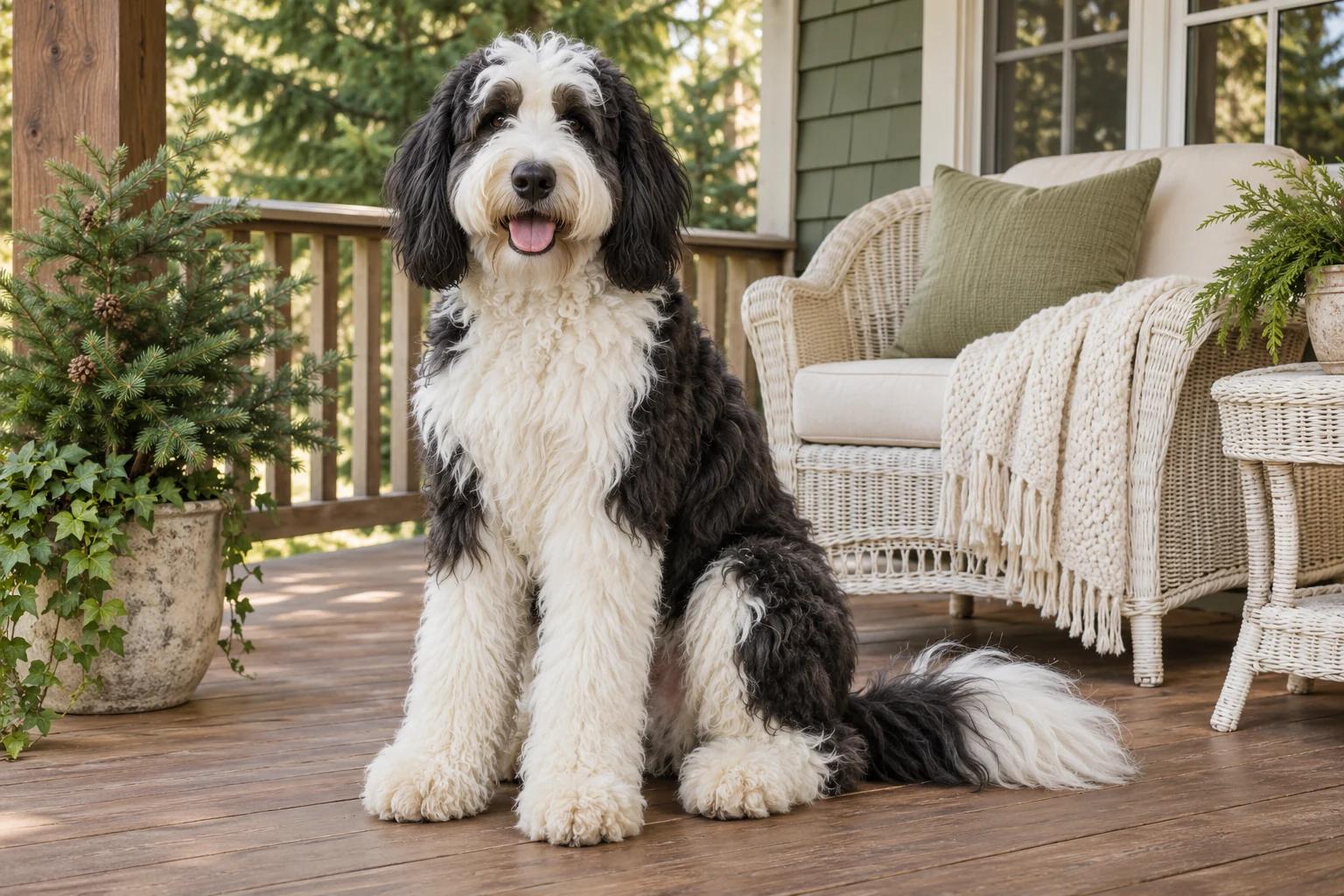
Sheepadoodle grooming is about maintaining a comfortable, accessible coat, not simply restoring a round face after a haircut.
Begin with the Sheepadoodle profile. The parent-breed naming guide covers a separate question; here the focus is practical coat care, tools and the difference between a cosmetic finish and a manageable routine.
Sheepadoodle grooming: inspect before you brush
VCA's coat-care guidance recommends regular inspection for tangles and trapped debris, gentle brushing and tools suited to the coat. It identifies areas such as the armpits, groin and behind the ears as places needing attention. Severe tangles warrant professional help; scissors are not a safe shortcut for removing a mat close to skin.
For your Sheepadoodle, begin by looking and feeling gently rather than dragging a brush straight through everything. Ask a groomer to demonstrate what a tangle feels like and where a comb should pass freely. Stop if a section resists instead of repeating harder strokes over the same place.
After an outdoor outing, check what the dog brought home in its coat. A twig or burr is a different problem from an ordinary loose hair. If you cannot remove it easily without pulling, leave the difficult work to someone equipped to do it safely.
Reach beneath the surface without scraping
The AKC's Standard Poodle grooming article stresses reaching through the coat rather than brushing only the top, while avoiding scratching the skin. That principle is useful when discussing a Sheepadoodle's grooming technique with a professional. It does not mean copying every Poodle haircut or product recommendation.
Ask for a demonstration on a small, comfortable area of your own dog. Watch how the groomer separates the hair, holds the tool and checks the section afterwards. Then try that same area under guidance. Seeing a finished fluffy dog is less educational than seeing exactly how one section was worked through.
Sheepadoodle coat care includes friction areas
The USDA's mat-prevention guidance highlights rubbing areas, including beneath collars, behind ears and in armpits. It explains that maintenance frequency depends on the coat's type and length, and that mats can trap material and interfere with comfort or movement.
For a Sheepadoodle, discuss the places where everyday equipment contacts the coat. Ask your groomer to show you how those areas should be checked when the equipment is removed in a secure setting. Do not assume the visible back is representative of every hidden area.
The chosen haircut should also be realistic for the work you can perform between appointments. A longer outline is not useful if important sections become inaccessible. Have an honest conversation about maintenance before asking for a particular style, especially when your reference photograph shows a dog immediately after professional preparation.
Choose help for the dog, not just the haircut
The ASPCA's grooming advice explains that grooming involves more than appearance and encourages careful selection of a groomer, including recommendations from trusted people or a veterinarian. It also advises asking a professional to demonstrate unfamiliar care tasks.
When discussing a Sheepadoodle appointment, explain what the dog currently tolerates and where you have difficulty. A groomer needs to know about handling concerns before starting, not after discovering them during a full session. Ask how breaks and unfinished work are handled if the dog needs a different pace.
Be open about the coat's current condition. Requesting a style should not take priority over a comfortable, achievable result. If you notice sore skin or another concern, seek veterinary advice rather than treating a grooming appointment as a substitute for an examination. The person cutting the coat and the person assessing a medical problem have different roles.
How to groom a Sheepadoodle without losing your place
Divide your own workflow into recognisable body areas. For example, decide where you will begin and how you will move around the dog before opening the tool kit. This is not a requirement to finish the whole body in one sitting; it is a way to know what you have actually completed.
Choose a stable working position with room for both of you. If you kneel on the floor, check that you can reach the intended area without leaning heavily over the dog. If professional equipment is needed, ask for instruction rather than improvising an elevated setup at home.
Keep the tools you are using within reach and put unused items away. A comb on the opposite side of the room creates an unnecessary interruption just when the dog has found a comfortable position. Good preparation lets you concentrate on the small area in front of you instead of repeatedly rearranging the session.
Discuss the face, feet and finish precisely
A request for a “teddy bear cut” can mean different things to different people. Bring a photograph as a starting point, then discuss the actual areas you care about: how the face is framed, how much length remains on the legs and what the finished outline should look like.
Ask what the groomer can achieve with the coat as it is now. A picture of another dog does not specify your dog's texture, available length or willingness to stand for detailed work. Agree on the practical result before the appointment begins rather than assuming the same label describes the same cut everywhere.
Sheepadoodle shedding should not be judged from the appearance of a freshly groomed photograph. When meeting an adult, ask the keeper what they actually find on bedding, clothing and grooming tools. Treat those observations as information about that individual, not a reason to promise the same experience from every puppy. The dog match quiz can help you weigh how much hands-on care you enjoy.
Frequently asked questions
What should I bring to a first grooming appointment?
Ask whether your own tools would be useful to bring. Explain the dog’s previous experience and the specific areas you find difficult, rather than requesting a familiar look without discussing the work involved.
Can I learn from watching the finished haircut?
A finished haircut shows the result, not the technique. Ask to watch one manageable section, including the tool angle and working position, rather than trying to reconstruct the process from a photograph.
What if different people share coat-care duties?
Make clear which areas each person has worked on, so everyone does not repeat the easiest section while missing another. Agree on the tools and approach shown by your groomer. Shared care works best when each person knows what has actually been done.
Sources behind this article
- VCA: Grooming and coat care ↗
- AKC: Grooming a Standard Poodle ↗
- USDA: Preventing matted hair ↗
- ASPCA: Why pets need grooming ↗
Article source checked: November 16, 2026. Source checked 2026-11-16
Keep reading

Affenpinscher Grooming: A Practical Coat-Care Routine
Read article →