Serengeti vs Savannah: Similar Inspiration, Different Breed Histories
Compare Serengeti vs Savannah breed development, activity and care while keeping ancestry records, numerical uncertainty and housing questions separate.
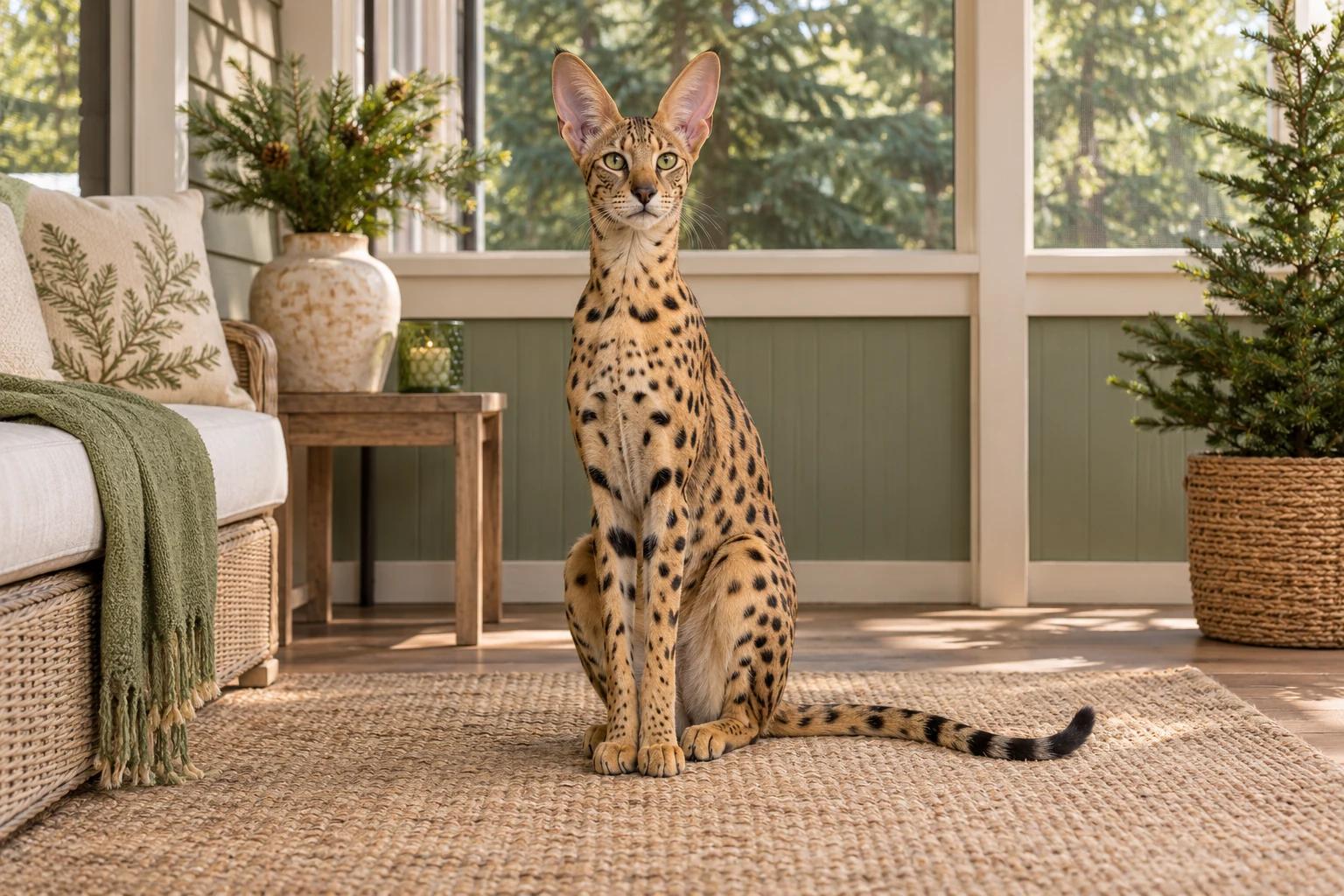
Serengeti vs savannah is a comparison in which a long-legged, spotted appearance can hide an important distinction. TICA describes the Serengeti as developed from Bengal and Oriental Shorthair crosses without serval ancestry in that breed development, while the Savannah's history includes the serval. Similar visual inspiration does not make the names interchangeable or establish identical care, documentation or behavior.
If you are considering a serengeti or savannah, start with records and the individual animal's routine. This article compares documented breed context without supplying legal rulings, predicting personality from an ancestry label or treating resemblance as proof of identity.
Serengeti vs Savannah: begin with development, not a photograph
TICA's Serengeti introduction explains a project modeled partly on the serval's appearance through domestic-breed crosses. Its Savannah account describes a breed with serval ancestry. That is a substantive difference between serengeti and savannah even when two photographs emphasize similar ears, legs or markings.
The Serengeti profile describes a medium, long-legged cat with a short silky coat and upright stance. The Savannah profile describes a tall, lean, often spotted animal with prominent ears. Use those descriptions to ask questions, not certify a pedigree by eye.
When background is uncertain, preserve the uncertainty. A name used in an advertisement should be supported by the relevant records. Do not relabel an animal to simplify a care or housing conversation, and do not assume a particular appearance settles what documentation is needed.
Compare activity through established routines
The Serengeti introduction describes agile, active cats interested in high places. The Savannah account also emphasizes activity and investigation. Neither description tells you exactly how either individual spends an ordinary day or which opportunities it will choose in your home.
Ask both caregivers the same questions: what games are familiar, which places are used for rest, how interaction ends and what happens while people are busy. Comparable examples make a savannah vs serengeti decision more useful than contrasting two enthusiastic descriptions written for different purposes.
A brief demonstration is not a complete routine. Learn about the less convenient parts as well, including backup care and what changes require help. Do not assume a large climbing structure can replace regular involvement from the people responsible.
Build a usable environment rather than an appearance match
FelineVMA's indoor-cat guidance combines play with retreat, appropriate resources and positive contact. Apply that to either candidate. Check stable surfaces, routes to essentials and whether another animal can block access.
Follow equipment installation and load instructions. An athletic reputation does not certify a shelf, and a tall outline does not establish that every jump is comfortable. Offer alternatives and watch ordinary use without staging a height test for a visitor.
Secure hazardous materials, fragile objects and exterior exits independently of training. A learned cue may support communication, but it should not be the only protection around an attractive distraction. The cat's curiosity is a reason to prepare the room, not a reason to leave boundaries unclear.
Keep numerical uncertainties out of a ranking
TICA’s live Serengeti page and its printable introduction give conflicting sex-specific weights. This comparison therefore uses the qualitative medium, long-legged description rather than choosing one set of disputed figures. The Savannah profile also displays published references with different scopes. These references are not used to rank the two breeds.
Those limits do not prevent practical preparation. Ask for the actual animal's current measurements and familiar equipment. A carrier's weight rating, interior dimensions and access all matter; none should be selected only from a breed silhouette.
Body condition is an individual veterinary question. Do not feed toward an imagined large-breed target or decide that visible leanness explains a change. A missing or conflicting statistic should remain visible rather than being replaced by a convenient guess.
Company and contact still need individual assessment
The Serengeti introduction describes an outgoing cat that may initially be cautious in a new location. The Savannah account distinguishes attachment from a preference for personal space. These are different prompts for questions, not a ranking of friendliness.
Let either animal choose whether to approach during a meeting. Investigation is not automatically a request for lifting or prolonged touching. Protect the option to leave and ask how the observed behavior compares with familiar daily life.
Adults should guide children, and other pets need their own introduction plan. Neither a social description nor previous experience with one animal guarantees compatibility with a different resident. Prepare appropriate separation and resources rather than testing the claim through immediate contact.
Separate paperwork questions from care questions
For a Savannah, the existing housing-rules guide explains the need to check the actual animal and location with the responsible bodies. This comparison does not establish permission for any generation or jurisdiction, nor infer that a Serengeti label resolves every housing condition.
Ask what documents are available and which uncertainties need clarification. Public rules, private terms and daily care are distinct questions. An answer to one does not certify the others, and an attractive breed comparison is not an ownership endorsement.
The existing Serengeti food-puzzle guide addresses a separate enrichment task. It can support a discussion about familiar activities, but a successful puzzle does not prove overall suitability or replace dependable feeding and professional advice.
Decide from what you can actually support
Use the cat quiz to organize preferences, then bring them back to the individual history. Write down an established activity, a contact preference, a care responsibility and any unresolved records question for each candidate.
An honest account may be less simple than a promotional comparison. That is useful: it shows where preparation or advice is still needed. The strongest decision concerns an animal whose needs you understand and can support, rather than a promise that a spotted appearance predicts the relationship you want.
Frequently asked questions
Are Serengeti and Savannah interchangeable names?
No. TICA describes different breed development, including different relationships to serval ancestry. Similar appearance does not establish identity or interchangeable care.
Why are numerical weights omitted here?
The TICA Serengeti page and its printable introduction do not align sufficiently for a numerical comparison. Published Savannah references are also not used to rank the breeds; no figures are repeated here.
Does an active reputation tell me which equipment is suitable?
No. Assess actual use, installation, load and access. A breed description cannot certify a particular structure or the individual's comfortable movement.
Can this article establish housing permission?
No. The relevant animal, records, location and responsible authorities must be considered separately. A breed comparison is not a legal determination.
Sources behind this article
- TICA: Serengeti breed introduction ↗
- TICA: Savannah ↗
- FelineVMA: Indoor cats position statement ↗
- TICA: Serengeti ↗
Article source checked: November 20, 2026. Source checked 2026-11-20
Keep reading

Abyssinian vs Somali: Coat, Size and Everyday Company
Read article →