Selkirk Rex Cat Temperament: Relaxed Company With Room for Play
Explore Selkirk Rex cat temperament with attention to chosen contact, meaningful play, rest and individual care rather than a universal cuddly promise.
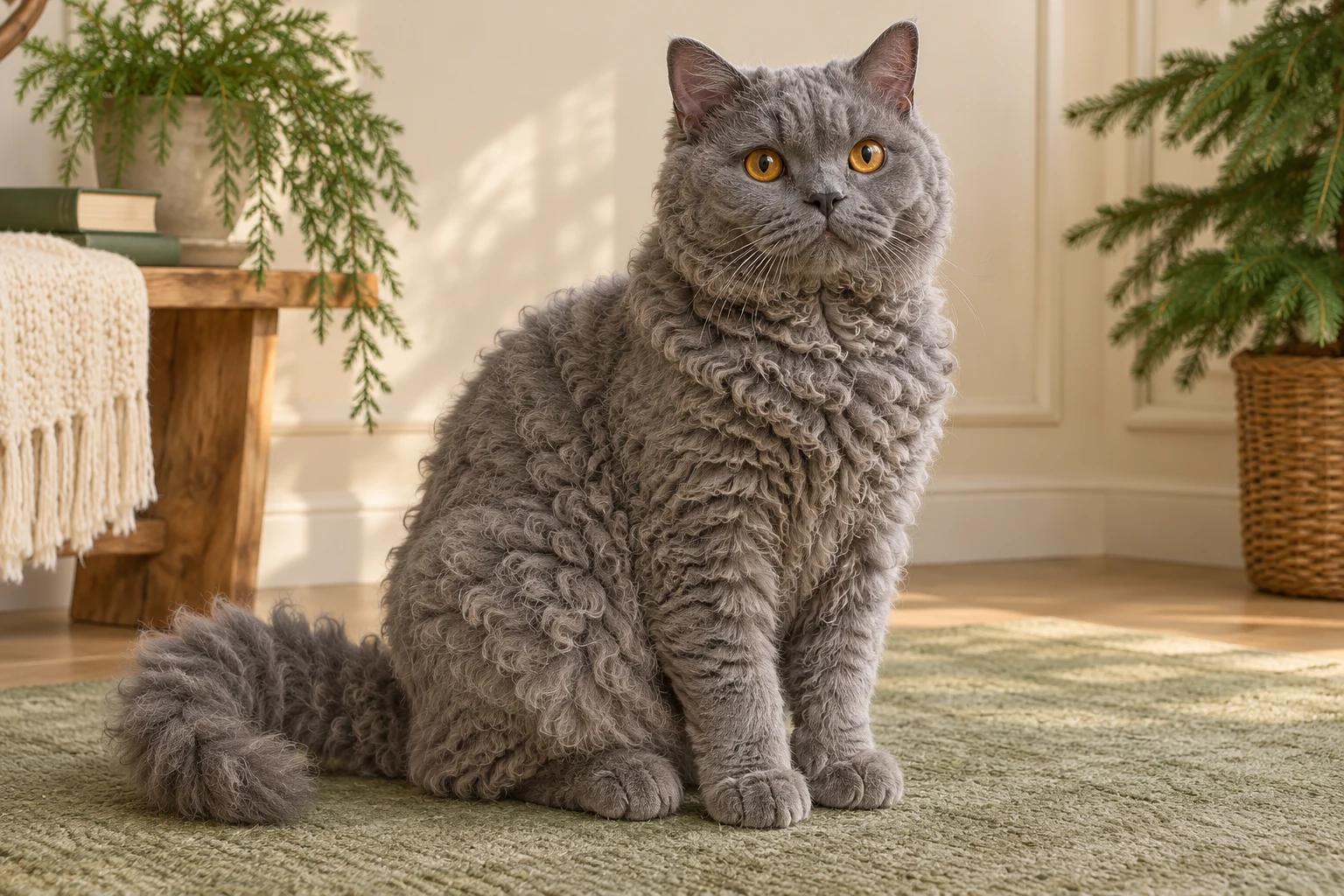
Selkirk rex cat temperament is often described as relaxed and social. That can sound like a companion who needs little planning, but a calm appearance does not remove the need for play, choice or thoughtful coat care. The animal may want nearby company at one moment and an undisturbed resting place at another. Its curls do not tell you which invitation it will accept.
This guide explores selkirk rex cat personality through daily interaction. It leaves equipment inspection to the existing grooming-kit article and focuses on understanding the individual without promising a universally cuddly or adaptable pet.
Selkirk rex cat temperament: make the description concrete
CFA presents the breed as interactive and interested in people, with playful moments alongside quieter company. The current Selkirk Rex profile similarly keeps companionship and activity in the care discussion. Ask the caregiver to translate those general words into ordinary examples.
Where does the cat rest when someone is working? How does it invite play? What happens when a familiar person stops giving attention? Those questions help you assess a real routine rather than select the adjective you like best.
At a meeting, allow the animal to observe and approach without obtaining an immediate cuddle. Ask whether the room and behavior are typical. One short encounter is a sample, not proof of how the cat will behave through a busy day or a new household arrangement.
Do not mistake a touchable coat for an invitation
An unusual coat can make visitors eager to feel it. That interest belongs to the person, not necessarily to the cat. Ask about accepted touch before approaching, and distinguish petting from lifting or grooming.
Pause to see whether the cat chooses to continue. If it leaves, protect that choice instead of returning it to somebody's lap. Affection does not need to be demonstrated through prolonged tolerance, and a social animal can decline a particular encounter.
Adults should supervise children and explain which resting places remain undisturbed. A child can enjoy observing curls without needing to handle the cat. The animal's comfort should not depend on successfully entertaining every visitor interested in its appearance.
Give a relaxed cat meaningful activity
The profile specifically asks owners to provide play even when a cat looks placid or cuddly. Ask which games the individual already returns to and when it usually engages. A calm description should not become a reason to offer no choices.
FelineVMA's indoor-cat guidance combines activity with retreat and suitable resources. Review whether the home allows exploration, scratching and rest without another animal repeatedly blocking access. A room full of people is not automatically an engaging environment from the cat's perspective.
Keep an invitation manageable and let it end. A short chosen game may be more useful than persistent attempts to make a cat appear energetic for a photograph. You are learning about its preference, not testing whether it is intelligent enough to use a particular toy.
Keep handling and coat care in their own context
Selkirk rex cat characteristics include both coat lengths and individual curls. Those features can involve hands-on care, but an enjoyable interaction on the sofa does not establish comfort with every grooming tool or position.
Ask about the routine already accepted and which tasks need professional help. If handling becomes newly difficult, contact your veterinarian rather than calling the animal bad-tempered. A changed response to one task should not redefine the whole personality or be ignored because a breed is reputed to be easygoing.
The separate Selkirk Rex kit-safety article explains practical equipment questions. This guide does not add a grooming technique or a reason to persist through discomfort. It keeps the relationship and the care task connected without treating them as identical.
Introductions require more than the word social
Ask about actual experience with other animals and unfamiliar people. A comfortable relationship in one home is useful history, not a guarantee that a new resident will be welcomed. Obtain appropriate guidance and prepare separate resources and retreat before arranging contact.
Do not leave the Selkirk to manage a pushier pet by itself because it looks substantial. Body size does not establish confidence or compatibility. Each animal needs a way to reach essentials without being forced into an encounter.
Visitors also need practical instructions about waiting and giving space. A meeting in which the cat chooses distance can still be managed thoughtfully. Avoid making direct handling the only evidence that the introduction has worked.
Describe changed behavior before explaining it
Selkirk rex cat behavior should be discussed with concrete observations. The cat stopped returning to a game, moved away when touched or changed its route to a resting place. Those details are more useful than deciding that it is stubborn, lazy or unusually affectionate.
Seek veterinary advice about a sudden or concerning change. A quieter reputation cannot establish that the animal is comfortable, and a burst of play cannot settle every concern about the rest of its day. Do not reproduce an uncomfortable event to obtain stronger evidence.
Keep current care information available to anyone helping. If several people notice different parts of a change, an agreed way to communicate can prevent each observation being dismissed separately. The aim is appropriate attention, not a home diagnosis assembled from a behavior diary.
Ask whether the real routine fits your household
Use the cat quiz to organize what you want from daily company, then bring those preferences to the individual history. Include play, grooming, accepted contact and care during absences rather than concentrating only on a relaxed image.
Ask the caregiver which responsibility is most likely to surprise a new owner. An honest answer about a task needing time or help is useful information. It gives you a chance to plan support before an expectation becomes a problem for the animal.
A sustainable relationship allows the cat to participate, rest and decline without being required to live up to a cuddly reputation. The curls may begin your interest; understanding the actual companion should guide the commitment.
Frequently asked questions
Does relaxed mean a Selkirk Rex needs no play?
No. The current profile supports regular interactive opportunities alongside rest. Ask what the individual enjoys rather than assuming calmness means inactivity.
Can visitors handle the coat whenever they want?
No. Ask about accepted contact and let the cat choose whether to approach and remain. An unusual texture is not permission for repeated handling.
Does size establish confidence with another pet?
No. Compatibility and introductions need individual assessment, appropriate management and access to separate resources and retreat.
Should changed handling tolerance be treated as temperament?
Not automatically. Describe the change and seek veterinary advice about concerns instead of assigning a personality label or persisting through discomfort.
Sources behind this article
Article source checked: November 20, 2026. Source checked 2026-11-20
Keep reading
Selkirk Rex Cat Size: Keep Each Weight Reference in Its Scope
Read article →