Schnoodle Grooming: Work With the Coat in Front of You
Plan Schnoodle grooming around brushing depth, friction areas, appropriate products and a practical pet trim rather than a single coat label.
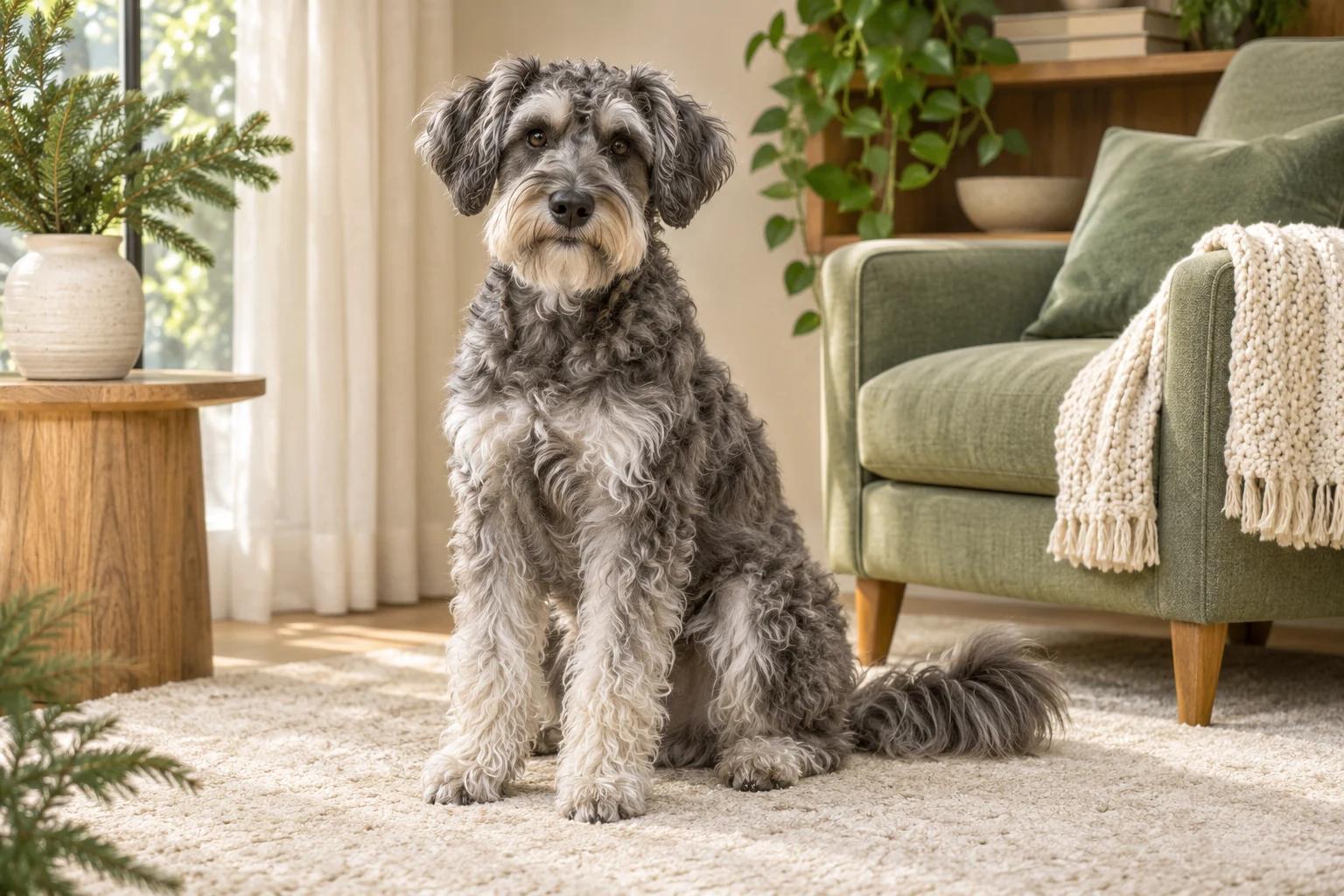
Schnoodle grooming should answer a practical question: what does this dog's coat need between professional appointments? Start there rather than with a photograph of the haircut you would like. Your preferred appearance matters, but it should fit the work you can actually do and the dog's experience of being cared for.
This guide concentrates on useful coat-care decisions rather than a universal appointment calendar. Bring your questions to the groomer with the dog present. A discussion of the actual coat and current condition is more useful than asking for the standard treatment attached to a crossbreed name.
Schnoodle grooming: brushing beyond the surface
The AKC's Poodle grooming article emphasizes brushing through the coat toward the skin, while avoiding scratching or scraping it. For a Schnoodle with a dense, curly coat, this is a useful distinction between grooming the visible surface and reaching the hair underneath.
Ask your groomer to show the depth and pressure appropriate for your dog's current coat. A fluffy outer finish does not demonstrate that the lower hair has been reached. Work through a manageable area rather than sweeping repeatedly over the whole back and calling it finished.
Watch the dog's comfort as well as the appearance of the brush. If you cannot reach through gently, do not simply press harder. Ask for help assessing the obstruction and choosing a suitable approach. Brushing is not a contest to preserve every centimetre of length. The practical aim is a coat you can maintain without dragging tools through resistant areas or scraping the skin to make the surface look tidy. Ask to practise one section while the groomer watches your technique. That shows whether your hands are reaching the intended area rather than simply repeating a motion you have seen.
Schnoodle coat care includes the hidden rubbing areas
The USDA's mat-prevention guide identifies the collar area, behind the ears and the armpits as common places for mats because of friction. It also notes that care needs vary with hair type and length, and that mats can trap debris.
Apply that to your Schnoodle's actual outline. A smooth-looking back does not tell you what is happening underneath the collar or where a foreleg meets the body. Have the groomer show you how to examine those less visible areas comfortably. Include any longer furnishings rather than judging the whole coat from its easiest section.
After an outing, notice whether leaves, mud or other material has caught in the hair. Do not leave a difficult patch simply because the next appointment is already booked. Seek professional help with a tight mat; scissors can cut skin as well as hair. Checking a concealed area is a different task from attempting to cut it out yourself, especially when you cannot clearly see what lies beneath. Explain exactly where the tool catches: behind the left ear is more informative than saying the dog is tangled. That description helps direct attention to the actual problem area.
Choose a maintained pet trim, not just a silhouette
The ASPCA's grooming discussion notes that patterned Schnauzer coats can require professional grooming. Groomers may also notice problems hidden beneath hair. Contact your veterinarian about a concerning skin change rather than treating the haircut as the complete solution.
For a Schnoodle, discuss what you can preserve between visits. A beard, full legs and rounded face are separate choices. Ask about maintenance before retaining length everywhere, and prioritize a comfortable result over copying a photograph.
Use products intended for the job
VCA's personal-care product guidance advises using shampoos formulated for pets rather than assuming human products are suitable. It also cautions against applying personal lotions to a pet's skin and recommends veterinary advice for skin concerns.
When learning how to groom a Schnoodle, separate ordinary cleaning from attempts to treat itching, flakes or an unfamiliar smell. Describe the issue to your veterinarian rather than selecting a household cream or stronger product because the coat seems difficult. A fragrance is not an explanation of what is happening underneath.
Keep the chosen product in its labelled container and follow its directions. If a groomer recommends a product, ask which task it addresses and whether it is appropriate for your dog. Do not combine several products simply because each claims to improve the finish. The useful question is what you are trying to accomplish, not how many bottles fit into a grooming kit. Make any known product reaction part of the discussion before a bath. Check whether the instructions require dilution or a particular rinse procedure. Do not substitute a remembered method from a different bottle; labels describe the product actually in your hand.
Describe the result in concrete terms
Bring a picture, but explain which features you like: a visible face, a particular beard shape or shorter legs. Ask what the dog will look like without salon styling. You are choosing the everyday result, not only the collection photograph.
Schnoodle shedding is a separate observation to discuss: what loose hair have you noticed, and has that changed? Bring examples rather than guessing from an advertising label.
The Schnoodle profile offers background. The parent-detail guide addresses naming, while the dog match quiz helps you consider your wider ownership preferences.
FAQ
What should I bring to a grooming consultation?
Bring the dog, your current tools and a clear description of what you find difficult. A reference photograph helps explain preferences but does not replace that discussion.
Is there one meaning of a Schnoodle pet trim?
No single phrase communicates every detail. Specify the appearance you prefer and ask the groomer to explain the proposed result before work begins.
What if the finished style is not what I imagined?
Identify the particular difference, such as face shape or retained leg length. Concrete feedback is more useful for a future appointment than simply requesting a different “look.”
Sources behind this article
- AKC: Grooming a Standard Poodle ↗
- USDA APHIS: Preventing matted hair ↗
- ASPCA: Why pets need regular grooming ↗
- VCA: Personal care products ↗
Article source checked: November 16, 2026. Source checked 2026-11-16
Keep reading

Affenpinscher Grooming: A Practical Coat-Care Routine
Read article →