Saluki vs Borzoi: Shape, Coat and Everyday Life
Compare Saluki and Borzoi size, outline, coat and companionship, with practical questions for choosing between these distinctive sighthounds.
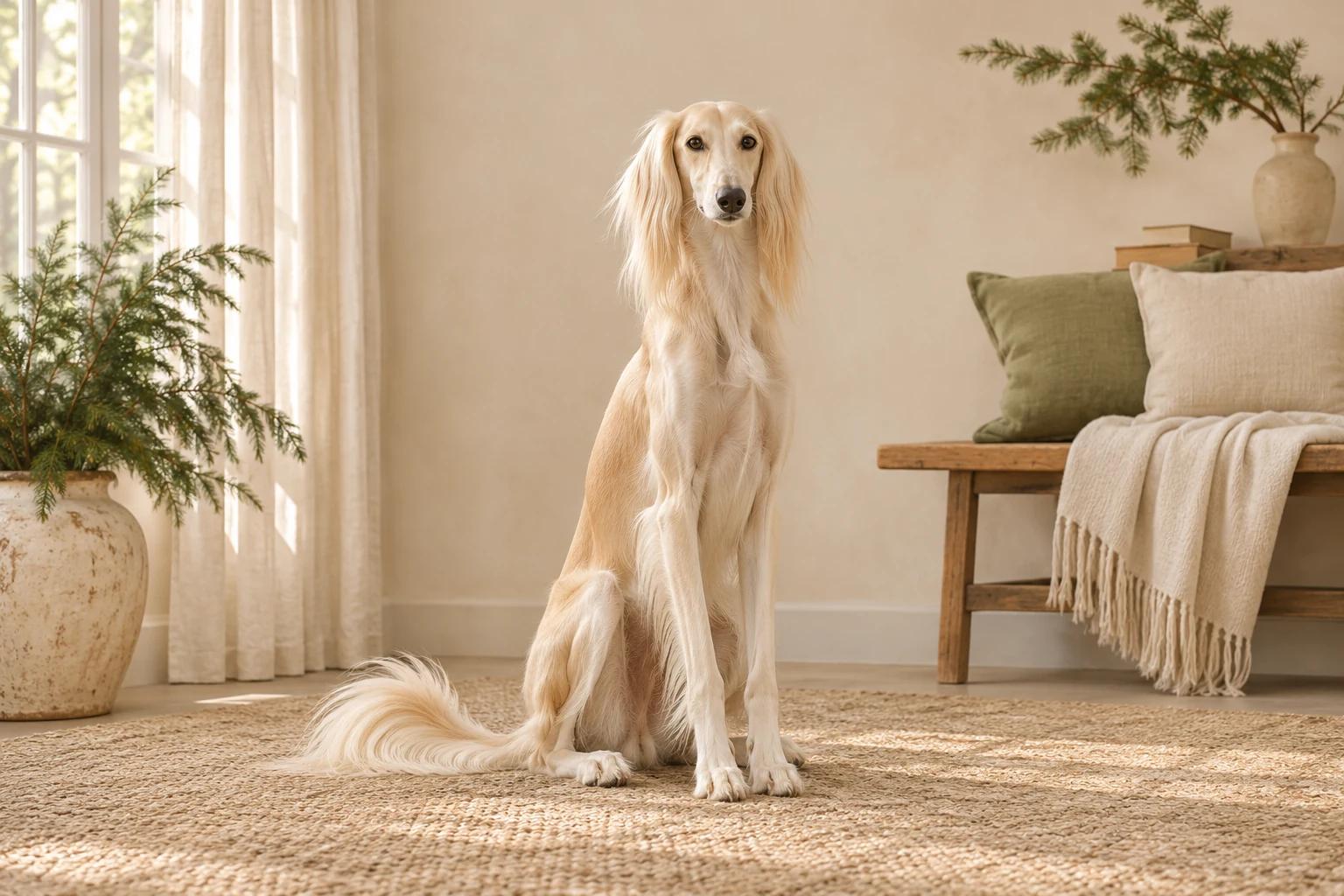
A Saluki vs Borzoi comparison is more useful when you look beyond the shared impression of elegance. These are distinct dogs, not different hairstyles on the same companion. Compare their complete outlines, the work involved in ordinary care and the sort of daily relationship you want to build.
Start with adults rather than puppy photographs. A young dog's appeal can overwhelm questions about the space, handling and activities that will matter for years. Meet more than one individual if possible, and ask what an ordinary day looks like when nobody is preparing for visitors or a show.
Saluki vs Borzoi: the outline tells a different story
The Saluki standard describes a long, narrow head, long hanging ears, a supple neck and a deep, moderately narrow chest. Its body coat is smooth and silky, with feathering in the feathered variety. Males average 23–28 inches at the shoulder; females may be considerably smaller.
The Borzoi standard describes a long, narrow head with a slightly domed skull and a tendency toward a Roman-nosed profile. Its small ears lie back at rest. The back curves over the loin, and the long silky coat may be flat, wavy or curly. Mature males should stand at least 28 inches and females at least 26 inches.
Look at side views and watch the dogs move before deciding that a photograph has shown you the difference. Coat, posture and camera position can obscure the body. Neither a beautiful outline nor an impressive stride tells you how that individual will fit your home.
The difference between Saluki and Borzoi care
The Saluki Club of America's ownership guide notes that the body coat needs regular care and that heavier ear and tail feathering may require additional attention. The separate Saluki type and smooth-coat article explains appearance variation; here, the useful question is what care this dog actually needs.
The Borzoi Club of America's introduction includes regular brushing, bathing when appropriate, and attention to nails, ears and teeth in the ownership routine. Its coat is not self-maintaining simply because it looks flowing and natural.
Watch ordinary grooming before deciding whether the working position and home maintenance are manageable.
Compare the whole care arrangement
Imagine bringing the dog home after an ordinary wet outing. Where can you stand together, put down your belongings and attend to whatever needs cleaning? A narrow entrance full of shoes and shopping bags may be inconvenient regardless of which breed you choose.
Try the practical space before buying equipment. A bed that looks generous in an empty room can become awkward beside the furniture you actually use. Consider where the dog can turn, stretch and pass without becoming an obstacle in a busy doorway.
Borzoi vs Saluki: companionship without assumptions
The Borzoi club describes an independent, sensitive companion that can be affectionate with its people. It recommends patient, consistent teaching rather than harsh corrections. That is a useful reminder not to confuse a composed appearance with a dog that needs no guidance or relationship.
When meeting either breed, look beyond the greeting. What does the dog do once the initial excitement has passed? Ask the caregiver about time spent together, favourite shared activities and how the dog responds when the familiar routine changes. One meeting cannot answer every question, but it can make your next questions more specific.
Do not turn affection into a contest. Learn how each individual shares time with familiar people.
Saluki or Borzoi for your actual home?
List the activities you genuinely want to share, not the ones you imagine starting after getting a dog. If you dislike driving, a plan built around frequent distant outings may not last. If you want a companion for every crowded social event, ask carefully about that expectation rather than assuming either breed will enjoy it.
The Borzoi club warns that moving small animals can trigger pursuit and recommends leads or secure fencing. A pleasant indoor encounter does not establish what will happen when another animal runs outside. Existing pets therefore deserve a specific management discussion, not reassurance based solely on a breed description.
Discuss resident animals, connected rooms and who opens the doors with the person placing the dog. Seek an individual assessment, not a compatibility guarantee.
Make the choice with more than appearance
Use the Saluki profile and Borzoi profile side by side, then try the dog match quiz. Treat them as prompts for a conversation, not a scoring system that automatically selects a puppy.
Before deciding, describe the part of ownership you would find hardest. It might be physical handling, arranging care during workdays or learning a new routine. Ask how the particular dog is likely to change that task. A candid difficulty is more useful than a long list of qualities you admire in both breeds.
There may be no reason to rush the decision. Spending more time with adult dogs can change which questions matter to you. The best comparison ends with a clearer picture of daily life, not merely a preference for one silhouette.
FAQ
Is a Borzoi simply a larger Saluki?
No. They are distinct breeds with different overall outlines and coat presentation. Compare complete adult dogs and their practical care rather than treating one as a scaled-up version of the other.
Should I choose purely by the amount of visible hair?
No. Watch ordinary care before deciding whether you can comfortably maintain the coat.
What if I like both breeds equally?
Spend more time with adults and identify the ownership task that would be hardest for you. Discuss that concrete concern with experienced caregivers instead of trying to settle the decision from photographs.
Sources behind this article
- AKC: Saluki standard ↗
- AKC: Borzoi standard ↗
- Borzoi Club of America: Introduction ↗
- Saluki Club of America: Living with a Saluki ↗
Article source checked: November 16, 2026. Source checked 2026-11-16
Keep reading

Affenpinscher vs Brussels Griffon: Everyday Differences
Read article →