Saluki Temperament: Understanding the Individual
Explore Saluki temperament, sensitive handling and independent learning, with practical ways to build companionship without forcing a performance.
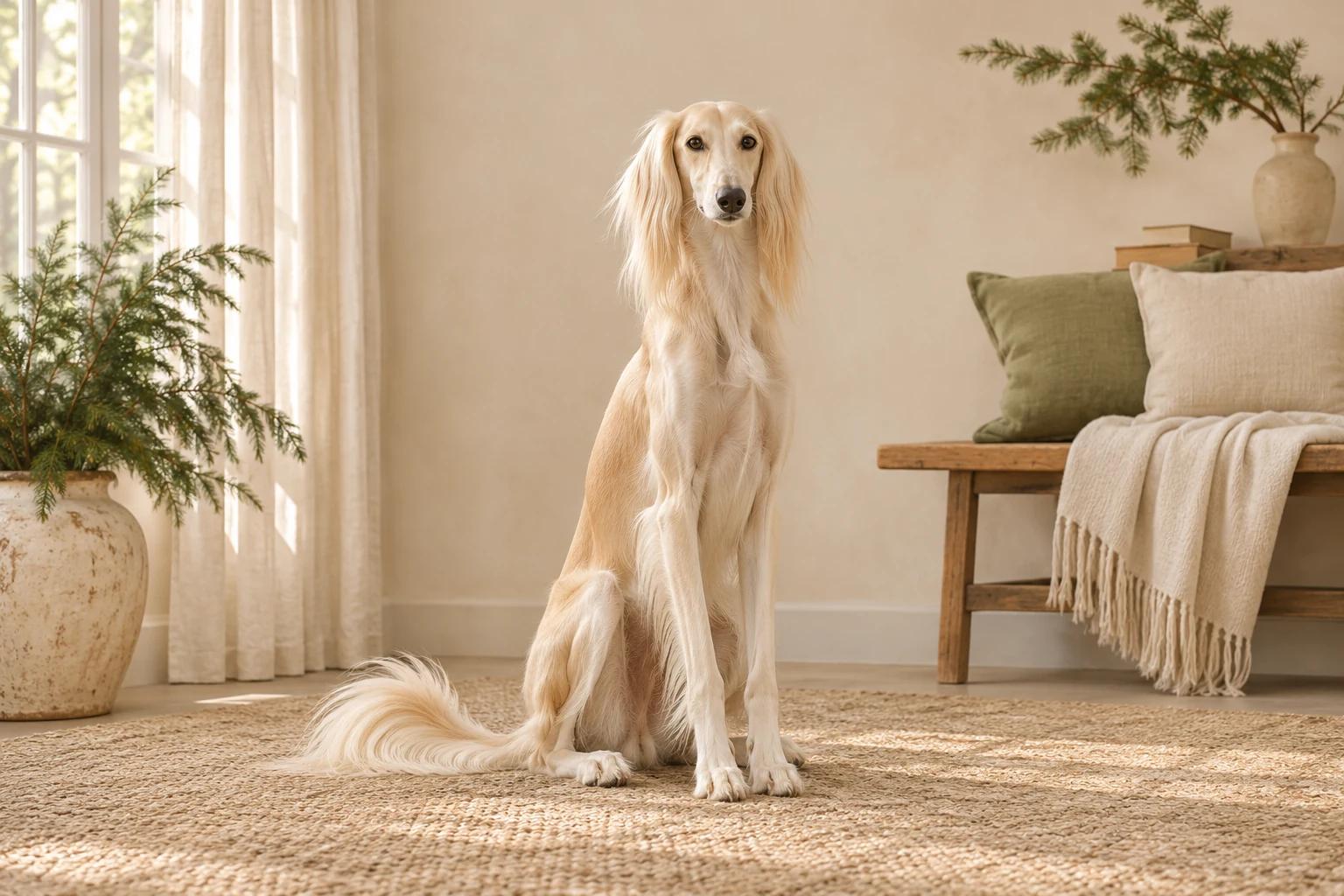
Saluki temperament is best understood through the dog's ordinary choices, not through a demand to behave like a different kind of companion. Look at how the individual spends time with familiar people, responds to invitations and takes part in useful tasks. A single greeting or photograph cannot show the whole relationship.
Start by asking what you expect from a dog. Do you want constant physical contact, an enthusiastic public greeter or a companion for shared activities at home? Being honest about those expectations is more helpful than assuming every attractive breed will express affection in the way you prefer.
Saluki temperament: sensitivity and reserve
PDSA's breed guidance describes Salukis as gentle, sensitive and sometimes reserved, particularly with unfamiliar people. Treat those words as tendencies rather than a script every individual must follow. Reserve is not an invitation to intensify an interaction until the dog produces a greeting.
When a visitor wants to meet your dog, make it clear that interaction is optional. A quiet visit can be successful without petting or a photograph. You can answer the visitor's questions while the dog remains elsewhere instead of making its participation the centre of the occasion.
Do not apologize for a dog that is not interested in entertaining someone. At the same time, avoid using a breed adjective to dismiss persistent distress. If ordinary situations are difficult, seek appropriate veterinary and qualified behavioural help rather than assuming nothing can change.
Saluki personality is not measured by contact alone
Notice the activities you already share. Perhaps the dog joins you when you move to another room, waits nearby while you prepare to go out, or takes an interest in a familiar game. Describe what actually happens before deciding what it means.
A useful question for a caregiver is, “What does a relaxed afternoon together look like?” The answer may tell you more than asking whether the dog is affectionate. Follow up with concrete details: where the dog chooses to rest, which invitations it accepts and what happens when the household becomes busy.
Do not compare your relationship with a friend’s dog. Nearby rest and physical contact are different ways to share time; learn the individual’s preferences.
Saluki characteristics and learning together
The Saluki Club of America's obedience guidance recommends patient, positive teaching, short sessions and relaxing breaks rather than repetitive drilling. Basic skills can be useful at home without becoming a competitive ambition. The club also recognizes that Salukis can participate in obedience and rally with suitable teaching.
Choose one useful action and make the request clear. For example, practise moving to a familiar position beside you before adding another task. Finish after a few good attempts instead of continuing solely because the dog succeeded once and you want to see it again.
Vary the purpose of practice without turning every interaction into a test. Some time together should simply be ordinary company. If you want structured help, tell an instructor what you need in everyday life rather than assuming a standard competition sequence is the only worthwhile goal.
Teach a voluntary handling position
AKC's chin-rest lesson offers a practical example: the dog voluntarily places its chin on your palm. Begin by rewarding interest in the offered hand, then gradually reward closer approximations to contact. Build duration only after the position is familiar, starting with a very brief hold.
Offer your hand at a comfortable height rather than lifting the dog's head into it. Keep your fingers relaxed and do not close them around the muzzle. If the dog withdraws, pause. The point is willing participation, not a disguised restraint.
Practise this skill separately from necessary care at first. Do not immediately use the first successful contact to perform an unfamiliar procedure. Ask your veterinary team how to prepare for specific examinations or treatments; a training exercise does not replace professional guidance or urgent care.
Saluki behavior: describe the sequence
A precise account helps when you need advice. Instead of “she was difficult,” describe what happened before, during and after the moment. Was a person approaching, a door opening or a tool appearing? What did the dog do next? Distinguish what you saw from your guess about the reason.
That habit also helps with small everyday misunderstandings. If the dog leaves when you collect a particular object, look at the sequence associated with that object rather than assuming a general dislike of you. The relevant detail may be the task that usually follows, not the object itself.
Avoid staging repeated demonstrations of a problem for visitors. Once you know a situation is difficult, reproducing it for an audience adds little useful information. Explain it clearly to the professional helping you and follow their advice about what information would be useful.
Make household expectations practical
Agree on the few boundaries that genuinely matter. If the dog is allowed on one piece of furniture but not another, everyone needs to understand the distinction. Do not invite it up for a photograph and then object to the same choice later without teaching an alternative.
Keep valued human belongings out of situations where confusion is likely. A scarf left among the dog's toys is not a fair test of respect for possessions. Arrange the room so you can enjoy time together without repeatedly rescuing objects or issuing warnings.
Show other caregivers the routines your dog knows. Demonstrate outing preparation or familiar handling and explain what you have not yet taught, rather than assuming experience transfers automatically.
The Saluki profile and dog match quiz can help prospective owners examine the wider fit. The type and smooth-coat article addresses appearance variation; it should not be used to predict a particular personality from a coat or outline.
FAQ
Does a Saluki have to be physically clingy to enjoy company?
No. Look at the individual's ordinary choices and shared activities rather than using one form of contact as the only measure of a relationship.
Can I teach useful skills without competing?
Yes. Choose actions that make daily life easier. A competition result is not required for you and your dog to benefit from learning together.
What information helps when I ask about behaviour?
Describe what happened immediately before and after the action, including the setting and the people involved. A concrete sequence is more useful than a label such as stubborn or difficult.
Sources behind this article
Article source checked: November 16, 2026. Source checked 2026-11-16
Keep reading

Airedale Terrier Temperament: What Everyday Life Can Feel Like
Read article →