Saluki Exercise Needs: Walks, Running and Safe Outlets
Plan Saluki exercise around regular walks, suitable running opportunities and individual fitness, without treating speed as unlimited stamina.
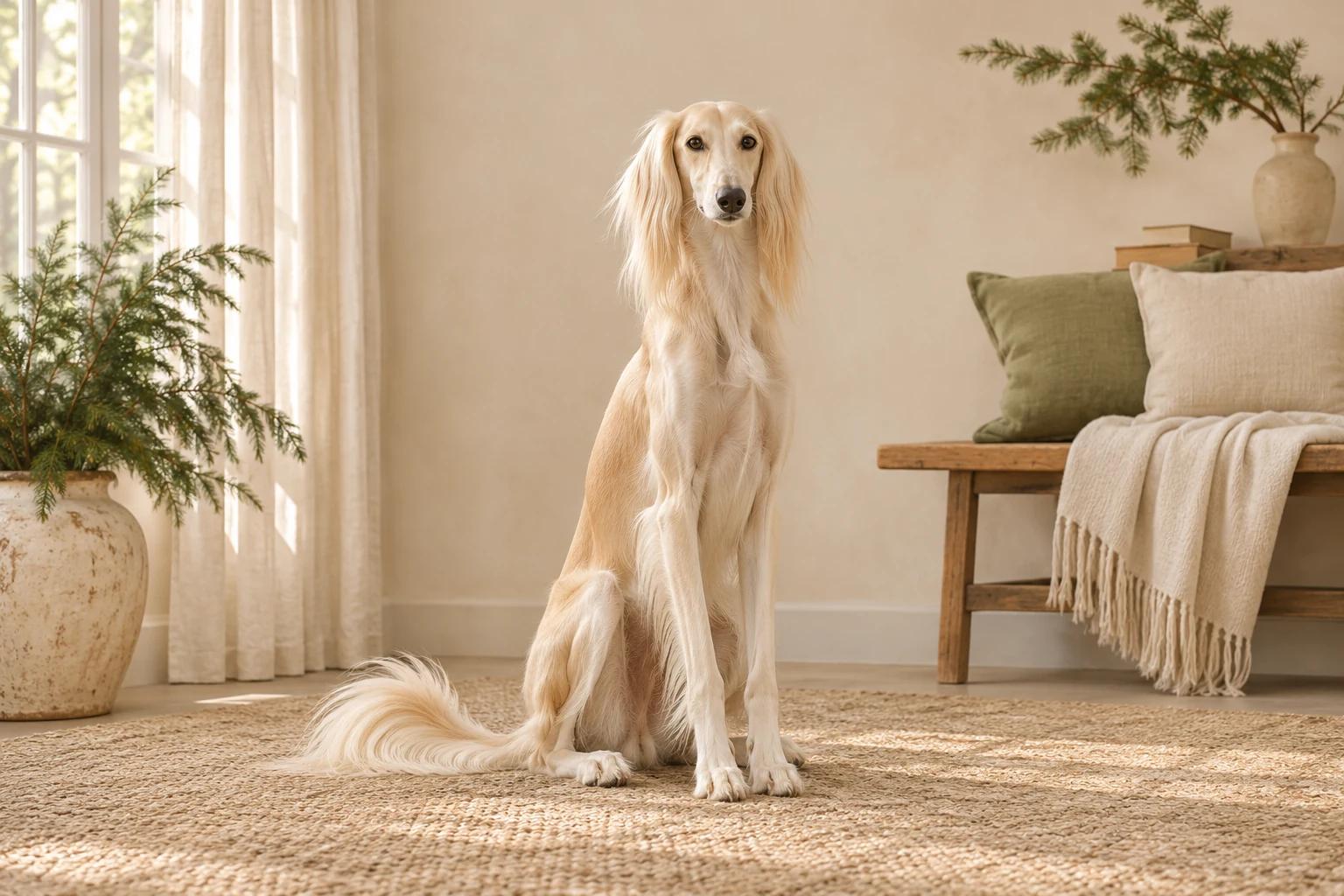
Saluki exercise needs call for distinct walking, running and sport plans. Think through the setting before opening a gate: a reputation for speed does not tell you whether the place or task suits this dog.
Before building an ambitious routine, identify what is genuinely available near you. A suitable regular option is more useful than an ideal field you can reach only occasionally. Look at the entire visit, including arrival and departure, not just the attractive photograph of open grass.
Saluki exercise needs: freedom needs a suitable setting
The Saluki Club of America emphasizes the breed's hunting drive and the importance of securely fenced running space. Do not rely on your ability to catch a departing Saluki or on a familiar response to your voice where the surroundings are unsafe.
For a hired field, inspect the boundary and entrances before release. Check the actual enclosure, not just its advertised description.
Ask how bookings overlap so you can leave without confusion when another dog arrives.
How much exercise does a Saluki need?
Battersea's exercise guidance recommends matching activity to age, health, breed and personality rather than using one universal rule. Fitness changes, and concerns about movement or behaviour should be discussed with a veterinarian before simply adding more exercise.
A puppy, a fit adult and an older Saluki need different decisions. Ask your veterinary team what is appropriate for the individual, especially before introducing a demanding activity. The ability to move quickly on one occasion is not evidence of readiness for a prolonged outing or repeated intense effort.
Do not interpret every restless evening as proof that the dog needs another hard session. Discomfort, insufficient rest and other problems can resemble an exercise shortfall. New limping, unusual fatigue or reluctance to continue needs attention, not a determination to finish the planned distance.
Give the Saluki daily walk its own purpose
A walk can be an ordinary shared part of the day without becoming a warm-up for a larger athletic project. Choose a route you can manage comfortably while remaining attentive to the dog and the people using the same space.
Look ahead at the physical layout. A wide path can narrow suddenly at a bridge or parked vehicle. Decide where you can wait or turn around rather than proceeding into a space that leaves no room to pass. If you regularly walk with someone else, agree who will hold equipment or manage a gate before reaching it.
Avoid combining the outing with tasks that absorb your attention. Carrying an unstable stack of parcels or repeatedly stopping to type can make an otherwise simple route harder to manage. Give the dog a proper walk, then deal with the errand that cannot comfortably happen at the same time.
Choose the route you can actually use
A route marked on a map may include steps, narrow barriers or stretches where the surface is difficult. Visit unfamiliar locations yourself when practical, or begin with an easily reversible section rather than committing to the complete circuit.
Think about where you would go if the usual entrance were closed. Knowing an alternative prevents a small disruption from becoming a hurried improvisation beside a road. This is especially useful when several household members share walking responsibilities but do not know the same paths.
Saluki activity level and organized running sports
The Saluki Club's lure-coursing introduction describes hounds following a mechanically operated lure around a course. It also distinguishes running alone from being certified to run compatibly with other dogs. Being a Saluki does not by itself establish readiness for either arrangement.
Watch an event before deciding to participate. Ask the organizers about beginner opportunities, eligibility, the field, equipment and how the dog is collected afterward. Explain your dog's age and experience honestly. Do not arrive assuming that a competitive run will double as an introductory lesson.
On a first visit without your dog, learn where participants wait and who gives release instructions. Understanding the flow helps you prepare.
Sport should remain optional. You can admire a coursing performance without making competition a condition of successful ownership. Equally, wanting to try a sport is a reason to seek suitable instruction, not to recreate machinery or a competitive course on improvised ground.
Make a sustainable week, not a single impressive day
Work out which outings require transport and which can happen from home. A timetable that depends on a car being available every evening may fail when another household member needs it. Keep the ordinary walking plan practical enough to survive normal changes.
If you use a paid facility, consider availability before making it central to the routine. A popular weekend slot may not be obtainable every week. Ask what happens during maintenance closures and think about an alternative while you still have time to assess it properly.
Review the plan when your dog's circumstances change. A move, a new caregiver or a different daily schedule can alter which locations are usable. You do not have to reproduce an old route exactly to preserve a worthwhile shared routine.
Explore the Saluki breed profile and dog match quiz for the broader ownership picture. The type and smooth-coat guide concerns appearance, not a formula for deciding an individual's athletic capacity.
FAQ
Does every Saluki need to compete in a running sport?
No. Organized sport is an optional shared interest. Learn about the activity before deciding whether participation suits your dog and your own goals.
Is an advertised exercise field automatically suitable?
No. Assess the actual site and the way arrivals and departures work. Advertising cannot tell you whether today's entrance, boundary or booking arrangement meets your needs.
Should I arrange the whole week around one distant facility?
Only if the travel and availability are genuinely workable. Keep a practical local plan and consider what you would do during closures or when transport is unavailable.
Sources behind this article
- Saluki Club of America: Living with a Saluki ↗
- Saluki Club of America: Lure coursing ↗
- Battersea: Exercise needs ↗
Article source checked: November 16, 2026. Source checked 2026-11-16
Keep reading

Afghan Hound Exercise Needs: Build a Workable Active Day
Read article →