Longhaired Russian Toys have more than a pair of fringed ears
The Russian Toy’s FCI standard describes moderate body hair, feathering and an adult ear fringe. Longhaired does not mean a uniformly fluffy coat.
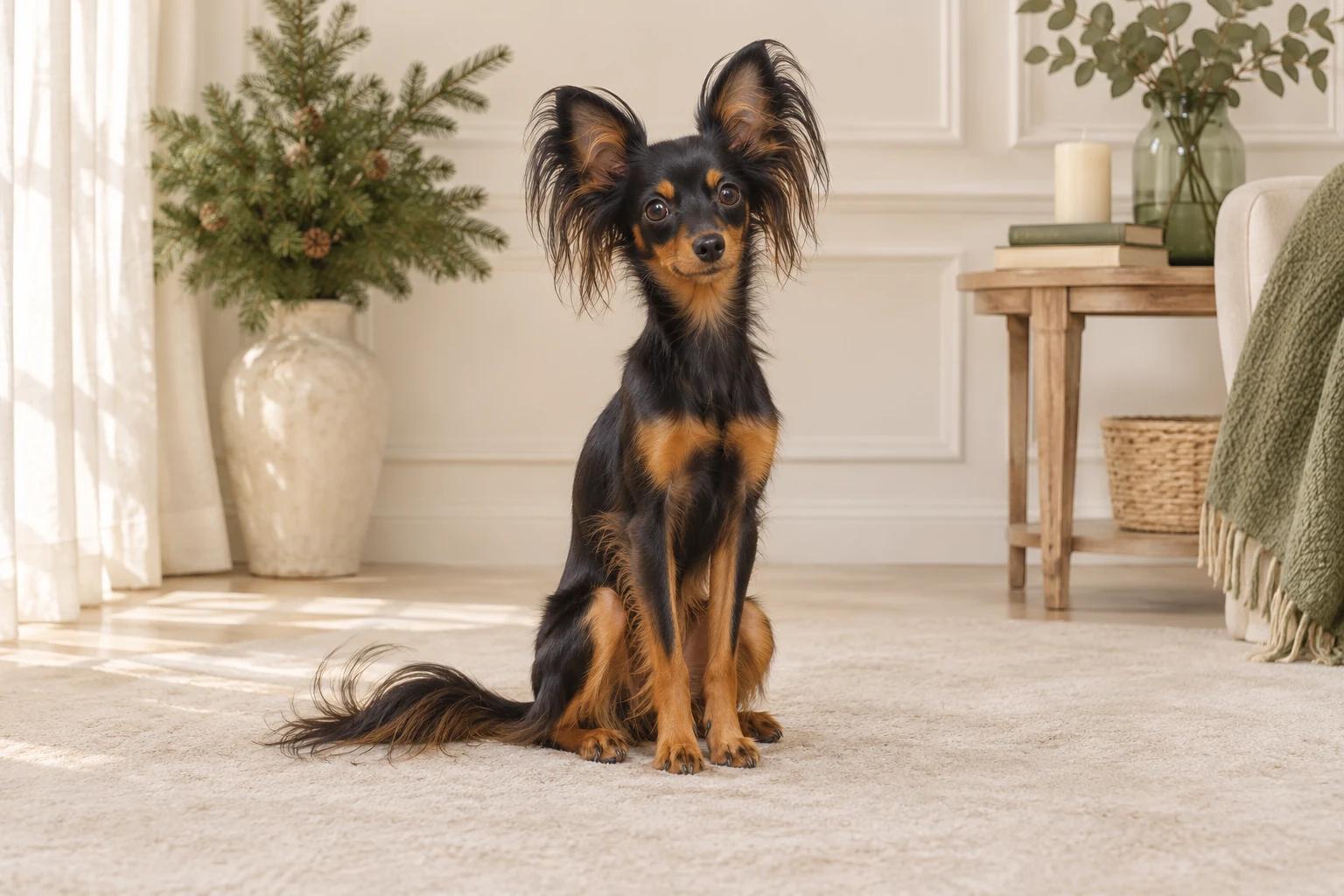
Follow the coat across the whole dog
The FCI Russian Toy standard describes two coat varieties. In the longhaired variety, body and neck hair is moderately long, three to five centimeters, and lies close. The head and fronts of the limbs retain short hair, while the backs of the limbs and tail have feathering. The striking ear fringe is one part of that arrangement.
Keep the adult qualification with the ear description
The document says that in adult dogs the fringe should conceal the outer edges and tips of the ears. That wording matters when comparing a puppy photograph with an adult portrait. The standard does not give a single deadline for every young dog to acquire the same amount of fringe.
Ask for the age of the dog in a reference image before using it to set expectations. A close-up of the ears alone also leaves out the body-coat details that distinguish the overall description.
Choose a useful introduction rather than maximum fluff
For a breed profile, pair a clear head view with an ordinary full-body photograph. Identify the coat variety and the age shown. There is no need to edit the body into a fuller silhouette: the source specifically describes close-lying hair rather than a tousled or fluffy body coat.
Appearance remains only part of an introduction. Ask separately about the individual’s care routine and daily life.
Sources behind this article
Article source checked: October 20, 2026. Source checked 2026-10-20
Keep reading
Russian Toy vs Papillon: Small Dogs, Distinct Outlines
Read article →