Russian Toy Dog Size: Height, Build and Everyday Fit
Understand Russian Toy size through shoulder height, fine-boned proportions and practical equipment fit, without chasing a weight target.
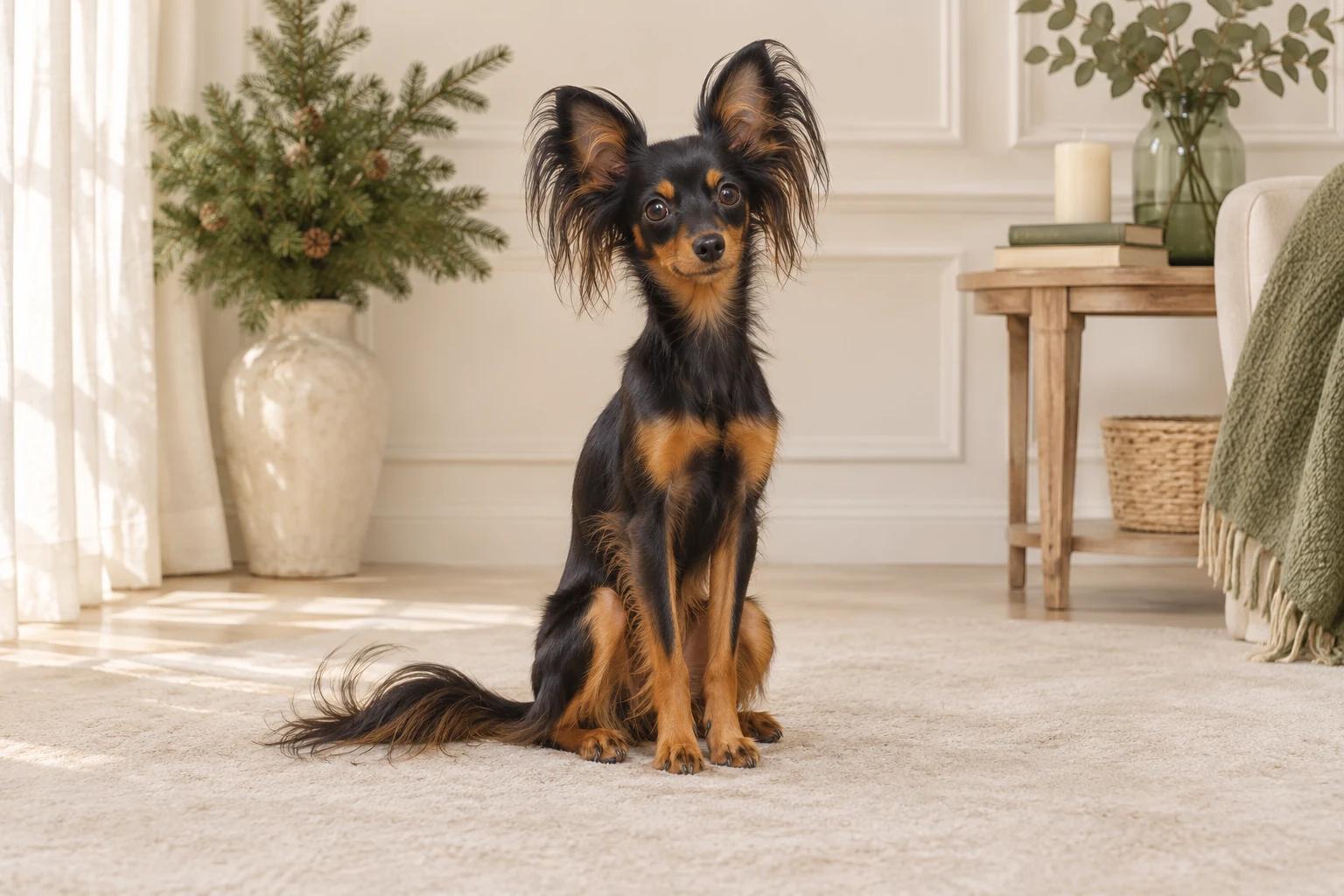
Russian Toy dog size is best considered with the dog standing naturally. Separate adult dimensions, current weight, body condition and equipment fit rather than relying on a weight label.
Start with the breed's height reference, then separate the questions that are often bundled together: adult dimensions, current weight, body condition and the fit of everyday equipment.
Russian Toy dog size: A small, leggy outline
The Russian Toy Club of America standard gives a shoulder-height range of 8–11 inches for both sexes, with fine bone, lean musculature and a square outline.
Russian Toy dog height means shoulder height, not height to the ears.
The standard is a description of breed type, not an instruction to make a dog reach a particular number. It does not turn a puppy forecast into a guarantee or tell you what feeding amount is right for an individual.
How big do Russian Toy dogs get in practical terms?
Think beyond whether the dog fits on your lap. Can it turn comfortably in its chosen resting space? Can it reach a water bowl without an awkward stretch? Can it move past furniture without being squeezed into the route people use most often?
A small dog may need less floor area for a bed, but the usable space around that bed still matters. A perfect-sized cushion placed behind a frequently moved chair is not necessarily a good resting arrangement.
Recheck adjustable equipment during puppy growth; the original size label cannot establish continued fit.
Make comparisons at the same scale
If you are comparing photographs, ask whether they show adults and whether there is a reliable scale reference. A close-up in a large person's hands is especially misleading. It can make a dog appear exceptionally tiny without providing any usable measurement.
An ordinary side view on level ground is more informative than a novelty photograph emphasizing smallness. The goal is to understand the dog, not to find the most dramatic visual proof of how little space it occupies.
Russian Toy dog weight is not a feeding target
The AKC Russian Toy standard gives an upper reference of 6.5 pounds for both sexes. FCI gives an upper reference of 3 kg. These are named standard ceilings, not a two-endpoint typical adult-weight interval or an individual healthy-weight target.
Weight is useful when it is accurately measured and interpreted with the individual dog's condition. It is less useful as a competition to stay as small as possible. Do not reduce food to preserve a miniature appearance or encourage weight gain simply to make the dog look more substantial.
VCA's guidance on toy and small-dog nutrition explains that small portions can still contribute excess energy. It recommends reviewing the actual diet, amount and body condition with the veterinarian and measuring food accurately, ideally with a digital kitchen scale. Puppy diets and the timing of a transition should be discussed for the individual rather than decided from appearance alone.
Weigh portions consistently and include training food when discussing intake with your veterinarian. A “small handful” is difficult to reproduce when different people feed the dog.
Harness fit: Follow the body, not the breed label
Battersea's harness guidance recommends equipment that avoids pressure on the neck and allows free shoulder movement. Different designs suit different dogs. Introduce the equipment gradually, rewarding interest and comfortable steps rather than fastening it abruptly; pain, panic or fear warrants a pause and appropriate help.
On a small frame, check buckle placement as well as straps. Use actual dimensions and have the fit assessed if uncertain.
Before the first outing, check the equipment stays correctly positioned during movement in a secure familiar area.
Check after changes, not only at purchase
Growth, altered adjustment and wear can change how an item sits. Revisit the fit rather than assuming that the original purchase decision remains correct indefinitely.
Everyday objects need to suit the individual
Bowls, toys and resting places should be usable, not simply labeled small. A bowl may have a suitable capacity but an awkward rim. A toy may be lightweight yet have pieces the dog can detach. A bed may be compact but leave too little room for the position the dog actually chooses.
Try placing the bowl away from a cabinet door before concluding that its shape is the problem. A change in location is easier to test than ordering another bowl.
Observe use before deciding the purchase has solved the problem. Does the dog approach the item readily? Does it abandon it after trying? Is the surrounding space causing the difficulty rather than the object itself? These are concrete questions you can answer without guessing from breed size.
Small stature should also not become an excuse to skip ordinary learning or activity. Equipment is there to support the dog's life, not to turn it into an accessory that is moved from one container to another.
Use size as one part of the choice
The Russian Toy profile covers companionship and daily care alongside physical details. The dog match quiz can help you consider whether the whole routine appeals to you. For coat appearance, the separate Russian Toy body and ear-fringe guide addresses that topic without using fur as a measurement of body size.
Choose a dog whose needs you can meet, not the smallest claim in an advertisement.
FAQ
Is shoulder height the same as height to the ears?
No. Shoulder height is measured to the withers, not the tips of the ears.
Can a puppy's future size be guaranteed from a photograph?
No. A photograph cannot establish a precise adult outcome. Ask for reliable background information and plan for individual growth.
Does an extra-small label guarantee a harness will fit?
No. Labels vary. Use the manufacturer's measurements and check how the item sits on the actual dog while standing and moving.
Sources behind this article
- Russian Toy Club of America: Standard ↗
- VCA: Nutrition for toy and small dogs ↗
- Battersea: Collar and harness introduction ↗
- AKC standard upper reference — adult-weight reference ↗
- FCI standard upper reference — adult-weight reference ↗
Article source checked: November 16, 2026. Source checked 2026-11-16Article source checked: November 18, 2026. Source checked 2026-11-18
Keep reading
Russian Toy Temperament: Lively, Close and Individual
Read article →