Rottweiler Grooming: Coat, Shedding and Practical Care
Build a practical Rottweiler grooming routine around the natural coat, gentle brushing, bathing access and checks that go beyond loose hair.
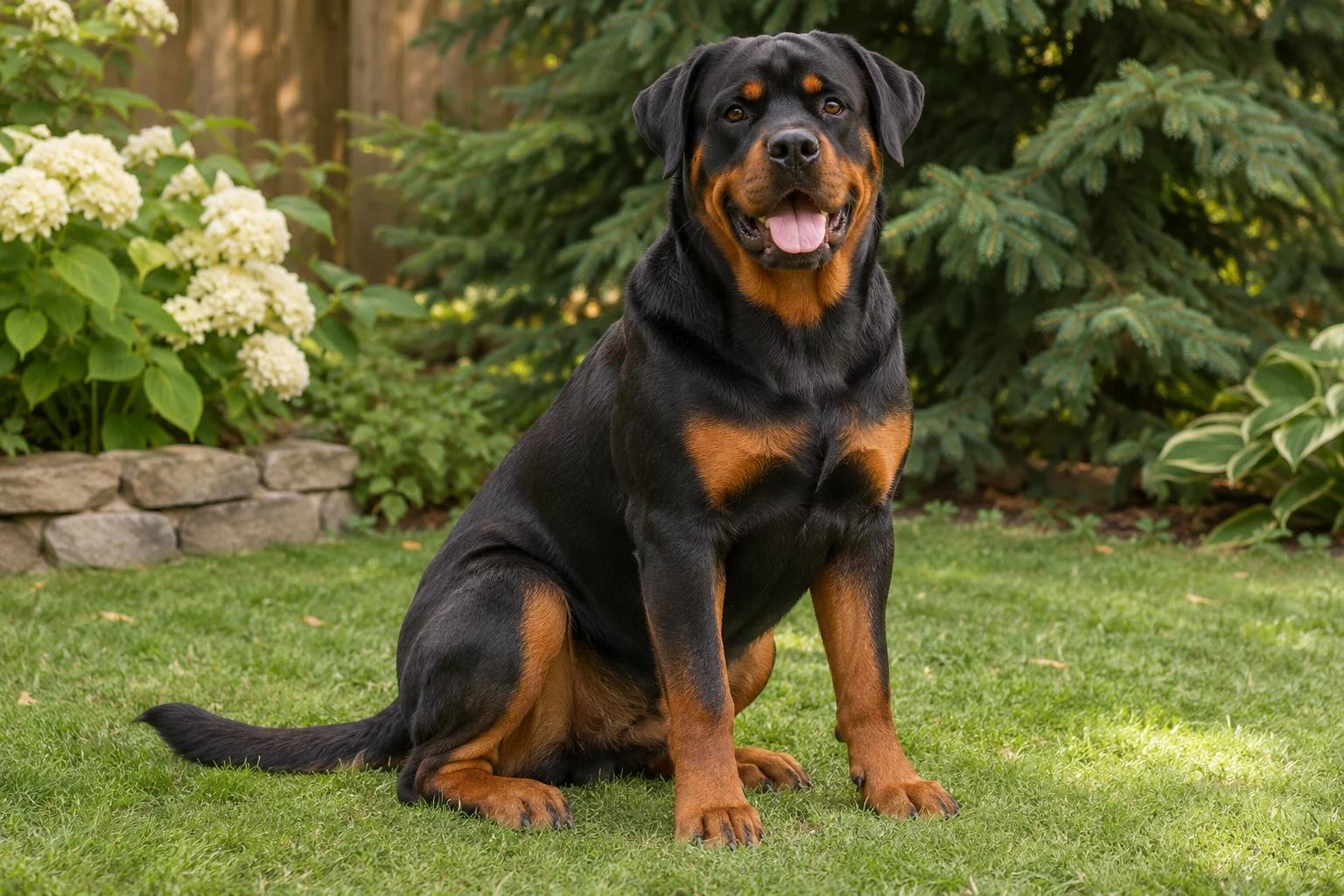
Rottweiler grooming does not require sculpting an elaborate outline, but it does require attention. A smooth-looking black coat can hide loose hair, dirt close to the skin and an area the dog finds uncomfortable. Good care is less about producing a shine on demand and more about knowing the coat you handle regularly.
The dog's size also changes the practical job. Reaching the far side, arranging a bath and working near the feet need a setup that suits an adult Rottweiler, not just a convenient puppy-sized routine.
Rottweiler grooming: Work with the natural coat
The Rottweiler standard describes a straight, coarse, dense outer coat lying flat, with undercoat especially around the neck and thighs. Hair is shorter on the head, ears and legs, and longer at the rear thighs. The standard calls for a natural, untrimmed presentation rather than a manufactured haircut.
Place your equipment where you can reach it without leaning across the dog. Good visibility matters more than working quickly, especially when you are still learning how the individual coat responds to your chosen tool.
Do not judge the task solely by reflected light on the black hair. A glossy photograph shows very little about the skin beneath it or whether the dog was comfortable during the process.
How to groom a Rottweiler without wrestling
RSPCA Australia's grooming guidance recommends starting with brief work on areas the dog already accepts, rewarding calm participation and expanding gradually. Use a suitable soft or short-bristled tool for shorter hair, work gently with the direction of growth and stop if the dog becomes uncomfortable. Difficult areas should not become a restraint contest.
For a large dog, move yourself to the accessible side rather than rolling the dog over.
Prepare the floor before the brush
Choose a surface where both of you can remain steady. Clear away bowls, trailing cables and items you might knock while moving around the dog. If you use a mat, make sure it is large enough for the position the dog chooses, rather than leaving the front feet on fabric and the back feet sliding beyond it.
Keep removed hair in one place so it does not immediately spread back over the working area. This is a small convenience, but it makes short sessions easier to repeat without turning grooming into a full-room cleanup.
Rottweiler shedding: Expect change, not a hair-free home
The AKC Rottweiler lifestyle guide describes shedding throughout normal coat life, with heavier periods in spring and autumn. Brushing helps manage the loose hair, but it does not stop the coat from renewing itself.
Separate two questions: how much hair is landing on the furniture, and what the coat and skin look like on the dog. A washable cover on the favorite resting place helps with the first. Looking closely during care addresses the second. Neither replaces the other.
A pile of hair is not a grooming score. If you have already worked through an area comfortably, repeatedly going over it to produce a larger pile adds little useful information. Pay attention to what is different from the dog's usual coat rather than trying to remove every possible loose strand in one session.
Dark hair makes household choices visible
Short black hairs can show clearly against pale fabric. Keep that ordinary reality in mind when choosing bedding and cleaning tools. It is not a reason to ban the dog from every comfortable surface or to expect a grooming product to make shedding disappear.
The sensible aim is manageable cleanup alongside a comfortable coat. Your Rottweiler does not need to look freshly prepared for a photograph every time someone visits.
Bathing is partly an access problem
AKC's home-grooming guide advises warm water, a mild dog-formulated shampoo, thorough rinsing and appropriate drying. It also recommends professional advice about suitable tools and veterinary attention for unusual skin changes. Dark nails obscure the quick, so ask for skilled help if you are unsure about trimming rather than guessing where to cut.
Before turning on the water, imagine the whole movement into and out of the washing area. Where will the dog stand? Where can you reach the controls? Can you get around the body without pushing it sideways? If the only plan depends on lifting an adult dog over a high edge, reconsider the location or arrange suitable professional help.
Place towels within reach before the bath begins. An open door across a slippery floor is not a useful drying station. You want the exit to lead to a stable place where the dog can be dried without a hurried chase through the house.
Rottweiler coat care includes looking beyond the back
RSPCA recommends checking less obvious areas such as between the toes and around the ears, as well as noting nail length and skin changes. Ask your veterinarian about anything unusual rather than treating every finding as a cosmetic problem.
Use enough light to see the area. A check should not become an improvised treatment session.
The Rottweiler profile covers broader care needs. The dog match quiz helps prospective owners consider the full daily commitment, while the existing Rottweiler carting guide addresses a separate working activity rather than coat care.
FAQ
Does the coat need a decorative haircut?
Ask what purpose a proposed cut serves. A specific care problem needs an appropriate solution, not an automatic cosmetic package.
Should every grooming session include a bath?
No. Decide what the dog actually needs that day. Brushing, looking over the coat and bathing are different tasks, not a compulsory package.
What is the most useful preparation for a large adult?
Check access and working space. A routine is much easier when you can reach the dog and move around it without lifting, crowding or slipping.
Sources behind this article
- AKC: Rottweiler standard ↗
- RSPCA Australia: Grooming dogs ↗
- AKC: Grooming at home ↗
- AKC: Rottweiler lifestyle ↗
Article source checked: November 16, 2026. Source checked 2026-11-16
Keep reading

Affenpinscher Grooming: A Practical Coat-Care Routine
Read article →