Rottweiler Exercise Needs: Walks, Skills and Scent Games
Meet Rottweiler exercise needs with purposeful walking, achievable scent games and simple skill work rather than an endless mileage target.
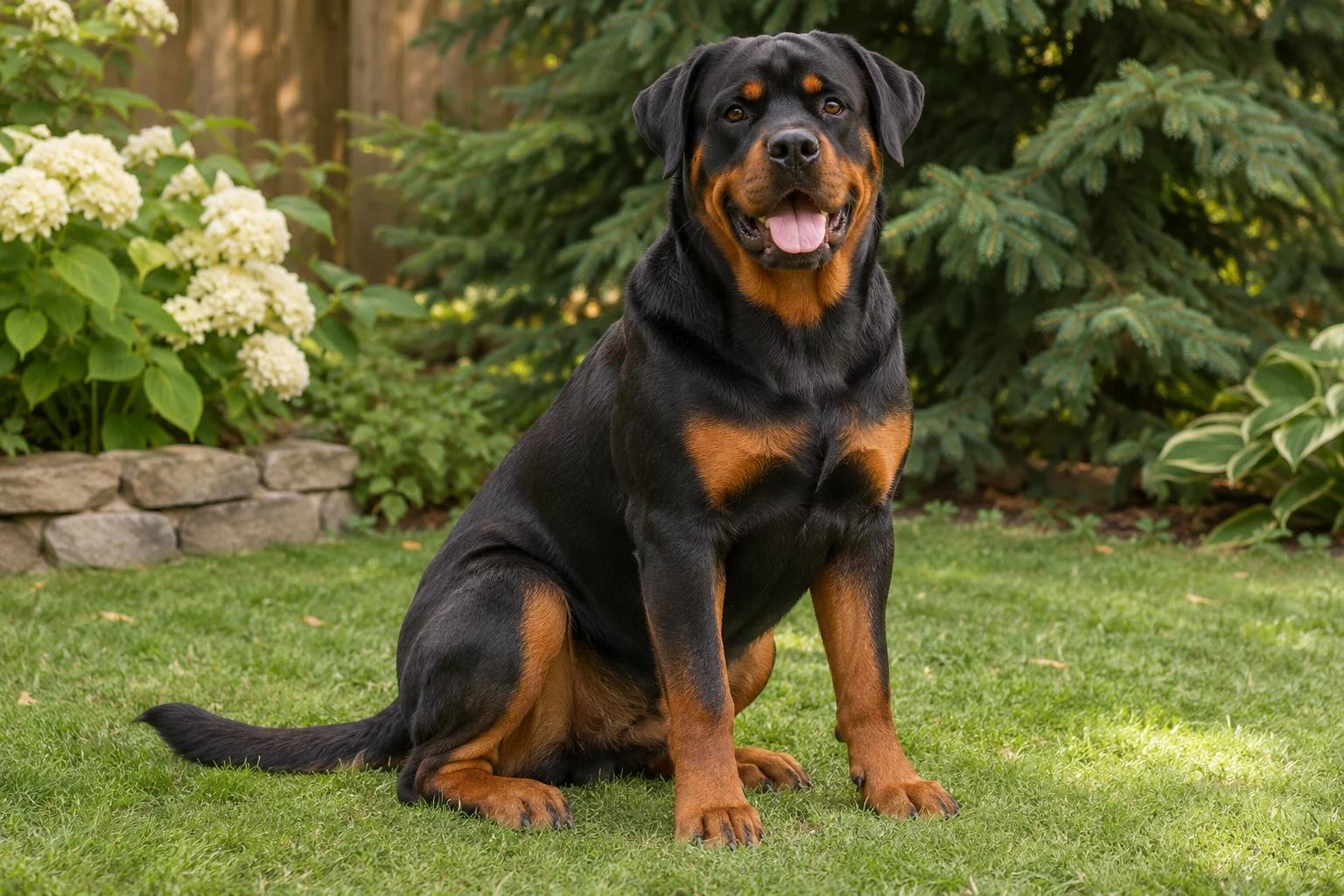
Rottweiler exercise needs involve more than making a powerful dog physically tired. A useful day gives the dog opportunities to move, investigate and work with you, followed by time when nothing is being demanded. Walking farther is not always the answer to a routine that lacks variety.
Begin with the individual in front of you. Age, current fitness, comfort and experience affect which activities are suitable. Ask your veterinarian before introducing demanding exercise or when a change in movement raises concern.
Rottweiler exercise needs: Give activity a purpose
The American Rottweiler Club emphasizes both intellectual and physical exercise, with the dog involved in everyday family life. Its guidance makes clear that an empty yard is not a substitute for participation.
Ask whether the day included shared activity, not just distance.
Purpose does not require specialist equipment. A familiar walking route can include an opportunity to investigate, a short section of practiced movement together and a straightforward return home. The point is to offer a task the dog can understand, not to make every outing resemble a training examination.
Make the Rottweiler daily walk workable
Choose routes with enough room to change direction comfortably. A narrow path with no escape from approaching traffic or dogs may be much harder work than a wider route of similar length. Consider sight lines, surfaces and places where you can pause without blocking others.
A Rottweiler daily walk should also work for the person holding the lead. If you spend the whole outing braced against pulling, the immediate priority is skilled reward-based training support and a more manageable setting, not adding distance to the same struggle.
Compare two versions of a familiar outing: one through a crowded pinch point and one with a spacious alternative. Which lets you stay attentive to your dog rather than constantly anticipating the next collision? Route choice is part of exercise quality, not merely a logistical detail.
Do not measure success only in speed
A dog moving steadily beside you is doing something different from a dog repeatedly accelerating after a thrown object. Those activities should not be counted as interchangeable simply because both involve movement.
Nor is a long walk automatically appropriate because the breed looks strong. Strength is visible; readiness for a particular demand is not. Avoid using an impressive adult outline as evidence that a young, unconditioned or uncomfortable dog should keep going.
An easy search with a clear answer
Dogs for Good's scent-training guide introduces searching with food placed visibly near the dog, then progressively farther away or partly out of sight. A consistent search cue helps explain the game. Food used in activities comes from the daily allowance; progress should follow successful searching rather than a need to make every attempt difficult.
For a first version, use a clear, safe floor area with one suitable food piece in view. Later, place it beside a stable object with enough room for the dog to approach directly. Avoid hiding it under furniture where the dog must scrape its face or shove a broad shoulder into a narrow gap. This is an accessible search, not a strength challenge.
When the dog finds the item, let that success finish the attempt. You do not need to keep producing harder hiding places until interest disappears. A few understandable successes tell you more than an elaborate search in which the dog gives up.
Turn familiar skills into a small movement game
AKC's home Rally guide describes teamwork through movements such as turns and halts, supported by basic walking, sit and down skills. It recommends brief, rewarding practice and teaching without physically moving the dog into position. Reward placement beside the handler helps keep that position meaningful.
If those foundations are already familiar, try a short sequence on a level, uncluttered surface: walk a few steps together, make one broad turn, then ask for a known halt or sit. Reward the completed behavior before attempting another sequence. This is an informal application, not a regulation course or a test of competition readiness.
A large dog needs room to turn without wrapping around your knees. Mark your own route mentally before beginning so you do not change direction unexpectedly. If the sequence becomes awkward, practice the human footwork alone and simplify what you ask of the dog.
Keep precision separate from endurance
Keep the skill exercise brief rather than repeating a successful turn dozens of times.
If you enjoy this sort of activity, a suitable class can help refine your timing. You do not need to add jumps, speed or advanced equipment to make basic teamwork worthwhile.
How much exercise does a Rottweiler need?
There is no single duration that makes every Rottweiler's day appropriate. Consider the content of activity, the dog's response and the opportunities to rest. A universal number can hide the difference between an easy outing and a physically demanding session.
If your dog seems persistently unsettled, review the whole pattern with a qualified professional rather than automatically increasing exertion. Likewise, a sudden reluctance to join a familiar activity deserves veterinary attention, not an assumption that the dog is being difficult.
The Rottweiler breed profile provides context for the Rottweiler activity level and wider ownership commitment. The dog match quiz can help prospective owners consider whether they enjoy daily shared work. For a separate sport, read the Rottweiler carting first-visit guide; pulling equipment is not part of the beginner activities here.
FAQ
Is a large garden enough exercise?
Space alone does not tell you what the dog does there. Consider the actual opportunities for movement and participation rather than the size of the boundary.
Must every activity be physically demanding?
No. A useful day can include thoughtful, low-key tasks as well as movement. More exertion is not the only way to make an activity worthwhile.
Should I copy another Rottweiler's routine?
Use it as an idea, not a prescription. Your dog's experience, comfort and current ability may be different, even if the dogs look similar.
Sources behind this article
- American Rottweiler Club: Finding a Rottweiler ↗
- Dogs for Good: Scent training ↗
- AKC: Rally training at home ↗
Article source checked: November 16, 2026. Source checked 2026-11-16
Keep reading

Afghan Hound Exercise Needs: Build a Workable Active Day
Read article →