Romanian Carpathian Shepherd temperament at home
Explore Romanian Carpathian Shepherd temperament, calm companionship and watchfulness through practical observations and everyday home arrangements.
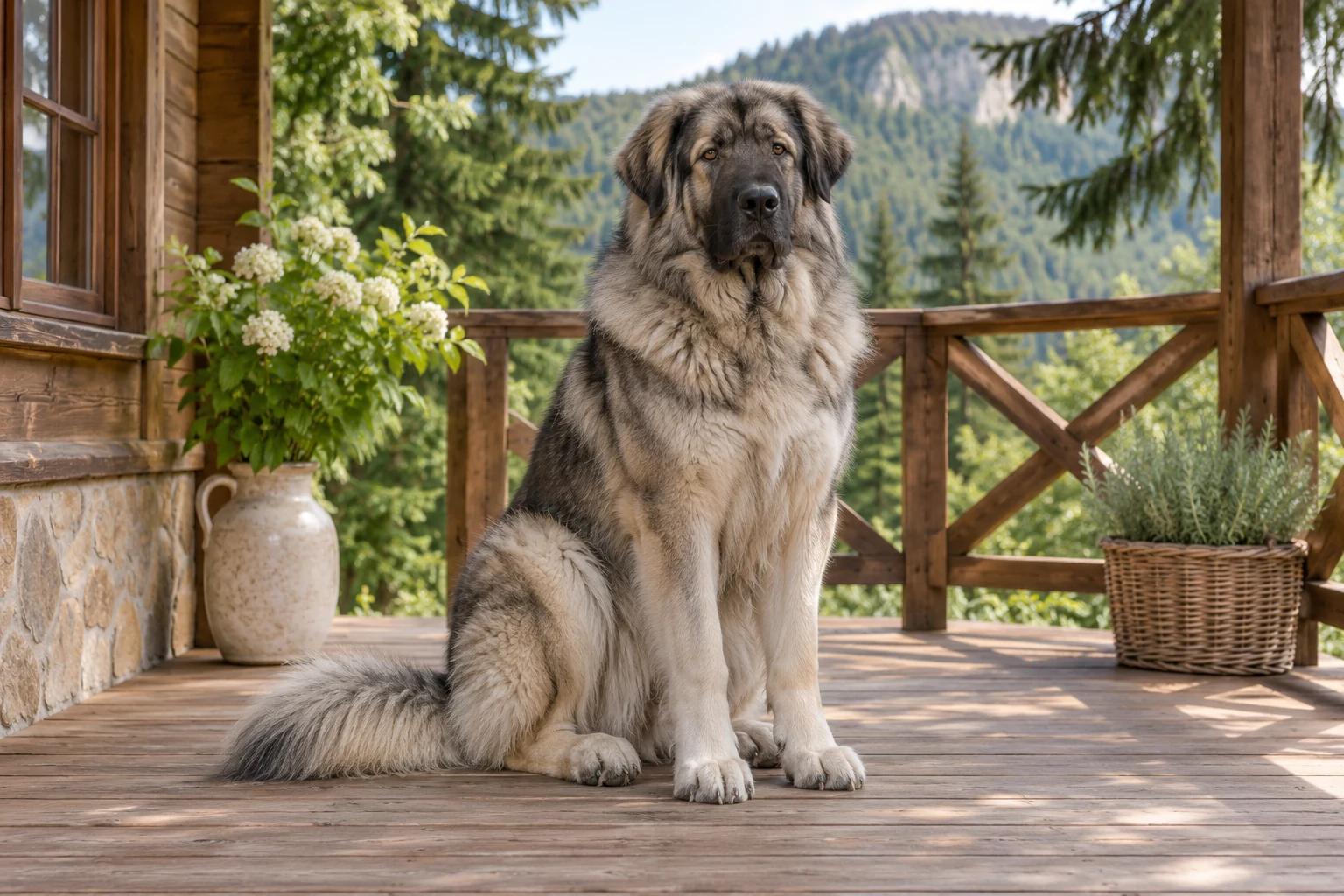
Explore the
Romanian Carpathian Shepherd
Background, care, and everyday considerations.
View breed profile →Romanian Carpathian Shepherd temperament should be understood through the life you will share, not through an image of a dog standing guard on a hillside. Home life includes people moving between rooms, deliveries arriving, quiet afternoons and unfamiliar experiences. The question is how the individual responds to those events and what support makes them manageable.
Start with the Romanian Carpathian Shepherd profile. A breed description can suggest questions to ask, but an actual dog's history and behavior provide the information needed to answer them.
Romanian Carpathian Shepherd temperament: calm and attentive
The FCI standard identifies a flock-guarding role and describes a calm, dignified dog attached to its people and flock. Those qualities are not a promise of automatic judgment in a modern household. A guardian background does not make unsupervised visitor encounters or deliberate intimidation an appropriate test of character.
Calmness also needs a setting. Ask how the dog behaves while familiar people move around the home, not merely how it appears when nothing is happening. Does it remain in its resting place, accompany the person or stand where several routes meet? Describe what you see before deciding what it means.
An adult lying quietly with a familiar caregiver may give useful information about that relationship. It does not establish what will happen after a move, in a busy public place or beside an unfamiliar animal. Good assessment keeps those questions separate instead of turning one peaceful scene into a universal answer.
Notice comfort, not just stillness
PDSA's body-language guide contrasts loose, relaxed posture with tension, turning away or becoming very still during an uncomfortable encounter. It advises allowing a dog to withdraw rather than following or forcing contact. The situation matters alongside the signal. Persistent anxiety or aggressive behavior warrants veterinary assessment and, where needed, qualified behavioral support.
For a Carpathian Shepherd, observe the space around the dog as well as the dog itself. A person bending over a resting animal is not the same event as walking past at a distance. A doorway that gives no room to step aside is different from an open room. These differences help explain why the same person may receive different responses in different places.
Keep your own description precise. “She turned her head when I reached for the collar” is more useful than “She dislikes people.” The first account identifies an action and a context that a professional can assess. The second may send the discussion in the wrong direction.
Barking needs an explanation
The RSPCA explains that barking can express excitement, frustration, fear or a request, rather than serving one purpose. For dogs reacting to passers-by, reducing access to the view can help manage the situation. A marked increase deserves veterinary discussion. Distress during absence should not be dismissed as a dog simply enjoying the sound of its own voice.
This matters when interpreting Romanian Carpathian Shepherd behavior. Hearing a bark at the boundary does not tell you whether the dog is reacting to a person, another dog or an unexpected sound. Look at what happened immediately beforehand and what ended the episode rather than assigning every vocalization to guarding.
A practical change might be using a different room while a busy public path is at its busiest. That is different from demanding silence while leaving the dog in exactly the arrangement that keeps triggering the response. Management can reduce repeated difficult encounters while you seek appropriate help with the underlying issue.
The home should offer a genuine resting place
The RSPCA's home-environment guidance calls for a comfortable, clean, quiet resting area and somewhere a dog can retreat from things it finds frightening. It also emphasizes suitable activities and enough resources for multiple dogs. Rest and access to appropriate occupation belong together; one is not a substitute for the other.
For this breed, place the resting area where its full body fits without blocking the route to the kitchen or exterior door. A dog should not have to move whenever someone wants a glass of water. Nor should a visitor need to lean over it to reach a chair. The room's traffic pattern can matter as much as the softness of the bed.
Compare two possible locations by walking through the ordinary tasks you perform there. Open cupboards, pull out chairs and carry laundry through the room. This simple check often reveals a practical obstruction that was invisible while the room was empty and still.
Company can take different forms
Romanian Carpathian Shepherd personality should not be judged solely by lap-seeking or frequent requests for touch. Ask which activities the dog chooses with its familiar caregiver. Sharing a room, investigating a new object together and participating in a short lesson are different forms of interaction, not grades on an affection scale.
Consider what you enjoy as well. If you want constant physical contact, say so during conversations with a breeder or rescue. If you prefer a dog that can accompany ordinary tasks without being the center of every moment, explain that instead. An accurate description of your expectations helps everyone discuss fit honestly.
Among Romanian Carpathian Shepherd characteristics, distinguish an established habit from a response to a temporary situation. A dog visiting an unfamiliar place may not show its usual home routine. Ask what is typical, what has changed recently and which observations are based on repeated experience rather than a single impression.
The dog match quiz can help organize those preferences. For the breed's documentation history, see what 1934 marks in the Carpathian Shepherd's history; that subject is separate from evaluating an individual companion.
FAQ
Is a calm dog automatically easy to live with?
No. Calmness in one situation does not describe every practical skill or response. Ask about ordinary departures, handling, outings and household interruptions. A useful assessment includes both the pleasant routine and the situations that still need support.
What should I ask a previous caregiver?
Ask for examples from a normal day and for a description of any recent changes. Find out which observations come from the dog's own home and which come from temporary settings. Specific examples help you picture the relationship more accurately than broad praise.
Can a guardian label tell me how the dog treats guests?
No. Discuss the individual dog's actual experience with arrivals and unfamiliar people. Do not arrange a confrontation to test the label. The goal is a manageable household relationship, not proof that the dog matches a dramatic reputation.
Sources behind this article
Article source checked: November 16, 2026. Source checked 2026-11-16
Keep reading
Romanian Carpathian Shepherd size: a practical guide
Read article →