Romanian Carpathian Shepherd size: a practical guide
Understand Romanian Carpathian Shepherd size through build, individual measurements and equipment fit, without treating weight as a growth target.
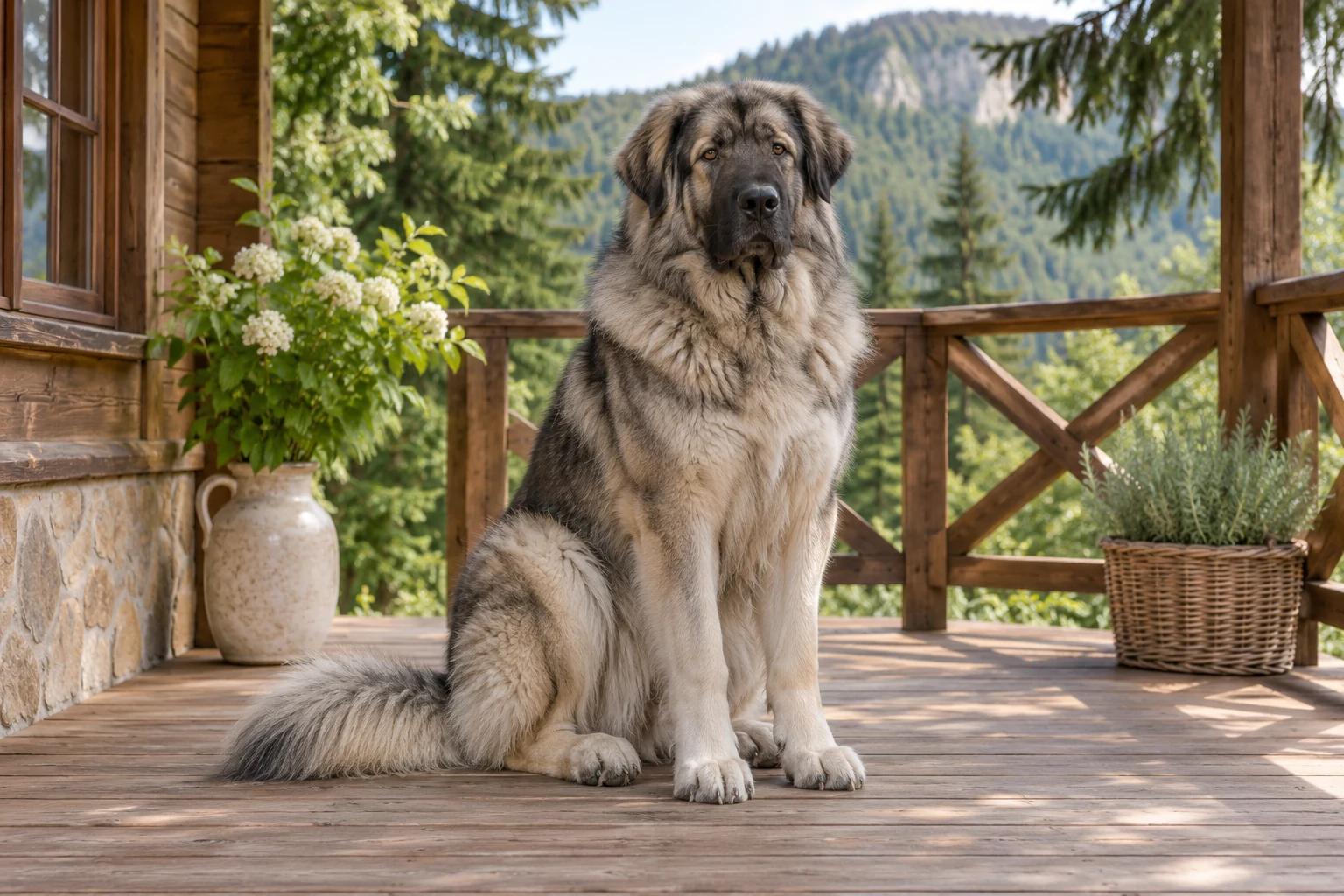
Explore the
Romanian Carpathian Shepherd
Background, care, and everyday considerations.
View breed profile →Romanian Carpathian Shepherd size is a practical ownership question, not just a number to compare with another breed. You need to picture an adult moving through your home, traveling with you and wearing equipment that fits its own proportions. A puppy's current outline or an impressive photograph is not enough to make those decisions.
The breed profile provides the wider context. This guide focuses on how to turn “large dog” into useful observations while keeping body size, body condition and product sizing separate.
Romanian Carpathian Shepherd size and proportions
The My Breed Atlas profile lists an adult weight range of 70–100 pounds, with shoulder heights of 26–29 inches for males and 23–26 inches for females. These profile ranges provide a planning reference, not a promise about any puppy or a target for feeding.
The FCI standard describes a relatively large, agile dog with a rectangular body, deep chest and strong bone, rather than a heavy construction. Body length exceeds height at the withers. Males are intended to be taller and stronger than females, and weight should remain in proportion to size. The emphasis is on a functional overall outline, not maximum mass.
If you are asking how big do Romanian Carpathian Shepherds get, start by meeting mature dogs and examining the individual you are considering. Ask which dogs are fully grown and which are still developing. An unusually large youngster should not automatically become your mental picture of every adult.
Look at movement as well as standing height. A dog occupies more room when turning, stretching out or stepping around someone than it does in a posed side view. That is why a sleeping space, hallway and vehicle entrance each need their own assessment.
Take the measurement that answers your question
Romanian Carpathian Shepherd height is measured at the shoulder, not the ears. Equipment may require several other measurements.
AKC's gear-measuring guide recommends measuring while the dog stands naturally and checking each manufacturer's chart. Chest girth is taken around the widest rib-cage area, usually behind the front legs; neck circumference and back length serve different products. Some charts describe the dog's measurements and others the product itself. Adjustable equipment may help when measurements fall between sizes.
For this breed, do not tighten a tape simply to flatten the visible coat into a smaller number. Keep the dog comfortable and ask an experienced fitter for help if you cannot obtain a reliable measurement. The purpose is an appropriate fit, not a precise-looking figure achieved through restraint.
When an item arrives, follow its fitting instructions and inspect strap and buckle placement while the dog stands, sits and walks.
Weight does not describe condition by itself
For Romanian Carpathian Shepherd weight, the most useful comparison is between the individual dog's frame, condition and previous measurements. The FDA recommends discussing appropriate weight and body-condition scoring with your veterinarian. Ask what the chosen scoring system means and how much food fits the dog's life stage and circumstances. Package portions are a starting reference, not necessarily the correct amount for every animal.
Do not feed toward the largest figure you have seen online. Extra food does not make the skeleton match a preferred photograph. Equally, a dog that looks less bulky than another should not be assumed underweight without an assessment. The appropriate question is how this dog is doing, not whether it wins a size comparison.
Use a suitable scale rather than trying to lift a large dog onto a household one. Ask the veterinary team about a comfortable weighing arrangement if stepping onto the platform is unfamiliar. Changes are easier to interpret when the weighing method is consistent and the dog is not moving around during the reading.
Transport space includes headroom and turning room
IATA's animal-container guidance requires room to stand, sit erect, turn normally and lie in a natural position. Its sizing measurements include nose-to-tail-base length, elbow height, widest body width and natural head or ear height. Bedding also occupies internal height. For air travel, confirm the airline's requirements directly; a home estimate is not an acceptance decision.
The practical lesson is to examine the usable interior. External dimensions include the container walls and may not describe the space available to the dog. A sloping roof can reduce headroom at one end. A large-looking doorway can still leave an awkward turn immediately inside.
Also check the route between the house and vehicle. Where will the door open, and is there level space beside it? Can you manage the lead without standing in traffic? These details are particularly important when a dog cannot simply be picked up and repositioned.
Make room for the ordinary adult
A bed should work in the place where you intend to put it. Lay out its footprint before buying, then consider whether an open cupboard or dining chair will occupy the same area. A generous bed squeezed into a passage can leave everyone stepping over the dog.
For equipment intended to support weight, read the stated load limit and installation instructions. Do not infer strength from a product photograph or the word “large.” Where a platform, ramp or vehicle setup is involved, the way it is secured matters as well as its dimensions.
Use the dog match quiz to consider the rest of ownership alongside physical fit. The existing article about the Carpathian Shepherd's 1934 standard history covers a separate historical question, not a growth prediction.
FAQ
Can a puppy photograph predict adult size?
Not reliably on its own. Perspective, posture and age can all change the impression. Discuss the puppy's development and family background with its caregiver, then allow for uncertainty rather than buying equipment that only works for one exact prediction.
Should I buy the biggest bed available?
Choose a bed with enough usable resting space that also fits its intended location. An oversized bed blocking a doorway may be less practical than a well-positioned one. Check the internal sleeping area, especially when thick sides occupy part of the advertised width.
Does a product labeled large fit every large dog?
No. The label is only a category within that product range. Check measurements, intended use and fitting instructions. For load-bearing equipment, confirm the stated capacity and secure installation as well as physical room.
Sources behind this article
- FCI: Romanian Carpathian Shepherd ↗
- FDA: Healthy Weight Questions ↗
- AKC: Measuring for Gear ↗
- IATA: Pet Container Requirements ↗
Article source checked: November 16, 2026. Source checked 2026-11-16
Keep reading
Romanian Carpathian Shepherd temperament at home
Read article →