Should you pick up a Ragdoll just because it seems relaxed?
Plan comfortable contact with a Ragdoll, teach children clear boundaries and separate an affectionate reputation from permission to lift a cat.
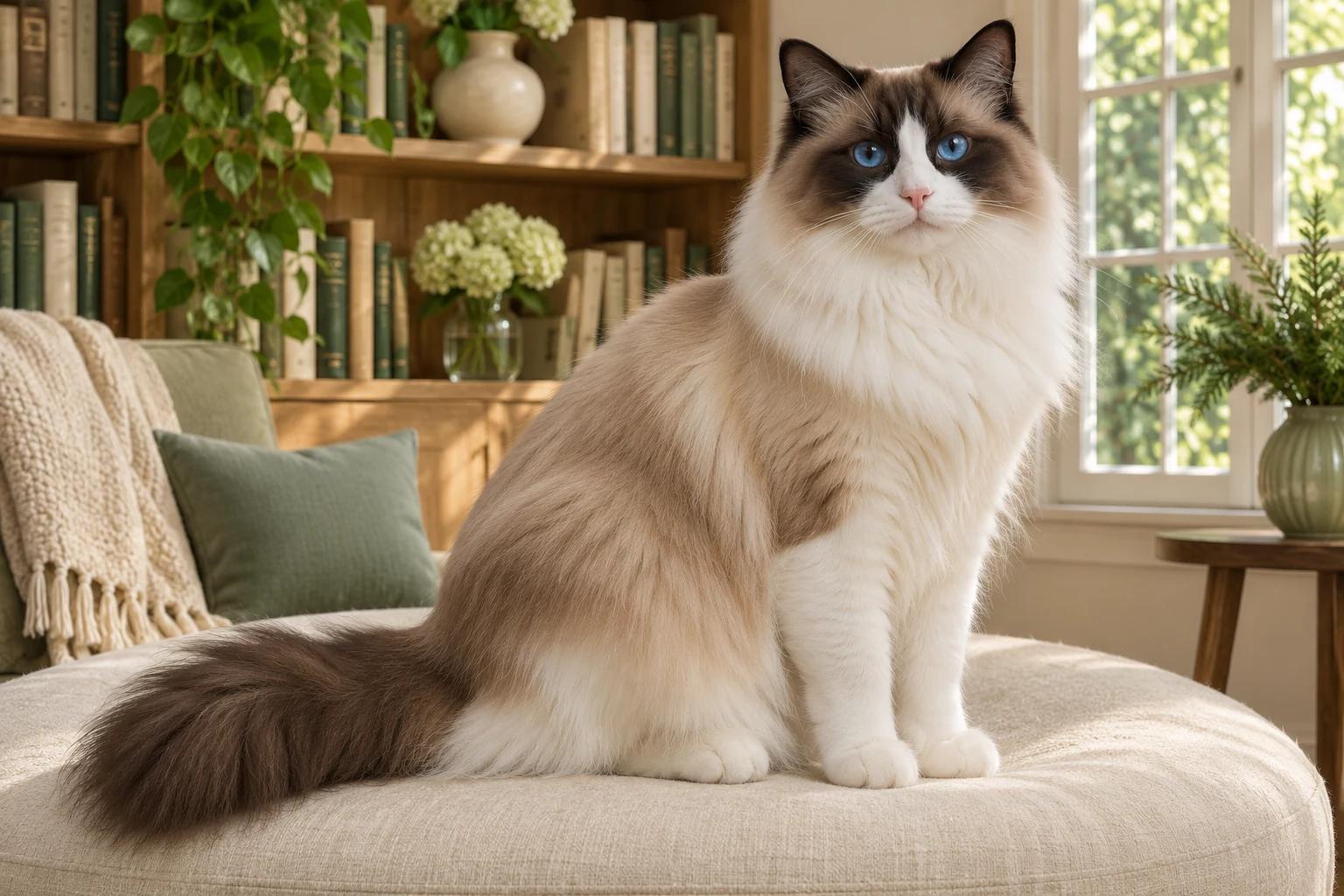
The name is not permission to lift
A Ragdoll can enjoy your company without wanting to be carried. CFA explains that the story of a cat going limp when held helped give the breed its name, but says this is not typical of most Ragdolls today. That distinction matters when a visitor assumes a relaxed-looking cat will accept being scooped up.
Start with the individual cat’s current habits. Ask its caregiver which kinds of contact it chooses, which it avoids and how it signals that an interaction is over. Request an ordinary example, such as what happens when someone sits on the sofa, rather than a demonstration in which the cat is passed from person to person.
Give affection a place on the floor
Set up an easy first meeting with the cat able to approach and leave. A person sitting quietly nearby gives you a chance to observe a voluntary interaction. Cats Protection advises allowing cats to approach children at their own pace and keeping a route back to a safe place. Apply the same respect to adult guests.
In a busy living room, agree in advance where that safe place will be. It should not become a viewing area with people waiting at the entrance. A practical family rule is that a cat resting in its retreat is left alone. Tell visitors the rule before they arrive so the first greeting does not become a negotiation over who gets a cuddle.
Teach children what they can do
An adult should supervise interactions and take responsibility for ending them when needed. Offer a clear alternative to carrying: sitting nearby, watching the cat or joining an adult-led play session with an appropriate toy. A child can participate in caring for a cat without being responsible for interpreting every small change in its behaviour.
Practise the household response to a cat leaving. Nobody follows it to retrieve it, calls it back repeatedly or blocks its path. If siblings disagree over whose turn it is, the adult resolves that disagreement away from the cat. These are family arrangements, not evidence that a Ragdoll will tolerate more handling than another breed.
Separate necessary handling from entertainment
Some handling is needed for care and transport. Ask your veterinary team or experienced caregiver to demonstrate how to manage those particular tasks comfortably, especially if you are unsure about lifting a large cat. Being able to move a cat safely for an appointment is a different goal from expecting it to enjoy being carried around the house.
If a cat previously welcomed touch and now avoids it, do not assume it has simply become unfriendly. Explain the change to your vet. Keep a note of the context and the body area involved instead of repeatedly testing the response. A breed reputation cannot tell you whether an individual cat is comfortable today.
Make the agreement easy to keep
Before bringing a Ragdoll home, ask every household member to describe the kind of relationship they hope for. If one person expects a cat who can be picked up whenever they wish, discuss that expectation now. Affection may look like sitting beside you, following your movements or choosing a brief interaction.
Write the contact rules into your pet-sitter instructions as well. Include where the cat rests, how it usually approaches and whom to contact if handling becomes difficult. A useful plan lets the cat participate in companionship while giving people predictable responsibilities. It does not require the cat to live up to its name.
Sources behind this article
Article source checked: October 22, 2026. Source checked 2026-10-22
Keep reading
Preparing a Korat’s household routine before a baby arrives
Read article →