Pyrenean Shepherd temperament: an involved companion
Explore Pyrenean Shepherd temperament through learning, visitors, alertness and daily routines, with practical questions for prospective owners.
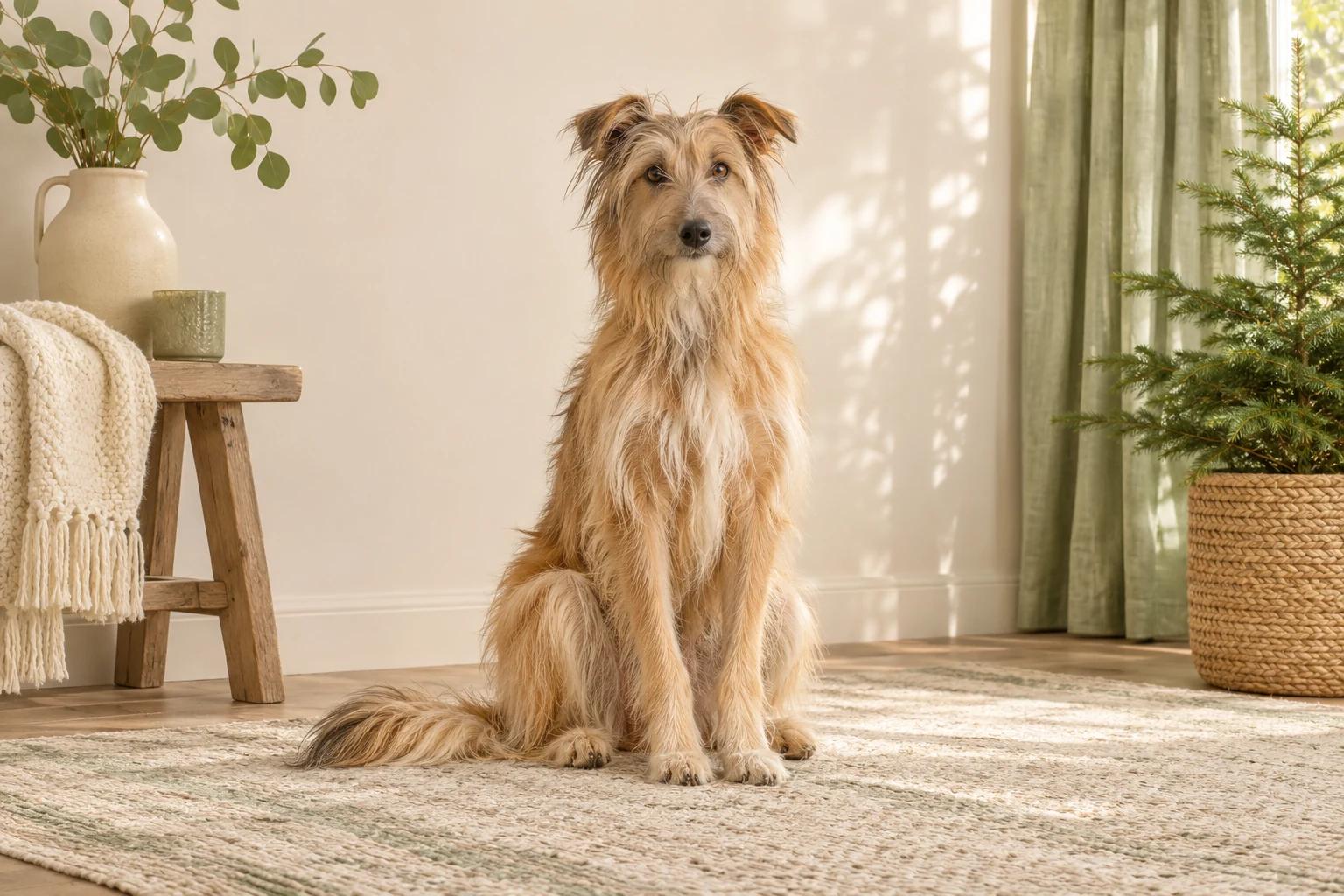
Pyrenean Shepherd temperament is best understood as a question of involvement. Do you want a dog whose day is closely connected with yours, and do you enjoy making that connection useful? The answer needs to cover more than walks. Think about teaching, visitors, work calls, quiet evenings and the arrangements you will use when life becomes busy. An appealingly lively dog still needs a workable place in all those ordinary moments.
Pyrenean Shepherd temperament: engaged, not ornamental
The AKC Pyrenean Shepherd standard emphasizes an active, enthusiastic companion with strong attachment to familiar people and reserve toward strangers. That describes a direction for your research, not an identical personality in every dog. Ask what those tendencies look like in the individual you are considering and in the home where it currently lives.
Translate descriptive words into daily examples. “Involved” might mean joining a training game, accompanying an outing or resting nearby while someone works. Which of those does this dog already know? Which would need teaching? A caregiver who can distinguish familiar routines from future goals gives you a much clearer starting point than a list of flattering adjectives.
Intelligence makes your instructions matter
VCA's Pyrenean Shepherd guidance highlights purposeful activity and consistent positive teaching. A practical consequence is that you should enjoy explaining a task clearly, not merely enjoy the idea of owning a clever dog. Decide what successful behaviour looks like before asking for it.
Consider a simple household moment: you want to answer a call while the dog rests nearby. Choose a resting place and practise using it during easy periods before expecting a complete meeting to go smoothly. Keep the expectation recognizable from day to day. One person inviting constant play and another demanding uninterrupted quiet creates a confusing routine.
Make learning something you can sustain. A notebook with a few current goals may be more useful than collecting dozens of online exercises. Record what you practised, where it worked and what the next small step might be. This helps another household member continue the same lesson rather than beginning a competing version.
Give activity a purpose without filling every minute
When considering Pyrenean Shepherd characteristics, separate a desire for activity from a plan for constant excitement. Your schedule needs room for outings and learning, but also transitions, rest and ordinary care. Write those quieter periods into the plan rather than hoping they will happen by accident.
Choose activities you genuinely like. If you enjoy teaching small skills, make that part of the week. If a suitable class interests you, find out when it meets and how you will get there. Do not build the ownership plan around a hobby you dislike simply because it looks impressive in a breed video.
Have a version for inconvenient days. Identify what you can do when a usual venue is unavailable, who can help when work runs late and how the dog will be cared for during travel. A reliable modest arrangement is more useful than an elaborate plan that disappears whenever the weather changes.
Let unfamiliar people remain unfamiliar at first
A Pyrenean Shepherd personality that feels warm and animated with its owner may look different during an introduction. Visitors should not have to win the dog over immediately, and the dog does not need to greet every person who enters. Decide in advance whether observation, separation or a brief introduction is the appropriate arrangement.
Give people simple instructions before they arrive. Ask them to leave space and let the handler decide what happens next. Keep an alternative resting area available rather than making the visit depend on the dog staying in the centre of the room.
During a prospective-owner meeting, do not interpret a lack of immediate attention as a failed connection. Ask the caregiver how meetings usually unfold and whether another visit would be useful. What matters is a candid understanding of the dog's experience and the support you can offer, not a cinematic first greeting.
Notice the surroundings that invite a response
For Pyrenean Shepherd behavior at home, look at the layout as well as the dog. A window overlooking constant movement, a shared corridor and an unpredictable doorbell create different demands from a quiet back room. Ask caregivers about specific triggers instead of relying on broad descriptions such as “alert.”
If noise is important to your housing, discuss it before placement. Find out when vocalization occurs, what follows it and how the caregiver handles the situation. Keep notes about context. A response to one kind of event does not tell you what happens in every other setting.
Arrange everyday life so the dog is not continually placed in the hardest situation. A resting place away from the busiest view or a planned visitor routine may be more useful than repeatedly asking for quiet in the middle of commotion. For persistent distress, aggression or safety concerns, seek qualified help and discuss the situation with your veterinarian.
Company needs a backup plan
Strong involvement with one person makes it especially important to consider who else will provide care. Introduce prospective helpers thoughtfully and explain the dog's familiar cues, equipment and routines. Do not leave the first meaningful meeting with a sitter until the morning you depart.
Work-from-home owners should be specific about availability. A day of uninterrupted calls is not the same as a flexible day with frequent breaks. Ask how the dog has experienced time apart and what support may be needed during a transition. Avoid a promise that you will never need to leave; plan for real life instead.
Use the Pyrenean Shepherd breed profile for the wider ownership picture. The existing variety article addresses appearance rather than predicting personality from a face or coat. The dog quiz can help you identify which parts of daily life deserve the closest discussion.
A strong match is not simply someone who likes an energetic dog. It is someone who likes the repeated, ordinary work of sharing life with that particular dog and has realistic help when needed.
FAQ
What is a Pyrenean Shepherd like as a companion?
Breed descriptions emphasize energy, involvement with familiar people and reserve around strangers. Ask the individual dog's caregiver how those tendencies appear during normal routines. Concrete examples are more useful than assuming every dog fits one personality sketch.
Does being intelligent make this breed easy?
Not automatically. A dog still needs clear expectations and practice in the situations it will encounter. Consider whether you enjoy teaching and can keep household routines consistent, rather than treating intelligence as a replacement for your involvement.
Should visitors insist on making friends?
No. Visitors can give the dog space and follow the handler's arrangement. An introduction is optional, and a separate comfortable area may be appropriate. Do not force interaction to prove that the dog can tolerate it.
Can appearance tell me the dog's temperament?
No. A preferred face or coat presentation does not establish how the individual handles company, outings or time apart. Discuss its history, meet it where possible and choose on the basis of the relationship and routine you can provide.
Sources behind this article
Article source checked: November 15, 2026. Source checked 2026-11-15
Keep reading
Pyrenean Shepherd size: measurements that matter
Read article →