Pyrenean Shepherd size: measurements that matter
Understand Pyrenean Shepherd size, height and weight, then use individual measurements to plan equipment, transport and comfortable space.
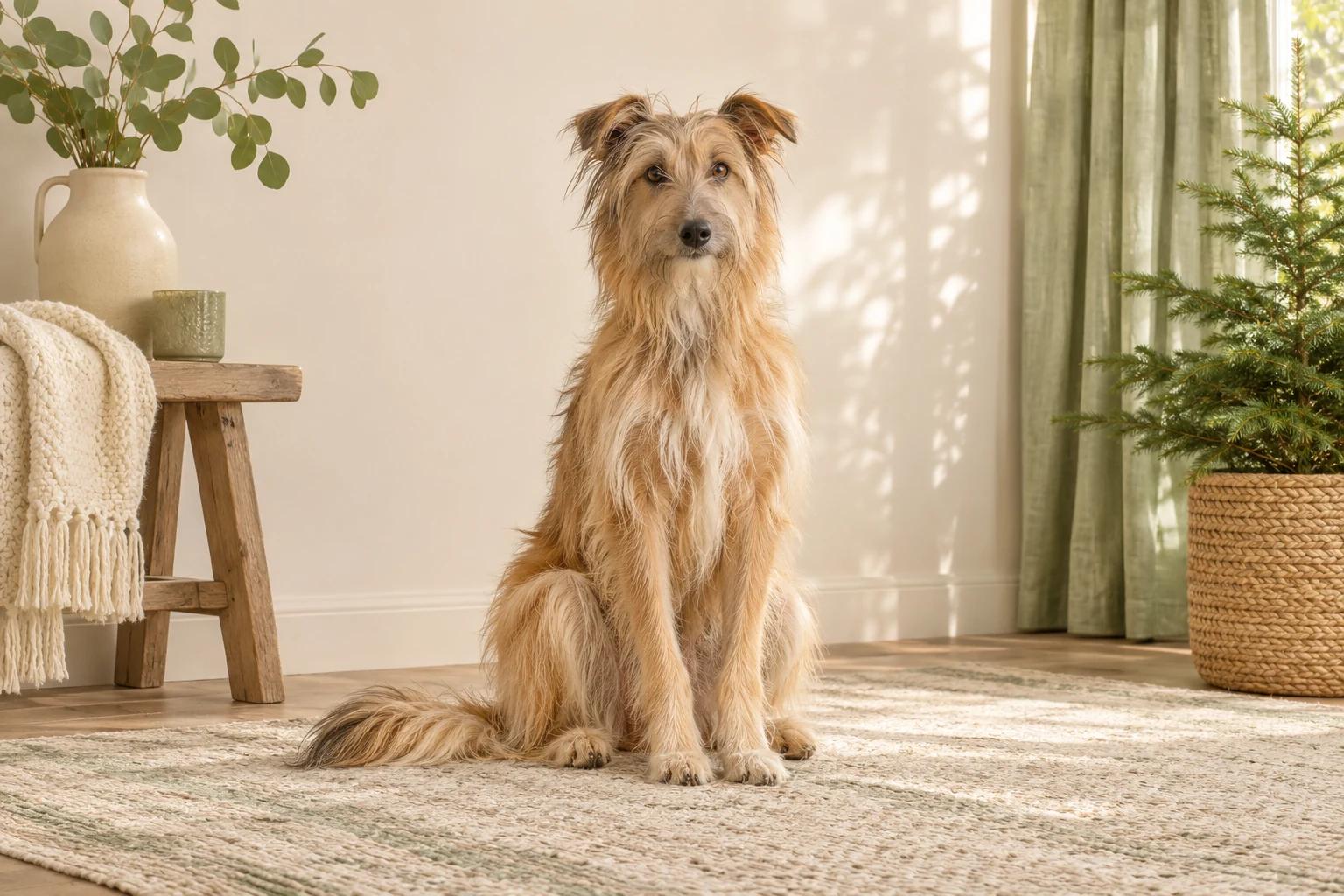
Pyrenean Shepherd size is easy to underestimate if you picture only a compact dog standing beside its owner. Height and weight help with planning, but they answer different questions. You need the actual dog's measurements for equipment, a realistic transport arrangement and enough usable room for resting and moving. A breed range is a starting reference, not a shopping size or a forecast written into a puppy's future.
Pyrenean Shepherd size: read the height range correctly
The AKC Pyrenean Shepherd standard gives heights at the withers by sex and variety: Rough-Faced males 15.5–18.5 inches and females 15–18 inches; Smooth-Faced males 15.5–21 inches and females 15.5–20.5 inches. Those categories matter when comparing a measurement with the published reference. Height at the withers is not height to the tips of the ears.
Ask which category applies before interpreting a number in an advertisement. A photograph of a dog sitting beside a chair does not establish its standing height. If size is important to your housing or travel arrangements, request a recent measurement from the caregiver rather than estimating it from perspective.
Record the date along with the figure. For a growing dog, an undated measurement may describe an earlier stage. For an adult, knowing how the measurement was taken helps you decide whether it answers the question you actually have.
Treat weight as a separate piece of information
The My Breed Atlas Pyrenean Shepherd profile lists an adult reference weight of 15–30 pounds. Pyrenean Shepherd weight is not interchangeable with height, and that reference is not a target every individual should be made to reach. Ask your veterinarian to assess body condition and any questions about growth or weight changes.
For practical planning, ask for a recent weight from an appropriate scale. A caregiver's estimate may be enough for a casual conversation, but it is not the best basis for a product with a stated load limit. Where equipment requires both dimensions and weight, collect both rather than using one as a substitute for the other.
Avoid choosing a dog because someone promises it will stay below a particular cutoff. If your building or transport provider has a firm limit, read the actual policy and consider what uncertainty you can accept. A smaller puppy is not a signed guarantee about adult size.
Separate the body from the coat in your mental picture
VCA describes the Pyrenean Shepherd as small and lean but highly active. That combination is a reminder that compact dimensions do not mean a minimal daily commitment. Plan the dog's timetable as carefully as its bed space.
A full coat can also make visual estimates unreliable. Ask the caregiver to demonstrate where to measure for a harness and how the intended equipment should sit. Follow the manufacturer's instructions for that particular design instead of buying the size worn by another dog of the same breed.
Our article on Smooth-Faced and Rough-Faced Pyrenean Shepherds explains the variety distinction separately. Here, the important point is practical: use the documented individual measurements rather than assuming a particular appearance settles every fitting question.
Build an equipment sheet before ordering
Create a simple note with the dog's name, measurement date and the dimensions each supplier requests. Keep weight, standing height, chest measurement and any other requested measurement clearly labelled. Include units. Mixing inches and centimetres is an avoidable way to order the wrong product.
For each purchase, record the product's own size chart and adjustment range. Two items labelled “medium” may have different dimensions. Check whether the published measurements describe the dog, the inside of the item or the outside of the product. Those distinctions are especially important when planning a space inside a vehicle.
Do not buy everything at once for a growing puppy. Choose what is needed now, with suitable adjustment where available, and plan to reassess fit. Keep receipts and packaging until you have checked the item under the seller's return conditions. A bargain is less useful if you cannot exchange something that does not fit.
Transport planning needs usable dimensions
Measure the actual area where the dog will travel, including the entrance to that space. A large-looking luggage area may have a smaller opening, a sloping roof or an obstruction that changes what fits. Check the travel equipment's instructions and applicable provider rules before committing to a setup.
If you are considering a carrier, do not assume the breed's published height determines eligibility. The dog must fit the specific arrangement appropriately, and providers may impose their own dimensions and other requirements. Verify those requirements for the journey rather than relying on a general claim that the breed is small enough.
Think about loading and unloading too. Where will you park? Can you organize the lead and equipment without opening directly into traffic? Who will handle the dog while another person moves luggage? A transport plan is the whole sequence, not only the purchase of a container.
Small enough for the room is not the whole housing question
Pyrenean Shepherd height can help you imagine physical scale, but daily use of a home is more complicated. Mark out a resting area that does not sit in the main walking route. Leave access to water and consider where equipment will be stored when not in use.
Then look beyond the footprint. Where are the nearest suitable outings? What happens when you have consecutive calls? How will you manage a busy shared entrance? Write down actual arrangements rather than treating compact size as the solution to every practical constraint.
If you are still asking “how big do Pyrenean Shepherds get,” pair the published reference with adult relatives where available and a candid discussion of uncertainty. For broader fit, use the dog quiz alongside conversations with the breeder or current caregiver. The goal is not the smallest possible dog. It is a companion whose physical needs and daily life you can accommodate.
FAQ
How tall is a Pyrenean Shepherd?
Published AKC heights vary by sex and variety, spanning 15 to 21 inches at the withers across the listed categories. Ask which category applies and obtain the individual dog's measurement when equipment or housing depends on it.
What does a Pyrenean Shepherd weigh?
My Breed Atlas lists 15–30 pounds as an adult reference range. That is not a feeding target or a prediction for every dog. Obtain a current weight for equipment decisions and discuss body condition with your veterinarian.
Can I buy a harness using breed name alone?
No. Measure the individual dog according to the product's fitting instructions and compare those figures with the manufacturer's size chart. Check adjustment and fit as the dog grows rather than relying on a generic size label.
Does a compact body mean low activity needs?
No. Physical dimensions do not tell you how much involvement a dog needs. Plan daily outings, learning, company and rest separately from the space required for its bed or travel equipment.
Sources behind this article
Article source checked: November 15, 2026. Source checked 2026-11-15
Keep reading
Pyrenean Shepherd temperament: an involved companion
Read article →