Pug grooming: a practical coat and handling routine
Plan Pug grooming beyond loose hair with sensible equipment, calm handling, professional guidance and a routine that fits everyday care.
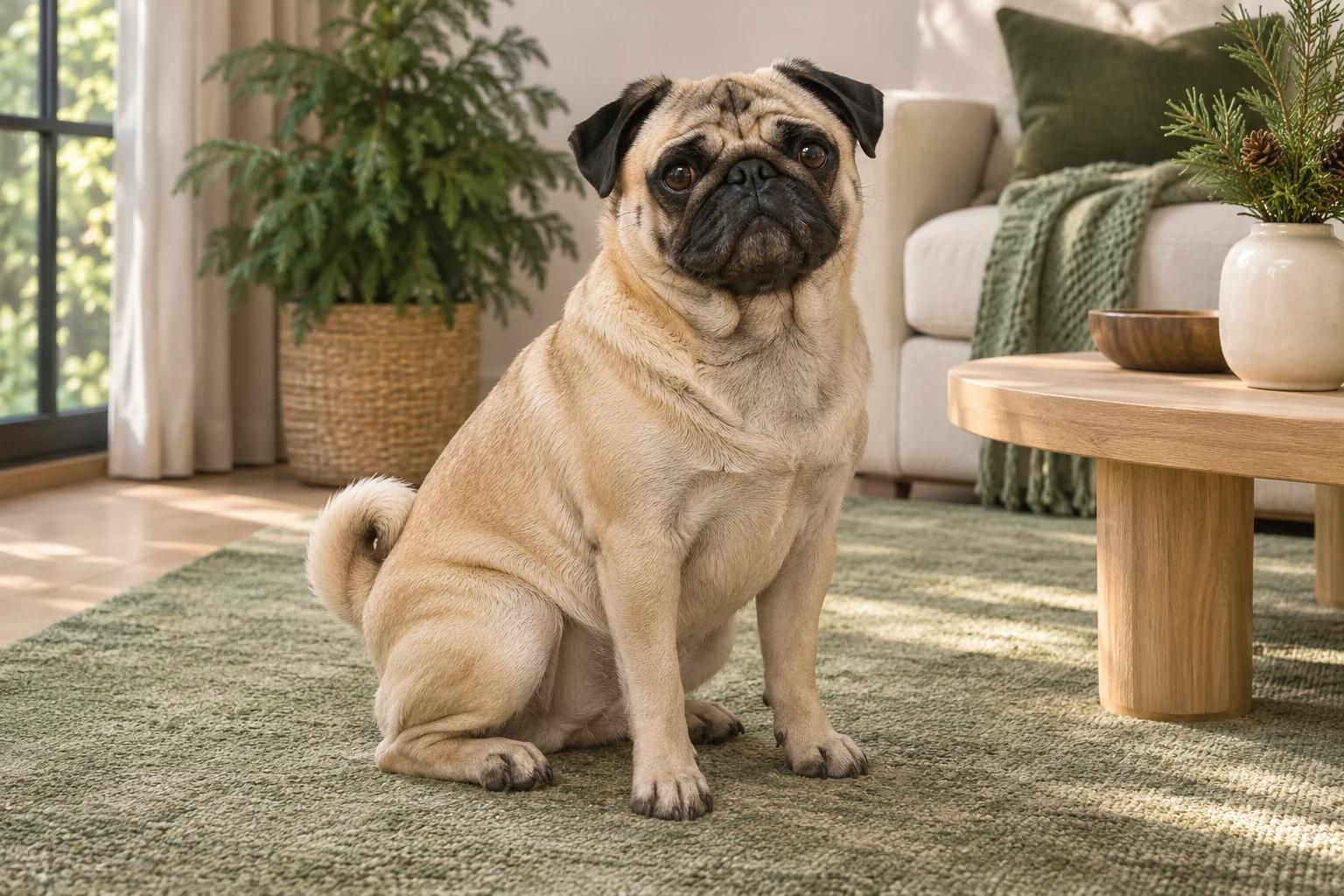
Pug grooming is not just the moment a brush touches the coat. It includes choosing a suitable place, preparing equipment, noticing how the dog feels about handling and knowing which questions belong with a professional. A short coat can make the visible task seem small, but a useful routine still needs attention. Aim for care that is manageable for the dog and repeatable for you, rather than a perfectly tidy finish after every session.
Pug grooming means more than brushing
VCA's Pug profile describes a short, smooth coat with above-average shedding and identifies facial folds as a separate care consideration. That distinction matters: removing loose hair does not complete every part of the dog's care.
Ask your veterinarian to demonstrate an appropriate fold-care routine for your individual Pug, including suitable products and when a change needs assessment. Avoid borrowing a technique or product from another dog's routine without checking that it is appropriate.
The Pug profile places regular grooming and cleaning within everyday ownership. Think of Pug coat care as several manageable responsibilities rather than one long session in which everything must be completed at once.
Make a simple division between tasks you have learned, tasks a groomer handles and issues requiring veterinary advice. This prevents confidence with brushing from turning into guesswork about an unfamiliar area of care.
Set up a place where you can both concentrate
Choose a quiet, well-lit location away from a busy doorway. You should be able to see the coat and move comfortably without leaning awkwardly or preventing the dog from changing position. Ask a professional about a suitable setup if handling is difficult.
Gather what you need before beginning. Keep clean towels and appropriate equipment within reach, with used items placed separately. Searching through a cupboard while trying to maintain the dog's position makes a straightforward task harder.
Use a familiar, manageable arrangement rather than introducing several new things together. A new surface, unfamiliar brush and another person holding the dog can create a very different experience from ordinary home care.
If several household members groom the Pug, agree on the setup and method. Everyone should know which products are approved for which purpose and where instructions are kept. Consistency also makes it easier to notice when something has changed.
Choose tools for this coat, not the biggest promise
Ask a groomer familiar with the dog to demonstrate a suitable brush and technique. The useful purchase is the tool you can use comfortably and correctly, not the one advertised with the most dramatic pile of removed hair.
Do not assume that using more pressure or making repeated passes will produce better care. Follow the demonstrated method and observe the dog's response. If the tool seems uncomfortable or you are unsure how to use it, stop and ask for guidance.
Keep equipment clean and inspect it before use. A damaged tool or one left full of old hair is not ready simply because it was suitable when purchased. Store the kit somewhere dry and inaccessible to chewing.
When learning how to groom a Pug, resist buying a complete collection before you know what each item does. A small, understood kit is easier to maintain and less likely to encourage unnecessary experiments.
Make handling a skill you practise
The AKC Pug training guide recommends building positive associations with grooming. Treat cooperation as part of the routine, not as something the dog should automatically provide because the task is necessary.
Begin from what the dog already accepts. Ask its caregiver about familiar equipment and comfortable positions, and tell your groomer if particular steps are difficult. This information helps everyone avoid pushing through a problem that needs a different approach.
You can separate preparation from a full grooming session. Let the dog become familiar with the location and equipment while following a trainer's guidance, then add the practical care in manageable stages. There is no need to prove you can finish every task at the first attempt.
If handling suddenly becomes difficult, do not assume the dog is being uncooperative. A veterinarian can assess possible discomfort, while a qualified trainer can help with learning. Those are different questions, and sometimes both need attention.
Plan the housework alongside the coat work
Pug shedding will be easier to live with if your cleaning setup is realistic. Choose washable resting covers and keep a spare ready so laundry does not leave the dog without a comfortable place. Consider the car as well as the sofa.
Place cleaning tools where you will actually use them. A suitable vacuum attachment stored beside the machine is more useful than a specialised gadget buried in a cupboard. Keep pet-care equipment separate from household cleaning chemicals.
Look at the places where hair accumulates in your own home. Fabric choice, shared furniture and the dog's favourite resting spots affect the practical workload. There is little value in copying someone else's schedule if your household is arranged differently.
Do not use a tidier room as the only measure of successful grooming. Comfortable handling and a sustainable routine matter too. Brushing is not a promise that no loose hair will appear between sessions.
Keep baths and appointments organised
Discuss bathing needs and products with your groomer or veterinary team rather than adopting a fixed schedule from a photograph or a generic checklist. The individual dog's routine and any veterinary instructions should guide the plan.
Before an appointment, tell the professional about handling difficulties, products already used and anything you have noticed. Ask what the service includes, what will not be attempted and what you should continue at home. Clear expectations prevent gaps in care.
Keep a short record of appointments and useful instructions. You do not need an elaborate diary, just enough information to avoid contradictory routines or forgotten advice. If another person provides care, make the relevant instructions accessible.
Medical concerns should not wait for a cosmetic appointment. Contact your veterinarian about irritation, unusual odour, discharge, discomfort or a marked change in the coat or skin. Avoid trying successive grooming products to solve an unexplained problem.
Review the routine as life changes
A puppy learning about equipment, an adult with an established routine and an older dog needing a different setup may not all benefit from the same arrangement. Ask for help adapting care rather than continuing a method simply because it used to work.
Reassess your own practical needs too. A change in working hours or caregiver can interrupt a routine that once felt easy. Decide who is responsible for each task and arrange professional help where necessary.
The article on Pug weight and body condition covers a separate veterinary discussion. Grooming provides an opportunity to notice changes, but it should not become an improvised diagnosis or feeding plan.
If you are considering the breed, use the dog match quiz and picture the ordinary care involved. The short coat is appealing partly because its tasks can be organised simply. That simplicity comes from learning and maintaining a routine, not from having nothing to do.
FAQ
Does a Pug need care beyond brushing?
Yes. Brushing is only one task. Ask your veterinary team about the individual dog's fold care and other routine needs, and learn which jobs you can perform and which require professional help.
What if my Pug dislikes the grooming setup?
Pause and seek advice about handling, equipment and the environment. A qualified trainer can help with cooperative learning, and a veterinarian should assess possible discomfort or a sudden change in response.
Can grooming eliminate all loose hair at home?
No. Plan coat care alongside regular household cleaning and washable resting covers. Choose a routine you can maintain rather than expecting a completely hair-free home after every session.
Sources behind this article
Article source checked: November 15, 2026. Source checked 2026-11-15
Keep reading

Affenpinscher Grooming: A Practical Coat-Care Routine
Read article →