Portuguese Water Dog temperament: an involved companion
Understand Portuguese Water Dog temperament through shared activity, learning, household boundaries and the practical demands of close companionship.
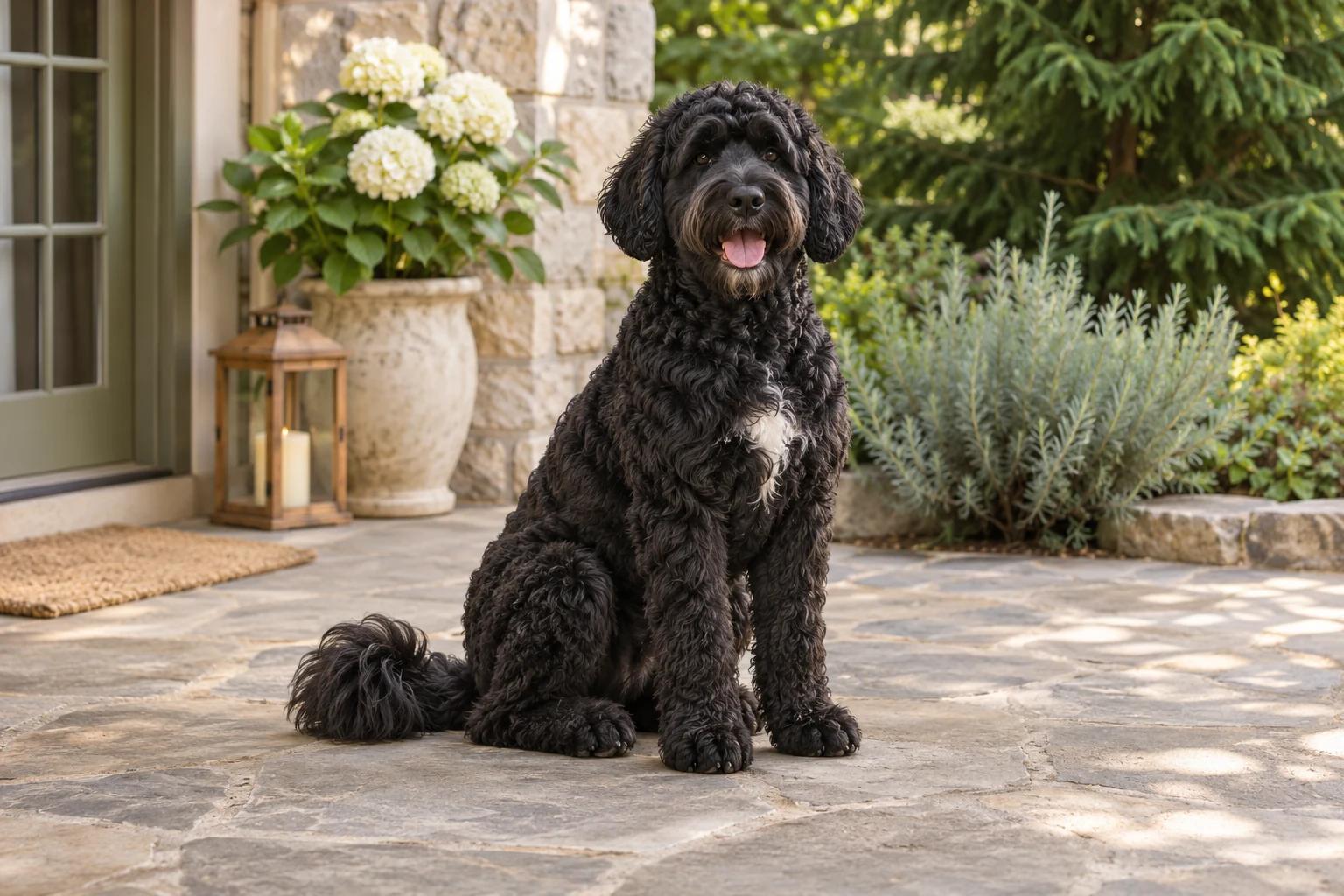
Portuguese Water Dog temperament suits a conversation about participation, not just personality adjectives. This is a breed to consider when you want to do things with your dog and can make room for the teaching and care that involvement requires. Before focusing on an appealing haircut or an imagined swimming partner, picture the dog beside you while you prepare dinner, answer a call or welcome a guest. Those ordinary scenes are where the relationship takes shape.
Portuguese Water Dog temperament: spirit and cooperation
The Portuguese Water Dog Club of America’s standard describes an intelligent, spirited companion with a self-willed side. Cooperation and initiative can coexist. The practical question is how you will teach the dog what works in your household, rather than expecting intelligence to supply the rules automatically.
Start with the routines you will repeat most often. Decide how the dog will join you on outings, where it can rest and what happens during meals. Agreement between people makes these patterns easier to learn. A dog receiving three different answers to the same behaviour has a harder task than one receiving a clear, consistent response.
The Portuguese Water Dog profile emphasises close company and an active daily life. Make sure the appeal of that companionship includes the practical work. You are choosing regular involvement, not a decorative presence that can always wait until the end of a busy day.
Teach attention without demanding it constantly
Portuguese Water Dog personality can make shared learning an attractive part of ownership. Keep that learning useful. Practise a brief check-in before opening a door, a pause while a lead is attached or settling while you sit down. Reward successful attempts and build the difficulty gradually.
The club’s puppy resource highlights training classes as a way for owners to learn how to teach, with motivational approaches among the methods discussed. Look for instruction that helps you understand the next step, not only follow directions during the lesson.
At home, give a session a beginning and an end. If every interaction becomes a cue, the day can become unnecessarily demanding for both of you. Leave room for the dog to rest and for simple companionship without a performance requirement.
When progress stalls, make the task easier and look at the surroundings. An unfamiliar room, another dog nearby or a new person holding the lead may change the challenge. Do not assume that a skill learned in one quiet place will immediately transfer everywhere.
Put household boundaries into visible arrangements
A rule is easier to maintain when the environment supports it. If you do not want the dog taking laundry, use a closed basket. If the kitchen becomes too busy during cooking, prepare a comfortable place outside the traffic route. Management gives training a fair chance.
Ask the current caregiver about carrying, chewing and interest in household objects. The club’s resource discusses mouth-oriented exploration as a relevant ownership consideration. Plan appropriate items and supervision rather than leaving tempting belongings within reach and hoping the dog will distinguish them on its own.
If the dog picks up an unsuitable object, avoid turning retrieval into a chase through the house. Work with a qualified trainer on calm exchanges and prevention. An object that may have been swallowed or poses an immediate danger calls for veterinary advice, not an improvised training experiment.
Keep the rules consistent across the family. A shoe cannot be an amusing toy with one person and a serious offence with another. Describe the permitted alternatives clearly, especially to visitors or children who may accidentally encourage a game you are trying to prevent.
Plan for greetings before excitement takes over
An involved companion may find arrivals interesting, but greeting manners still need teaching. Choose a simple routine: manage the doorway, give the dog an appropriate place to wait and let the visitor enter without competing for space.
Practise with manageable situations before expecting a polished response during a crowded occasion. One familiar person arriving quietly is a different challenge from several guests carrying bags. Keep your expectations matched to the practice the dog has had.
Let the dog disengage after the greeting. Being near people does not mean it should accept constant touching or attention. Provide a retreat and tell guests how to respect it. Supervise children and dogs, and avoid making the dog responsible for deciding when play has gone too far.
Portuguese Water Dog characteristics are only part of the picture in a home with other animals. Ask about the individual’s experience and plan introductions carefully. A sociable reputation does not establish that a particular pairing will work without management.
Make quiet time a normal part of company
Close companionship should include the ability to share a quiet room. Set up a resting place where the dog can be near household activity without lying directly in the busiest path. Notice and reward calm settling without repeatedly restarting interaction.
If you work from home, distinguish periods of availability from periods when you need to concentrate. Use predictable transitions and appropriate care beforehand rather than expecting the dog to infer the meaning of a laptop opening. Arrange help if your schedule leaves too little room for its needs.
Prepare for time apart as well. Ask about existing experience, introduce manageable absences and observe the response. Do not assume that being affectionate means inevitable distress, or that being intelligent means effortless coping.
Persistent signs of distress need support from your veterinarian or a suitably qualified behaviour professional. Describe what happens during absences and what you have already tried. Avoid responding with punishment or simply extending the absence to test whether the dog will give up.
Learn the individual behind the description
Portuguese Water Dog behavior is best understood through repeated observations, not a single lively greeting. Ask a breeder or rescue for examples from ordinary days. What happens after an outing? How does the dog handle grooming? What situations need additional support?
For a puppy, discuss the early experiences provided and the routine you will continue. For an adult, ask about established habits and what changes may be difficult. Neither conversation should be replaced by a promise that the breed is always easy, obedient or suitable for every household.
Coat handling belongs in the relationship too. Introduce care calmly and get help with unfamiliar techniques. The article on coat types and clips explains appearance, but your daily aim is comfortable, manageable care.
Use the dog match quiz to consider whether you want this level of involvement. Then test the idea against your diary, support network and the specific dog. An honest match is built on what you can offer repeatedly, not what you could manage during one enthusiastic week.
FAQ
Does a Portuguese Water Dog train itself because it is clever?
No. Intelligence does not supply household rules. Teach useful skills in manageable steps, use consistent cues and practise in the situations where you need them. Qualified instruction can help both you and the dog learn effectively.
Is a Portuguese Water Dog a good choice if I want little interaction?
The breed profile describes an active, involved companion. If you prefer a dog that needs very little shared activity or attention, reconsider the fit before committing. Ask about the individual’s routine rather than relying on appearance.
How can I judge an adult dog’s temperament?
Ask for specific examples from everyday life and observe the dog in an appropriate setting. Discuss handling, visitors, activity, rest and time apart. One meeting is useful information, but it should be considered alongside the caregiver’s history and observations.
Sources behind this article
- Portuguese Water Dog Club of America: AKC Breed Standard ↗
- Portuguese Water Dog Club of America: Puppy Resource Kit ↗
Article source checked: November 15, 2026. Source checked 2026-11-15
Keep reading

Airedale Terrier Temperament: What Everyday Life Can Feel Like
Read article →