Portuguese Water Dog coats: texture is not a haircut
Separate curly and wavy Portuguese Water Dog coats from lion and retriever clips, with clear descriptions to use when discussing grooming.
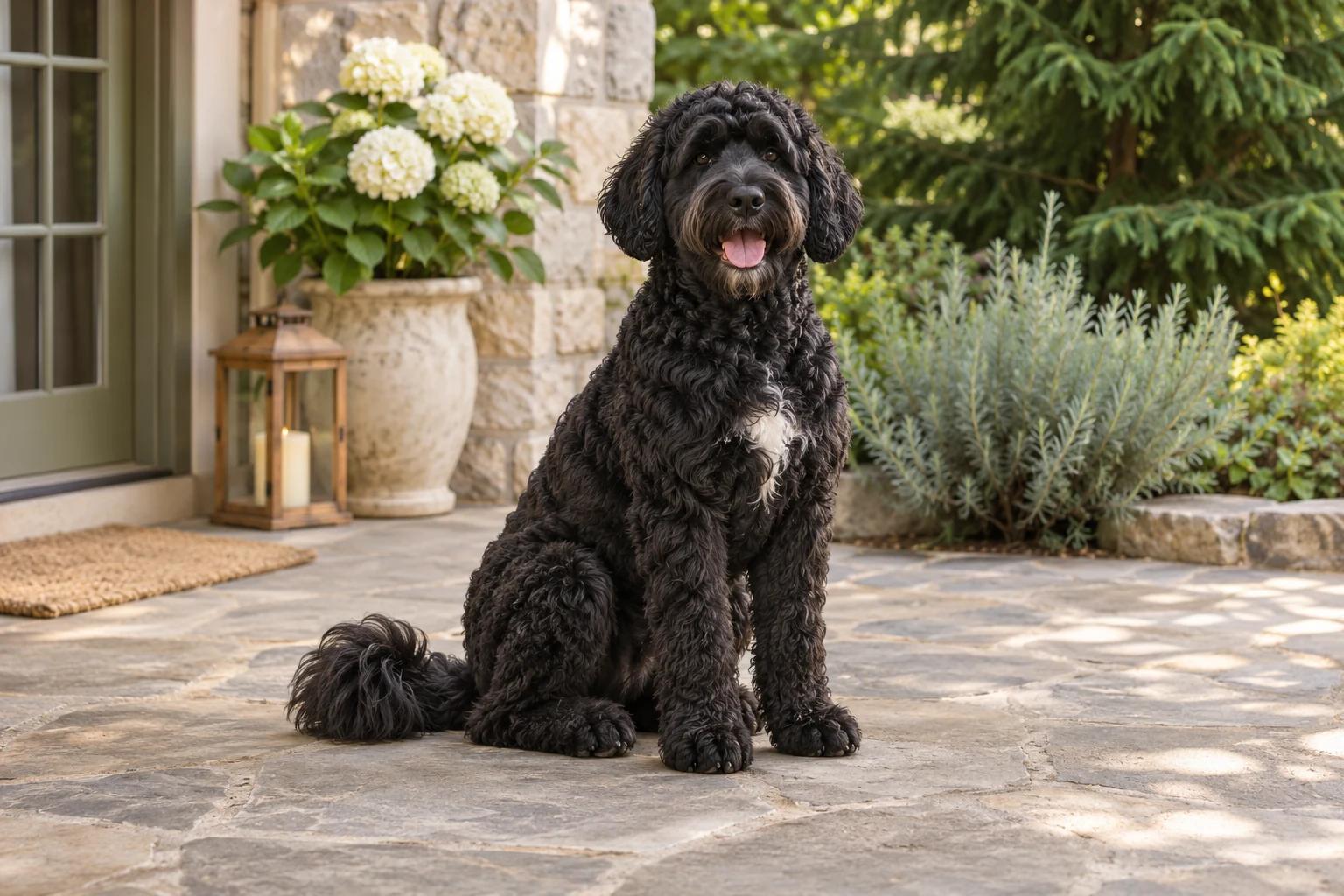
Two questions explain four different pictures
Four photographs of Portuguese Water Dogs can show surprisingly different outlines without showing four kinds of dog. One question concerns the coat's texture: curly or wavy. Another concerns the haircut: lion clip or retriever clip. The Portuguese Water Dog Club of America's grooming diagrams show both coat types in both clips, making the distinction particularly easy to understand.
The breed standard describes compact curls in the curly coat and gentler waves in the wavy coat. It describes no undercoat and gives neither texture preference. A clip changes the amount and arrangement of hair left on the dog; it does not turn naturally wavy hair into the curly coat variety.
What lion and retriever clips actually leave
In the lion clip, the middle body and hindquarters are clipped, as is the muzzle, while the hair at the end of the tail remains long. This creates the conspicuous contrast between the fuller front and the shorter rear. In the retriever clip, the coat is shortened to follow the dog's outline, with the tail tip again left long. The AKC standard specifies a blanket of coat no longer than one inch for that presentation.
Those are descriptions of recognized show presentation, not instructions to take clippers to a dog without learning how. The standard accepts either correctly presented clip. The words “lion” and “retriever” describe the styling here; neither changes the dog's breed or demonstrates a particular working ability.
Make the grooming conversation specific
Bring a clear reference picture and identify what you like about it: the shorter body, the fuller front or the long tail tip. Then discuss the actual coat and its current condition with the groomer. A photograph alone may leave you and the groomer talking about different features, especially when its coat texture differs from your dog's.
Agree on what upkeep you can manage between appointments and how to introduce any unfamiliar handling comfortably. An ordinary pet-care decision does not have to reproduce every detail of a show outline. Once texture and clip are separate in your vocabulary, you can describe the result you want without expecting a haircut to change the coat your dog naturally grows.
Sources behind this article
Article source checked: October 20, 2026. Source checked 2026-10-20
Keep reading
Portuguese Water Dog vs Bernedoodle: choosing a companion
Read article →