Portuguese Podengo Pequeno temperament at home
Understand Portuguese Podengo Pequeno temperament beyond its small size, including outings, visitors, garden management and shared household routines.
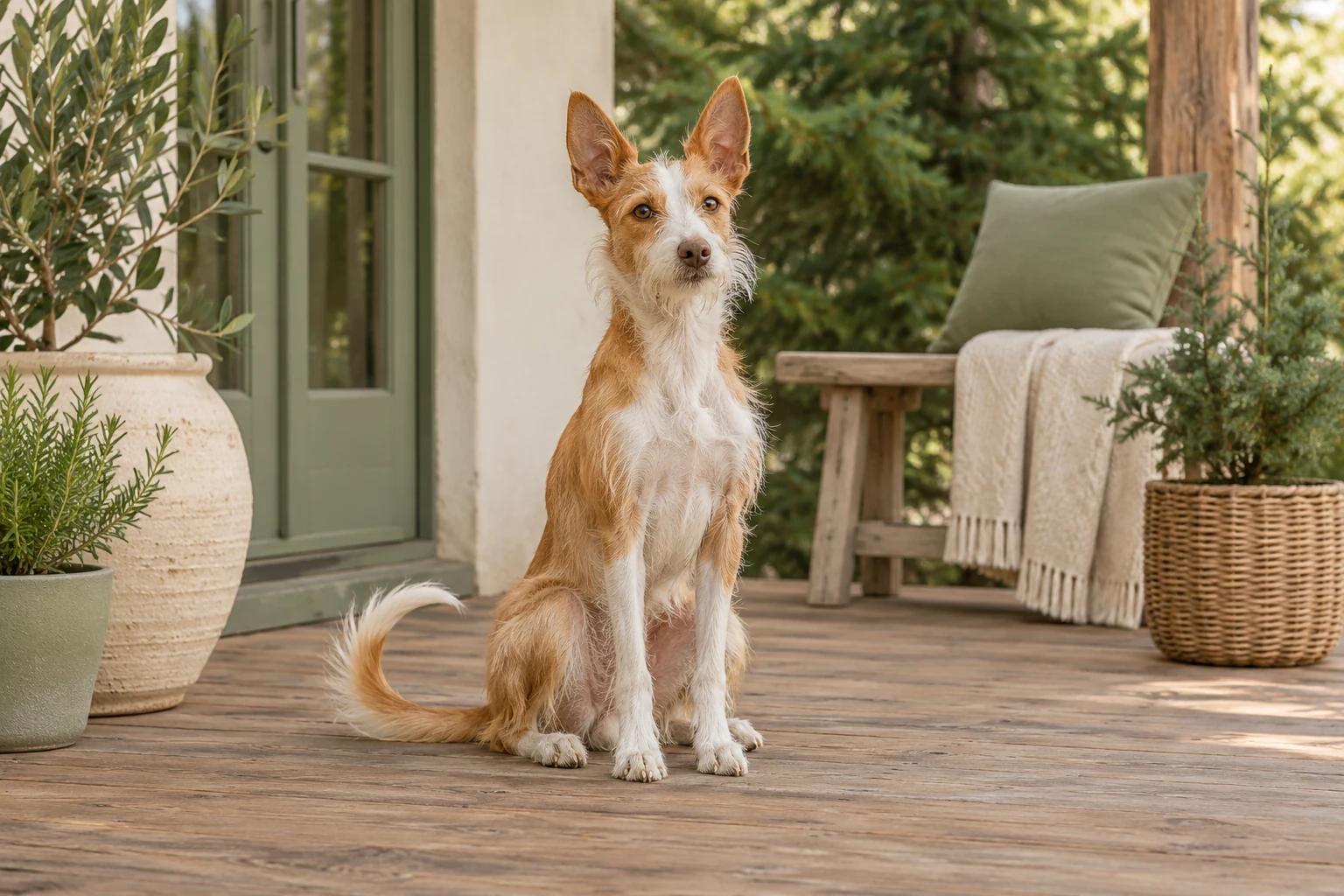
Explore the
Portuguese Podengo Pequeno
Background, care, and everyday considerations.
View breed profile →Portuguese Podengo Pequeno temperament deserves a bigger place in your decision than the dog’s compact outline. It is possible to fit a small bed into your home without having made room for the dog’s interests, learning and company. The AKC standard describes a lively, intelligent rabbit hunter. For a companion household, the useful question is how you will provide a satisfying ordinary day while keeping exploration manageable. Start there, rather than assuming small means easy to occupy indoors.
Portuguese Podengo Pequeno temperament beyond lap-dog assumptions
A small companion can enjoy a quiet seat beside you and still need meaningful outings. The Portuguese Podengo Pequeno profile describes an active daily routine with mental engagement. Plan for walks, shared games and learning, not only toilet trips between long periods of inactivity.
Consider how an outing begins in your household. Can you prepare the lead without everyone rushing? Is there somewhere to pause before stepping through a shared entrance? A predictable start gives you a chance to ask for attention before the environment becomes interesting. It also makes the activity easier for the person providing it on a busy day.
Afterward, allow time for a quieter transition. Put wet equipment away, offer a familiar resting area and see what the dog chooses to do. You are learning its rhythm, not trying to keep it in motion until it has no energy left. If you cannot imagine enjoying this daily attention, reconsider whether the appeal is mainly the dog’s appearance.
A garden needs rules as well as a fence
VCA’s breed account highlights chasing and digging as practical management considerations. Inspect the garden from the dog’s level before relying on it as a secure space. Look at gaps under gates, loose edges and items left beside the boundary, not just the fence viewed from your back door.
Decide how garden access will work when someone is delivering materials or doing maintenance. A closed internal door or prepared room can prevent confusion while an external gate is open. Tell visitors which entrances must stay closed; do not assume they will understand the arrangement from seeing a lead on a hook.
If you provide an approved digging area, introduce it under supervision and keep it separate from hazards or plants you need to protect. Manage access to the rest of the garden while you teach the distinction. Simply placing a digging box outside does not communicate the rule by itself.
A garden is useful space, but it is not a replacement for shared outings. Ask the current caregiver how the dog uses outdoor time and whether you can observe it before deciding what your setup will require.
Familiar people and new people are different questions
Portuguese Podengo Pequeno personality can look different with its own household than with visitors. VCA describes family attachment alongside possible reserve with strangers. Allow that distinction to inform a first meeting: sit down, give the dog space and let its response unfold instead of insisting on immediate contact.
For your home, prepare a visitor routine that does not rely on picking the dog up and presenting it to someone. A small dog still needs choice about proximity. Explain where guests should stand or sit, keep an escape route to the resting area open and separate the dog if the arrival is too busy.
Ask about handling as well as greeting. How does the dog respond to a harness being fitted, feet being touched or someone leaning nearby? These are ordinary care situations, not proof of sociability, and they deserve gentle practice in their own right.
Where children are present, adults should manage the interaction. Keep the dog’s rest area outside children’s play and supervise contact. Being small enough for a child to lift is not permission for the child to do so.
Make play useful without turning everything into a test
A simple shared activity can tell you a lot about the dog. Offer a suitable toy, watch how it engages and practise an easy transition to something else. Does the dog prefer searching, following you or interacting with the object? Use that information to choose activities rather than buying a large collection before you have met it.
Keep early games easy to understand. You might place a toy in plain view and invite the dog to find it, then gradually make the location less obvious. Clear the area of small household objects so the game has an appropriate target. Supervise new toys and remove damaged items.
For everyday learning, agree on words and rules across the household. One person rewarding jumping while another asks for feet on the floor creates an avoidable puzzle. A short written note about doorways, furniture and greetings helps everyone teach the same routine.
Notice what precedes the behavior
When discussing Portuguese Podengo Pequeno behavior, start with the event immediately before it. A bark at movement outside a window creates a different question from vocalizing when someone leaves. Recording that context helps you make a relevant adjustment instead of applying the same response to every sound.
The live profile describes some barking through the day, so do not choose this dog on a promise of silence. Look at the windows and entrances in your own home. A resting spot with an uninterrupted view of a busy path may create more interruptions than a quieter position in the same room.
For time apart, ask what the individual currently manages and build from that starting point. Arrange cover for longer absences during the transition. If the dog shows distress, consult a qualified professional and your veterinarian rather than treating the behavior as an amusing small-dog quirk.
Choose the dog behind the description
Useful Portuguese Podengo Pequeno characteristics are the ones you can connect to your life. Ask to see the dog on a normal outing, during a quieter period and around an appropriate visitor. You do not need to stage every possible challenge; a few ordinary observations and honest caregiver answers are more valuable.
Keep visual preferences in a separate column from your daily requirements. If the wire coat drew your attention, the article on the Pequeno’s natural wire coat addresses that appearance without deciding temperament. Use the dog match quiz to rank schedule, activity and household constraints, then compare those priorities with the individual dog rather than a photograph.
FAQ
Is a Portuguese Podengo Pequeno mainly a lap dog?
Do not plan around that assumption. The breed profile describes an active companion needing outings and mental engagement. An individual may enjoy resting close to you, but that does not replace a daily routine that includes activity and learning.
Can I leave a Pequeno alone in a fenced garden?
Do not treat a fence as proof that the setup is suitable. Inspect gaps, gates and boundary conditions, and consider the dog’s behavior under supervision first. Outdoor space should not become a substitute for company, appropriate care or a plan for absences.
Why might a friendly Pequeno hesitate with visitors?
Familiar household contact and unfamiliar people are different experiences. Allow distance and an unblocked retreat instead of forcing a greeting. Ask about the individual’s history and seek help if discomfort is persistent or difficult to manage.
Sources behind this article
- American Kennel Club: Portuguese Podengo Pequeno standard ↗
- VCA Animal Hospitals: Portuguese Podengo Pequeno ↗
Article source checked: November 15, 2026. Source checked 2026-11-15
Keep reading
Portuguese Podengo Pequeno size: a practical guide
Read article →